
Loading Dock Ice Safety: What OSHA Actually Requires

Brad Caton • November 2, 2026

Share this article

Most commercial snow removal contracts are written around the parking lot and the front walkway — the parts of a property tenants and customers see. The loading dock, tucked around the back, usually gets whatever attention is left over. That gap matters more than most property managers realize, because federal workplace safety law treats the dock as its own hazard zone, separate from the sidewalk out front, and it names snow and ice specifically as a condition employers are required to correct.

For a facility that runs freight in and out all winter — a distribution hub, a manufacturing plant, a grocery warehouse, a corporate campus with a service entrance — that gap between "the lot is plowed" and "the dock is compliant" is where liability actually concentrates. Here's what the regulation says, why the dock carries different risk than the curb, and what to build into a snow removal plan so it covers the whole property, not just the parts visible from the street.

What OSHA's Walking-Working Surfaces Rule Actually Says About Snow and Ice

The relevant standard is 29 CFR 1910.22, OSHA's general requirements for walking-working surfaces. It applies to "all places of employment, passageways, storerooms, service rooms" — which covers a loading dock as much as it covers a warehouse floor. The rule doesn't leave snow and ice as an implied hazard that inspectors have to argue their way into. It names them directly.

Under the surface-conditions section of 29 CFR 1910.22, employers must ensure that walking-working surfaces are "maintained free of hazards such as sharp or protruding objects, loose boards, corrosion, leaks, spills, snow, and ice." That's not a seasonal guideline or a best-practice recommendation — it's the same subsection that covers loose boards and corrosion, which is to say, it's treated as a structural defect, not weather.

The standard goes further than "clear it once." It requires that walking-working surfaces be "inspected, regularly and as necessary, and maintained in a safe condition," and that any hazardous condition be "corrected or repaired before an employee uses the walking-working surface again" — or guarded off until it is. Applied to a loading dock in February, that means a single morning plow pass isn't the compliance bar. It's an ongoing inspection-and-correction obligation for as long as the hazard exists, which during a multi-day PNW snow event can be most of a week.

Why the Dock Carries More Risk Than a Slippery Sidewalk

A patch of ice on a public walkway is a slip-and-fall risk. A patch of ice on a loading dock apron is that, plus a forklift operating environment, plus a loaded trailer backed up against an elevated edge. OSHA's own guidance for powered industrial trucks flags this directly: its loading-dock safety material lists "skidding or slipping due to wet or icy conditions" as a named hazard for forklift operation, alongside falling off the edge of the dock and unpredictable tail swing. The recommended practices that follow are basic but specific — keep the working surface clear and clean, maintain a safe distance from the dock edge, and improve edge visibility.

Warehouse loading dock with a forklift inside a dark trailer bay, flanked by yellow safety posts.

Stack those hazards together and the dock becomes the highest-consequence square footage on a commercial property in winter: an elevated surface, a fall exposure, a several-thousand-pound machine operating on it, and a regulatory standard that treats an unaddressed ice patch the same way it treats a structural defect. A snow removal scope of work that stops at "clear the lot and the entrances" leaves exactly that zone uncovered.

What to Ask a Snow Removal Contractor Before You Sign

Most commercial snow removal RFPs are written around square footage of parking lot and linear feet of sidewalk. Before this winter's contract is finalized, it's worth confirming the scope actually extends to the areas 1910.22 governs:

Is the dock apron and staging lane explicitly in the scope of work?

Not implied by "full property coverage" — named. A dock apron, the trailer staging lane behind it, and the ramp connecting the two should each appear as a line item, not an assumption.

What's the trigger depth and response window for the dock specifically?

A property's general trigger — say, two inches of accumulation before a plow is dispatched — may not be tight enough for an area where a forklift operator is working at the edge of a four-foot drop. Ask whether the dock gets the same trigger as the parking lot or a tighter one.

How is de-icing handled on the dock without damaging dock plates or trailer seals?

Chloride-based de-icers that are fine on asphalt can accelerate corrosion on steel dock plates and levelers. A contractor who has actually worked industrial and distribution sites should have a documented answer for dock-specific de-icing product selection.

Is there a documented, timestamped record of when the dock was serviced?

Given that 1910.22 requires ongoing inspection and prompt correction, a facility needs to be able to show, after the fact, that the hazard was addressed within a reasonable window — not just that a truck showed up at some point that day.

How Invictus Snowfighters Covers the Dock, Not Just the Curb

This is where a snow removal vendor's actual operating model matters more than its marketing.

Large white truck with flashing lights driving through a dark industrial street at night

Invictus Snowfighters built its service around commercial and industrial properties across the Vancouver–Seattle–Portland I-5 corridor — the kind of multi-building distribution, manufacturing, and corporate campus sites where a loading dock isn't an afterthought, it's the busiest part of the property. On larger job sites, that includes on-sitefirst responder units— a stocked container of ice melt and equipment positioned on the property itself — so a dock apron doesn't wait for a truck to arrive from across the region before it gets treated.

Every service visit isGPS-verified and timestamped, which is the practical answer to 1910.22's inspection-and-correction requirement: if a regulator or an insurer ever asks whether a hazardous walking-working surface was corrected in a reasonable window, there's a record, not a guess. That same documentation is what actually holds up if aslip-and-fall claimlands months later.

Geography is the other piece. Invictus is ISO SN9001-certified and, per its own team, one of the only companies with boots on the ground across the full I-5 corridor rather than subcontracting out regions it doesn't actually service. For a property manager running a multi-site portfolio — a distribution hub inKent, WA, a manufacturing plant inSurrey, BC, and a corporate campus outsidePortland— that means one vendor, onedocumentation standard, and one point of accountability, instead of five regional subcontractors each interpreting "clear the property" differently.

The crew doing that dock-apron work also falls under its own OSHA guidance. Cold-stress exposure is a real risk for anyone spending a shift outdoors clearing ice off steel dock plates and ramps in freezing conditions, and it's worth asking a vendor how it staffs and rotates crews through multi-day events — the same way it's worth asking how the dock itself gets covered. Seewhat OSHA's cold-stress guidance means for snow removal crew safetyfor the questions to ask on that front.

In British Columbia, that liability exposure runs through a separate legal channel — theOccupiers Liability Act— worth reviewing alongside any US-facility OSHA obligations if a portfolio spans the border. And because clearing a dock apron means moving snow somewhere, it's also worth confirming that wherever it ends up doesn't create a separatestormwater complianceproblem once it melts.

Building the Dock Into This Winter's Plan

None of this requires an exotic solution. It requires the scope of work to actually name the dock, the staging lane, and the ramp as covered surfaces, with a trigger depth and response window appropriate to a zone where a forklift is operating a few feet from a drop-off — and a documentation trail that shows the hazard was addressed, not just that a truck was dispatched. That's a conversation to have with a snow removal vendor before the first snowfall, not after an incident report is being written.

It's also a conversation worth having earlier than most property managers assume. Snow removal contracts for the Vancouver–Seattle–Portland corridor are typically finalized in late summer and early fall, well before the first storm system reaches the coast — which means late August is closer to the deadline for locking in dock-specific scope language than it is to premature planning. A vendor that's already at capacity by the first snowfall isn't the one that's going to redraft a scope of work to add the dock apron mid-winter.

FAQ: Loading Dock Snow and Ice Safety

Does OSHA actually name snow and ice as a specific hazard, or is that an interpretation?

It's specific. 29 CFR 1910.22's surface-conditions requirement lists "snow, and ice" directly among the conditions a walking-working surface must be kept free of, in the same clause as loose boards and corrosion.

Does 1910.22 apply to outdoor areas like a loading dock apron, or only indoor floors?

The standard's surface-conditions requirements apply to walking-working surfaces generally, which OSHA's own loading-dock safety guidance treats as covering the dock and apron — its recommended practices for loading docks specifically address wet and icy conditions as a hazard for that area.

Is a single morning plow of the dock enough to meet the standard?

Not by itself. 1910.22 requires walking-working surfaces to be inspected regularly and hazards corrected before further use — during a multi-day snow event, that points toward ongoing monitoring and re-treatment, not a one-time pass.

What should be in a snow removal contract to cover the dock specifically?

A named scope for the dock apron, ramp, and trailer staging lane; a trigger depth and response window for that zone; a de-icing product suited to steel dock hardware; and a timestamped service record for each visit.

Recent Posts

Snowy sidewalk by brick building with a tree and red curb marked “FIRE LANE NO PARKING”
By Brad Caton • October 30, 2026
A snow-covered fire lane or hydrant is a fire code violation, not just an inconvenience. ISO-certified Invictus Snowfighters breaks down what NFPA 1 and the fire code actually require. Request a quote.
Snow plow clearing a commercial parking lot at dawn in the Pacific Northwest
By Brad Caton • October 28, 2026
WorkSafeBC winter safety requirements mean BC employers must run a documented risk assessment before snow hits. Invictus Snowfighters, the region's only ISO-certified provider, breaks down what to verify and how to prepare. Contact us before the season starts.
Snow-covered street beside a brick building with parked cars and a lit entrance
By Brad Caton • October 26, 2026
White Rock's snow removal bylaw requires property owners to clear sidewalks by 10 a.m. See what Bylaw 1529 requires, the real fine under Bylaw 1929, and how ISO SN9001-certified Invictus keeps White Rock properties compliant. Request a quote.

Snowy urban alley with a person sweeping near green bins and brick buildings in the background
By Brad Caton • October 23, 2026
Richmond's snow removal bylaw (Traffic Bylaw 5870) requires commercial, industrial, and undeveloped properties to clear sidewalks by 10am daily or face a $125 fine per violation. See what the City's own guidance requires, and how Invictus keeps Richmond properties compliant before the first snowfall.
Snowy sidewalk beside a fenced path, with a black dog walking away toward a crosswalk sign.
By Brad Caton • October 21, 2026
Burnaby's snow removal bylaw fines commercial properties up to $400 per violation. Here's what Section 31 requires, what the city's own guidance says, and how Invictus keeps Burnaby properties compliant before the first snowfall.
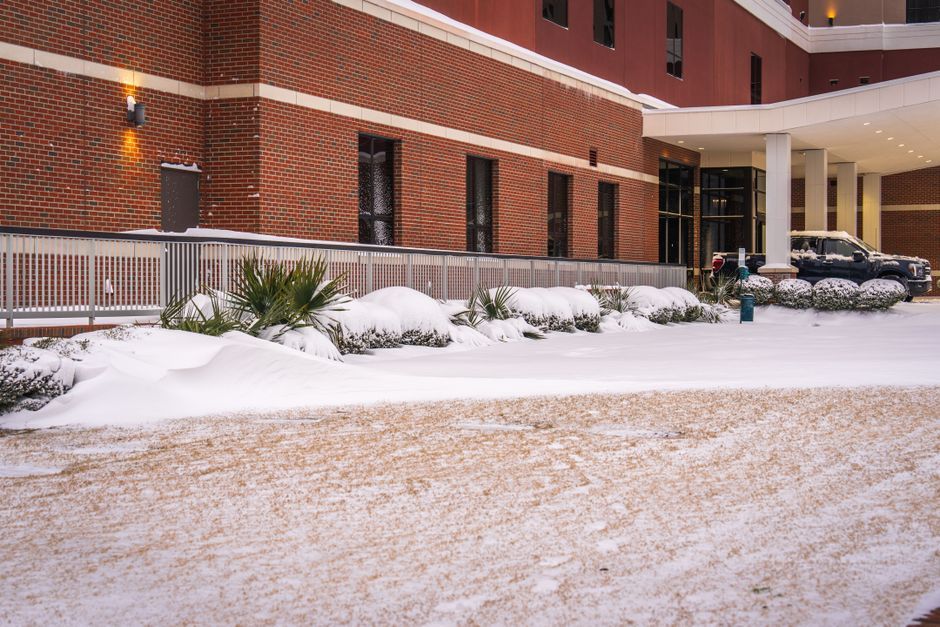
Snow-covered driveway outside a brick building with parked cars and a covered entrance
By Brad Caton • October 19, 2026
Surrey's snow removal bylaw requires commercial properties to clear sidewalks by 10am next day or face daily fines. See what Bylaw 13007 requires. Request a quote.
Property manager and maintenance contractor shaking hands in a commercial parking lot
By Brad Caton • October 16, 2026
Managing five property maintenance vendors instead of one costs hours every month. See how commercial property managers consolidate winter service with the rest of their maintenance calendar, from a company serving 500+ Pacific Northwest properties for 30+ years. Get a quote.
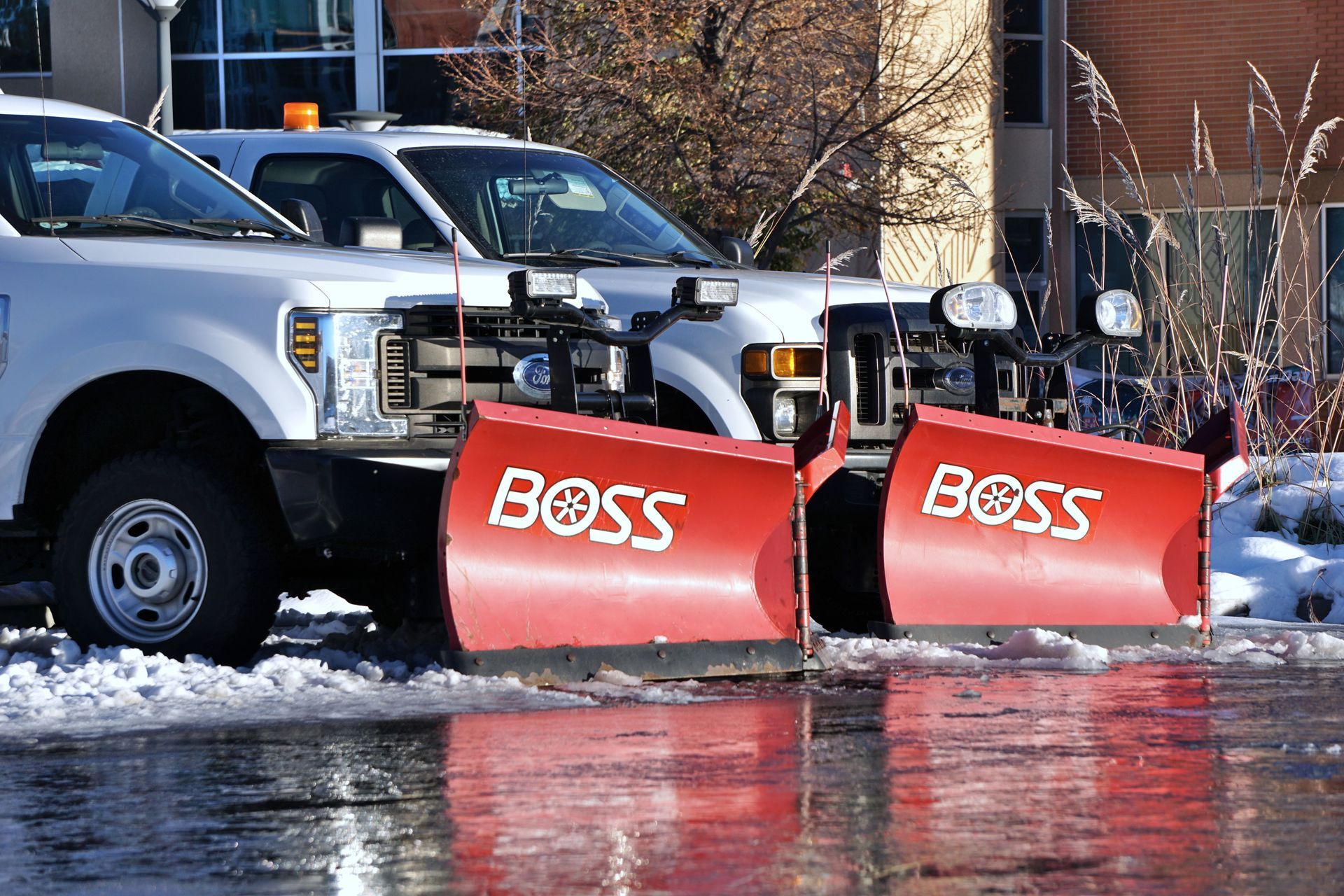
Snowplow clearing a large commercial parking lot for a multi-property portfolio contract in the Pacific Northwest
By Brad Caton • October 14, 2026
Multi-property snow removal contracts consolidate a fragmented, sole-proprietor-heavy market into one accountable partner. See what portfolio bundling actually saves, what to verify first, and the one trade-off to watch. Request a quote.
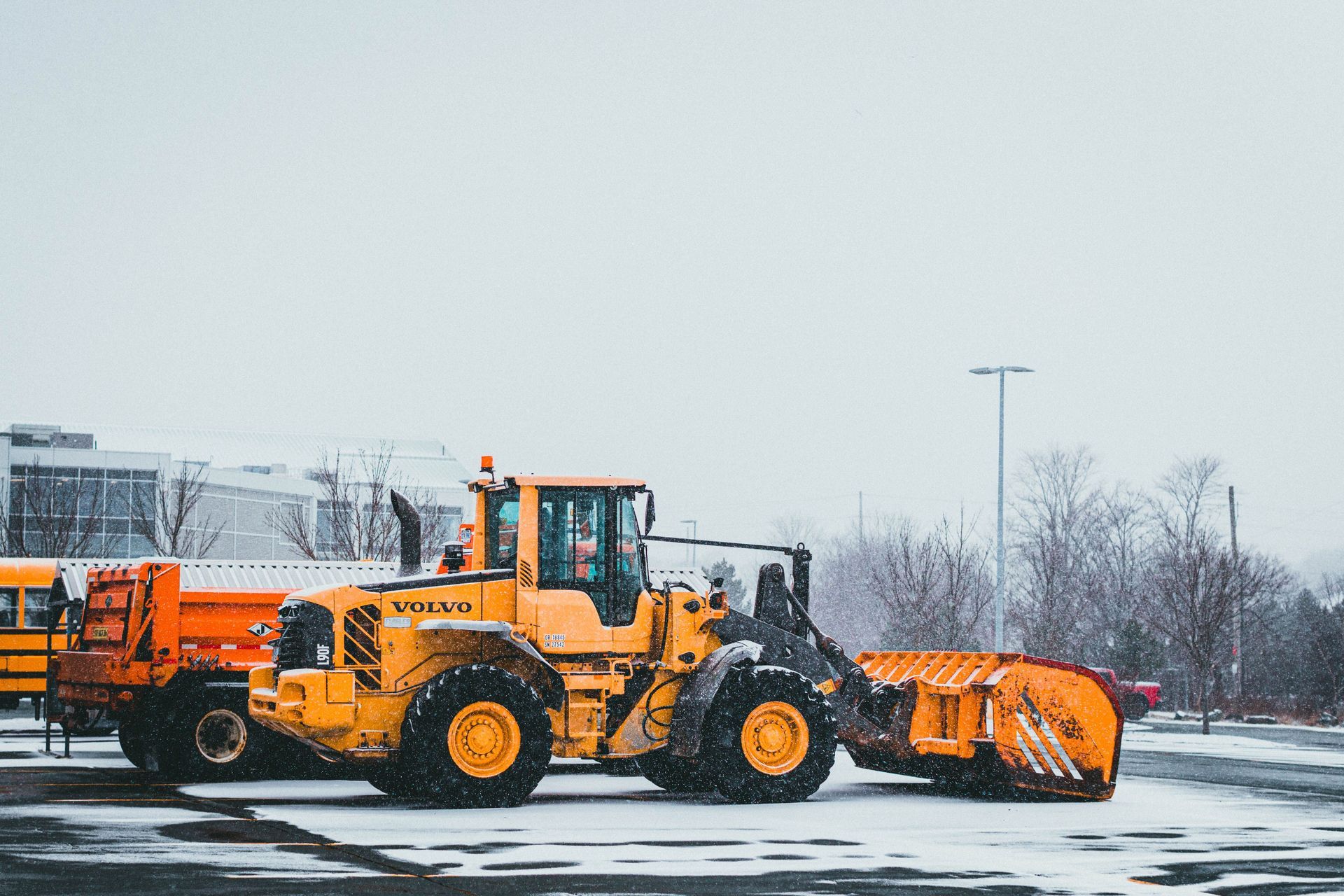
Yellow snowplow and front loader clearing a snowy parking lot in winter
By Brad Caton • October 12, 2026
How much snow removal equipment does your commercial property really need? Learn to evaluate a vendor's fleet capacity before the storm hits. ISO SN9001-certified Invictus serves the Pacific Northwest I-5 corridor. Request a quote.
Snow plow clearing a commercial parking lot in the Pacific Northwest at dawn
By Brad Caton • October 9, 2026
Trigger depth clauses tell you when a plow shows up — not when your property becomes a liability. See what a trigger depth actually covers, what SIMA's own guidance says it misses, and how Invictus Snowfighters' First Responder model closes the gap across the I-5 corridor. Request a quote.
Show More