How Much Snow Removal Equipment Does Your Property Need? | Invictus Snowfighters
Brad Caton • October 12, 2026
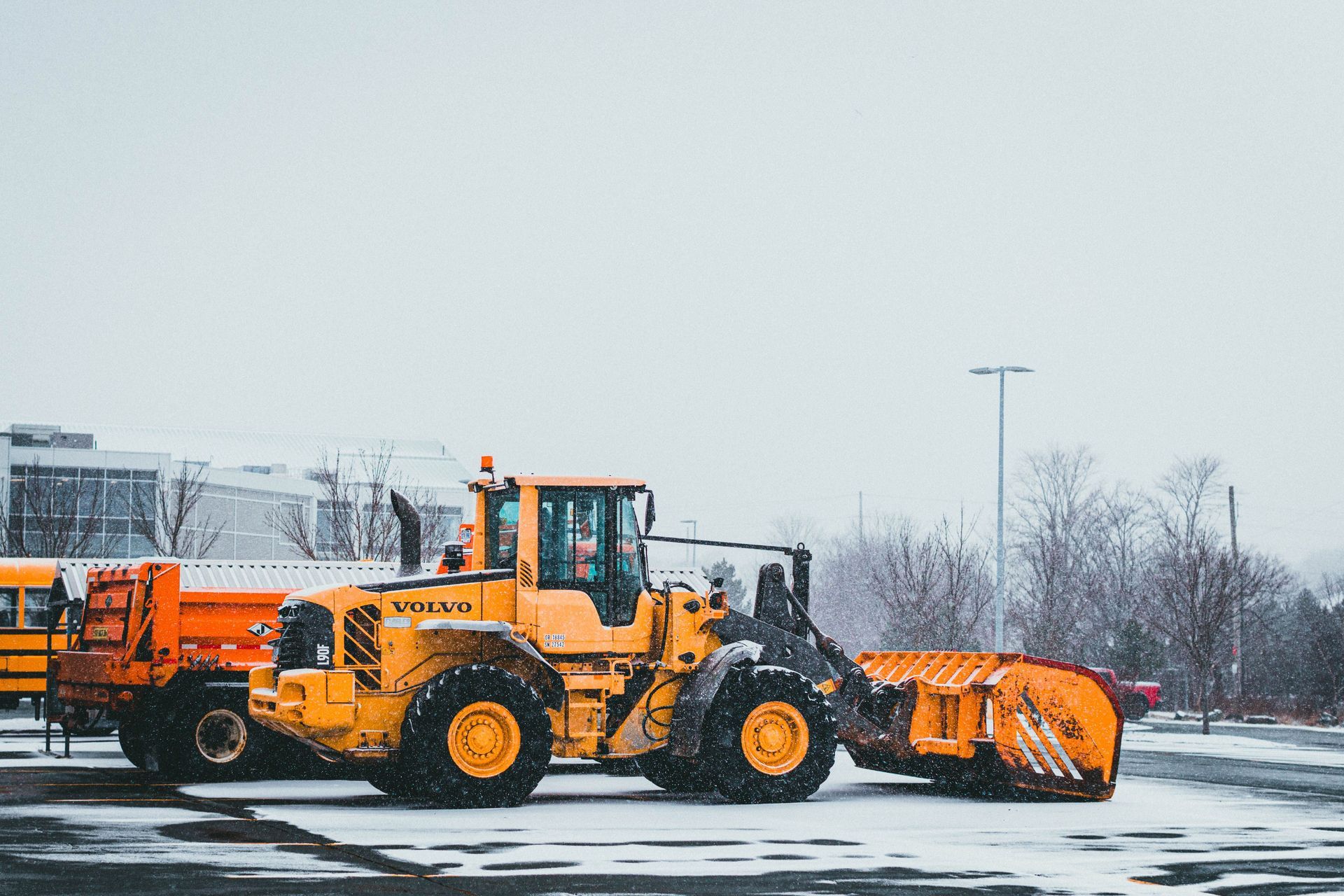
Brad Caton didn't learn this lesson from a textbook. In the early years of Invictus Snowfighters, a week of nonstop snowfall in the Pacific Northwest buried the company's crews under three feet of accumulation with only three or four guys and not nearly enough equipment to cover every job. The work didn't stop coming in; the trucks just couldn't be in two places at once. That week became the reason Invictus now over-procures equipment for every contract it signs, rather than the reason it should have been in the first place.
Invictus Snowfighters has serviced the Pacific Northwest since that lesson, and it shaped how the company builds capacity into every contract it signs today. Most property managers never see that side of a vendor relationship. They see a bid, a certificate of insurance, and a promise. They don't see the yard, the fleet, or the bench strength standing behind the promise until the first real storm exposes the gap. This guide walks through how to evaluate the snow removal equipment and crew capacity a commercial property actually needs, and how to tell whether the vendor in front of you has it.
Why "They'll Handle It" Isn't a Capacity Plan
Every snow removal proposal reads the same way: prompt response, professional crews, reliable service. None of that means anything if the vendor's fleet is already stretched across a dozen other properties when your lot needs clearing at 4 a.m. Capacity isn't a line item on a bid; it's the honest answer to a specific question: if three of your competitors' storms hit on the same night mine does, do you still show up on schedule?
That question matters more for commercial properties than most owners realize. A residential driveway can wait a few extra hours without much consequence. A commercial parking lot, loading dock, or walkway that isn't cleared on schedule becomes a liability exposure the moment the first person slips. Capacity planning is really risk planning wearing a different name.
What Level of Service Actually Determines Your Equipment Needs
The Snow & Ice Management Association's Standard Practice for Procuring and Planning Snow and Ice Management Services (SIMA-10-2025) puts a name to the piece most contracts skip: Level of Service, or LOS. The standard defines LOS as the documented description of the outcome a property expects, the conditions that trigger a dispatch, and the scope of work required to deliver it. Equipment and crew requirements aren't guessed at after the fact; they're sized to match whatever LOS the contract actually specifies.
A property with a "substantially clear of hazards by 6 a.m., regardless of storm timing" standard needs a fundamentally different equipment allocation than one that accepts next-business-day clearing. The tighter the response window, the more a vendor needs standing capacity, not capacity they can shuffle in from another job once the storm has already started. If your current contract doesn't spell out an LOS in writing, you have no real basis for judging whether the vendor's equipment is adequate, because "adequate" was never defined.
The Property Variables That Drive Equipment and Crew Requirements
Once the LOS is defined, the physical facts of the property determine what it takes to meet it. The variables that matter most:
- Total surface area and layout. Square footage of parking, drive lanes, walkways, and loading areas, plus how much of it is broken into disconnected sections that each need separate passes.
- Trigger depth and response window. A 1-inch trigger with a 2-hour response commitment demands far more standing equipment than a 3-inch trigger with next-morning service.
- Site complexity. Tight turning radii, structured parking, loading docks, and pedestrian-heavy walkways each require different equipment types, not just more of the same truck.
- Concurrent obligations. A single site is easy to staff. A vendor's obligations across every other property it services during the same storm is what actually determines whether your site gets its plow on time.
That last variable is the one most property managers can't see from a bid sheet, and it's the one that matters most. A vendor with three trucks and thirty contracts is making a bet that not everyone needs them at once. During a regional storm, that bet fails everywhere simultaneously.
Site Assessments: What a Capacity-Ready Vendor Documents Before the First Storm
SIMA-10-2025 also formalizes the site assessment step that separates a capacity-ready vendor from one that's guessing. A proper assessment documents drainage patterns, snow storage areas, hazard zones, and the equipment access routes for the specific property, not a generic checklist applied to every job the same way. It's also the step that reveals whether a site's layout requires equipment the vendor doesn't currently own.
Our ownpre-winter site assessment guidecovers what that documentation should include from the property manager's side. The point of asking a vendor to walk the property before signing isn't a formality. It's the only reliable way to confirm the equipment plan matches the site, instead of matching whatever the vendor happened to have available.
The Questions That Reveal Whether a Vendor Has the Capacity to Back Up Their Bid
A vendor's fleet size on paper doesn't tell you much without context. What actually reveals capacity:
- How many other properties are serviced within the same response window as yours, and where are they located relative to your site?
- What happens to your service priority if a storm hits every contract at once?
- Is equipment owned or subcontracted, and what happens when a subcontractor takes on other work mid-season?
- Is there dedicated backup equipment, or does a single breakdown take a route out of service?
We built out a fulllist of 20 questions to ask before hiring a commercial snow removal company, and a companionRFP scoring guidefor weighing the answers against each other. Capacity questions should carry real weight in that scoring, not get treated as a formality after price.
Why Multi-Property Portfolios Need Extra Buffer Capacity
Portfolio owners face a version of this problem that a single-site owner doesn't: the same storm hits every property in the portfolio at the same time, and a vendor sized for individual sites doesn't automatically scale to cover all of them at once. We wrote about the tradeoffs of splitting a portfolio acrossmultiple vendors versus consolidating with onethat has the fleet depth to actually cover the full portfolio, and capacity is the deciding factor either way. Budgeting for that consolidated approach still has to be realistic; ourguide to budgeting for commercial snow removal servicescovers how to plan for a season without guessing. A single vendor with sufficient standing equipment across a service area can prioritize and sequence a portfolio intelligently during a storm. Five vendors, each stretched thin on their own book of business, can't coordinate at all.
That's the reason geography matters as much as fleet size. Invictus operates continuously along the I-5 corridor from Vancouver, BC through Seattle to Portland, which means a portfolio spread across that footprint is served by one crew network with shared equipment reserves, not five disconnected local operators each betting their own small fleet is enough.
How Invictus Builds Capacity Into Every Contract
The lesson from that first brutal week never left the way Invictus plans equipment. Every new contract gets evaluated against current fleet capacity before it's signed, not after. Large commercial sites and multi-property portfolios get a dedicatedFirst Responder Unitstaged on or near the property, a stocked container of ice melt and product positioned to shorten response time instead of relying entirely on a truck driving in from elsewhere. It's the same instinct behind treating snow and ice management as first-responder work rather than another landscaping line item: people get hurt when equipment doesn't arrive in time, so the equipment plan gets built before the storm, not adjusted during it.
If you're evaluating whether your current vendor, or a prospective one, has the capacity to actually deliver on the Level of Service your property needs, our team can walk your site and lay out exactly what that looks like. Nailing down that plan early also matters for timing:commercial snow removal contracts in the Pacific Northwesttend to lock in well before the first snowfall, and the SIMA standard cited above recommends portfolios have contracts awarded no later than September 1 to leave time for a proper site assessment.Request a quote from Invictusand see how a capacity-first plan compares to what you have now, or start with ourfull range of snow and ice management servicesacross the Pacific Northwest.
Frequently Asked Questions
How do I know if my snow removal vendor has enough equipment for my property?
Ask for a written Level of Service commitment, then ask how many other properties are serviced within that same response window and where they're located. A vendor who can't answer both questions clearly hasn't sized their fleet to your site specifically.
Does a bigger property automatically need more equipment?
Size matters, but response window and site complexity matter just as much. A smaller site with a tight trigger depth and a 2-hour response requirement can demand more standing capacity than a larger site on a next-morning schedule.
What's the difference between owned and subcontracted equipment for capacity purposes?
Owned equipment is committed to the vendor's own contracts first. Subcontracted equipment can be pulled onto other jobs mid-season, which is why it's worth asking directly whether a vendor's capacity numbers include subcontractors and what happens if that subcontractor takes on other work.
Should a multi-property portfolio use one snow removal vendor or several?
A single vendor with sufficient fleet depth across the portfolio's geography can prioritize and sequence properties during a regional storm. Splitting a portfolio across several smaller vendors often means each one is independently under-resourced when the storm actually hits.
Recent Posts