
OSHA Cold-Stress Guidance and Snow Removal Crew Safety: What Property Managers Should Ask | Invictus Snowfighters

Brad Caton • August 26, 2026

Share this article

Most property managers vetting a commercial snow removal vendor ask about equipment, insurance, and response times. Almost none ask what happens to the crew standing on their parking lot at 4 a.m. after eighteen straight hours in freezing rain. That's a gap worth closing, because the Occupational Safety and Health Administration (OSHA) specifically names snow cleanup crews as one of the outdoor worker groups most exposed to cold stress and a fatigued, under-rotated crew doesn't just put workers at risk. It puts your service reliability at risk too.

Here's what OSHA's guidance actually says, why it matters to the property you manage, and what it should tell you about how a vendor staffs a multi-day storm.

Why This Work Is Physically Brutal, Not Just Inconvenient

Snow and ice management gets bundled in the public imagination with landscaping another outdoor maintenance service, scheduled and predictable. It isn't. "This is first responder business," is how Invictus founder Brad Caton describes it. "People die in snow and ice situations. When they slip and fall and hit their head, it happens." Unlike mowing a lawn, a storm doesn't wait for daylight, doesn't pause for a lunch break, and doesn't care how many trucks you have running. Crews work through the night, in freezing precipitation, for as long as the storm demands.

Caton learned that the hard way early in the company's history. During one multi-day storm that dropped roughly three feet of snow, his crew of three or four guys couldn't keep pace with the volume of work they'd taken on. "I don't think I slept, and we were falling behind because there was so much snow coming and we just didn't have enough equipment," he recalls. The lesson stuck: since then, Invictus has made a fixed practice of procuring enough equipment and enough crew capacity before taking on a new job, rather than finding out mid-storm that it's short.

What OSHA's Cold Stress Guidance Actually Says

OSHA doesn't have a single, dedicated standard covering cold-weather work. What it has instead is the General Duty Clause — Section 5(a)(1) of the Occupational Safety and Health Act — which obligates every employer to provide "a workplace free from recognized hazards likely to cause death or serious physical harm." OSHA's own Cold Stress Guide is explicit about who that duty covers: "Some workers may be required to work outdoors in cold environments and for extended periods, for example, snow cleanup crews, sanitation workers, police officers and emergency response and recovery personnel."

The agency's guidance lists the risk factors that drive cold stress toward hypothermia, frostbite, or trench foot: wetness, improper dressing and exhaustion. That third factor is the one property managers almost never think about. A crew that's been out for twelve or eighteen hours without relief isn't just tired. Per OSHA, exhaustion actively raises the risk of the kind of serious cold-weather injury that pulls a worker off the job mid-storm, and mid-shift losses are exactly when your property's coverage gets thin.

The progression OSHA describes is worth understanding, because it's not subtle once it starts. Mild cold stress shows up as shivering and stomping feet to generate heat a worker who's alert and can self-correct. Left unaddressed, it moves to moderate and severe symptoms: shivering stops, coordination breaks down, a worker becomes confused and disoriented, and in the worst cases loses consciousness. That's the OSHA definition of hypothermia risk, and it's also, not coincidentally, the profile of a worker who's more likely to misjudge a grade, miss a patch of black ice, or make an equipment-handling mistake. A vendor's crew-rotation policy isn't paperwork it's the difference between catching a worker at the "shivering and alert" stage and finding out only after something worse happens on your property.

Why a Fatigued Crew Is Your Problem, Not Just the Vendor's

OSHA's own recommended safe work practices for outdoor winter work detailed on its Winter Weather Preparedness page read like a staffing-depth checklist: assign relief workers and rotate extra crew in and out for long, demanding jobs; use the buddy system so workers can monitor each other for symptoms; provide warm break areas; and monitor weather conditions with a reliable way to communicate and, if needed, stop work. Every one of those practices requires a vendor to have bench strength more trucks and more people than the bare minimum a single storm requires.

A vendor without that depth faces an ugly choice mid-storm: push an exhausted crew past the point OSHA flags as high-risk, or pull them off site and leave your parking lot, walkways, and loading docks uncleared during the exact window your liability exposure is highest. Neither outcome is one you want to discover for the first time during a three-day system.

What to Ask a Snow Removal Vendor Before You Sign

A vendor's answers to these questions tell you more about how they'll actually perform during a multi-day event than any glossy capabilities sheet:

  • Do you rotate crews in and out during extended storms, or does one shift run until the job is done?
  • How many properties can one crew realistically cover before you bring in relief workers?
  • Do you train crews on cold-stress recognition, or leave it to individual judgment?
  • If a crew is pulled for safety reasons mid-storm, what's your backup plan for my property specifically?

Vendors covering a single, narrow service area often can't answer the last question well they don't have another crew close enough to redeploy. That's part of why evaluating a snow removal company's equipment and staffing capacity before you sign matters as much as checking their insurance certificate.

How Invictus Builds Crew Depth Into Service Reliability

Invictus's answer to the staffing-depth question starts with geography. As the only commercial snow removal services provider with crews and equipment staged across the full I-5 corridor Vancouver, BC through Seattle to Portland the company can shift resources across a wide footprint instead of running one crew flat-out on a single patch of properties. That's the direct, practical result of the lesson Caton took from that first understaffed storm: procure and position enough equipment and people before the job starts, not after it's already behind.

On large commercial sites, that preparation shows up as the company's on-site "first responder unit" a staged 40-foot container loaded with ice melt and product, positioned on the property itself so crews can respond faster without a long round-trip to resupply mid-storm. It's a small operational detail, but it's the kind of redundancy that keeps a crew from running the kind of back-to-back, unrelieved hours OSHA flags as high-risk. Clients who've worked with the team describe the result in plain terms: "if you got a problem, give it to Brad, he'll fix it." That's Invictus's team in a sentence prepared enough going into a storm that fixing problems is the exception, not the routine.

The same logic that governs crew safety governs Invictus's broader operating model. The company is still self-performing rather than subcontracting its routes, which is increasingly rare as private equity consolidates the snow removal industry and stretches subcontractor networks thinner during peak demand. It also holds ISO SN9001 certification, which requires documented operating procedures the same kind of formal process that makes crew rotation a standing policy rather than a judgment call made at 3 a.m. by a foreman who hasn't slept. And it applies the same staffing-depth thinking to specialized properties, including the OSHA duties that come with warehouse and distribution center snow removal, where 24-hour operations mean there's no "storm's over, we'll finish tomorrow" option.

Frequently Asked Questions

  • Does OSHA require snow removal companies to follow specific cold-weather safety rules?

    Not through a dedicated standard. OSHA regulates cold-weather work through the General Duty Clause, which requires employers to keep workers free from recognized hazards, and its own guidance explicitly names snow cleanup crews as a group exposed to cold stress risk. 

  • What happens to my property's service if my vendor's crew is short-staffed during a storm?

    It depends entirely on whether the vendor has relief crews and equipment positioned to redeploy. A vendor running one crew with no backup has to choose between pushing an exhausted crew or leaving your property uncleared; a vendor with regional depth can rotate in fresh coverage. 

  • Is crew fatigue actually connected to service quality, or is this just a safety issue?

    Both. OSHA lists exhaustion as a direct risk factor for cold stress injuries, and a crew nearing that point is also more likely to miss a pass, misjudge an icy grade, or make the kind of error that shows up as a slip-and-fall claim on your property. 

  • Does a certification like ISO SN9001 have anything to do with crew safety?

    Indirectly, yes. SN9001 certification requires a company to document and follow standardized operating procedures rather than leaving decisions to whoever is on shift. A vendor operating under that kind of formal system is more likely to have a written crew-rotation policy than one running on informal habits.. 

If you manage a commercial property along the I-5 corridor and want to know exactly how your current vendor staffs a multi-day event, request a quote from Invictus and ask the crew-rotation questions above as part of the conversation.

Recent Posts

Property manager and maintenance contractor shaking hands in a commercial parking lot
By Brad Caton • October 16, 2026
Managing five property maintenance vendors instead of one costs hours every month. See how commercial property managers consolidate winter service with the rest of their maintenance calendar, from a company serving 500+ Pacific Northwest properties for 30+ years. Get a quote.
Snowplow clearing a large commercial parking lot for a multi-property portfolio contract in the Pacific Northwest
By Brad Caton • October 14, 2026
Multi-property snow removal contracts consolidate a fragmented, sole-proprietor-heavy market into one accountable partner. See what portfolio bundling actually saves, what to verify first, and the one trade-off to watch. Request a quote.
Yellow snowplow and front loader clearing a snowy parking lot in winter
By Brad Caton • October 12, 2026
How much snow removal equipment does your commercial property really need? Learn to evaluate a vendor's fleet capacity before the storm hits. ISO SN9001-certified Invictus serves the Pacific Northwest I-5 corridor. Request a quote.
Snow plow clearing a commercial parking lot in the Pacific Northwest at dawn
By Brad Caton • October 9, 2026
Trigger depth clauses tell you when a plow shows up — not when your property becomes a liability. See what a trigger depth actually covers, what SIMA's own guidance says it misses, and how Invictus Snowfighters' First Responder model closes the gap across the I-5 corridor. Request a quote.
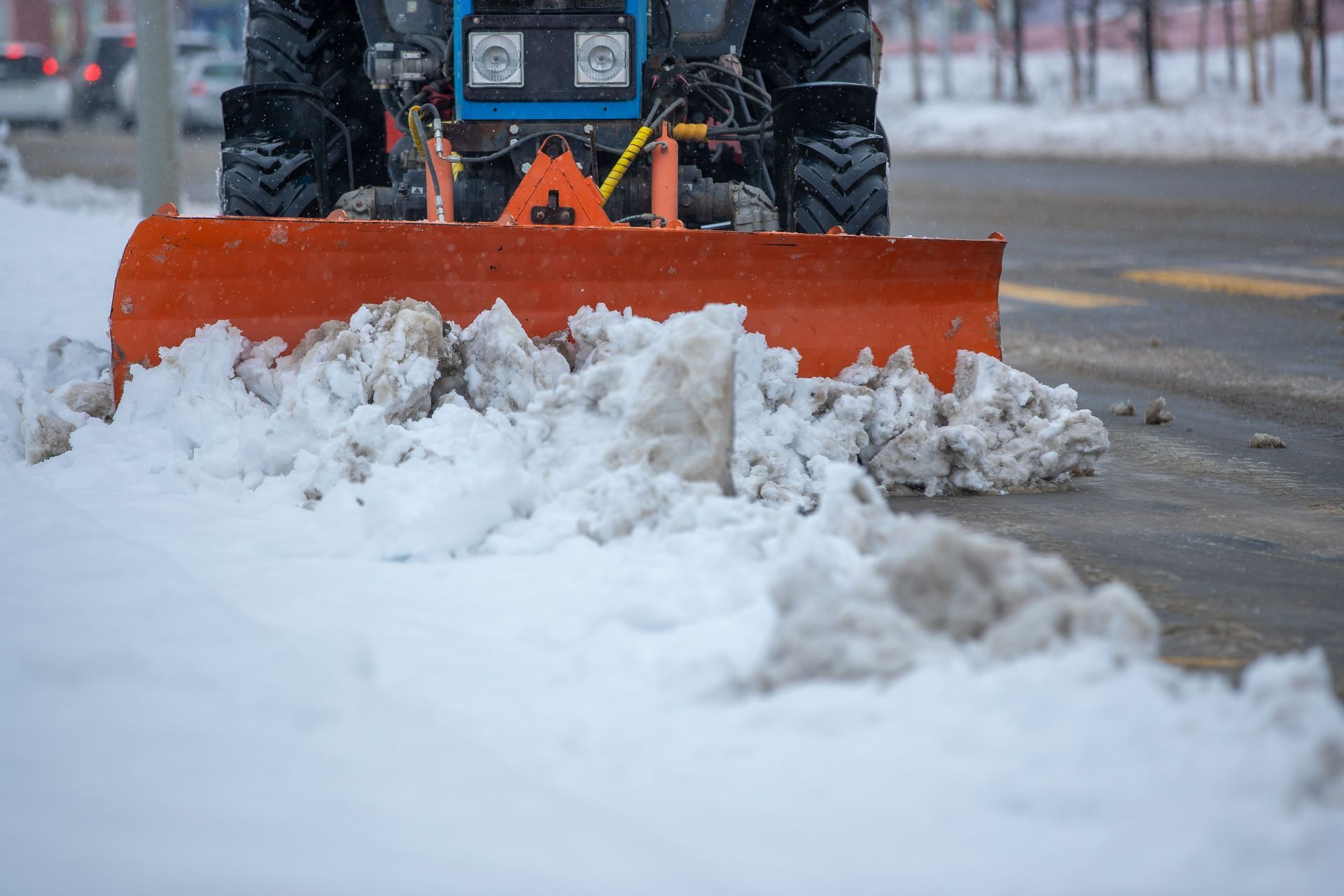
Snowplow clearing snow from a road, with a bright orange blade pushing slush forward
By Brad Caton • October 7, 2026
In-house vs. outsourced snow removal: how Pacific Northwest property managers can weigh liability, equipment costs, and staffing. ISO SN9001-certified Invictus explains what to ask. Get a quote.
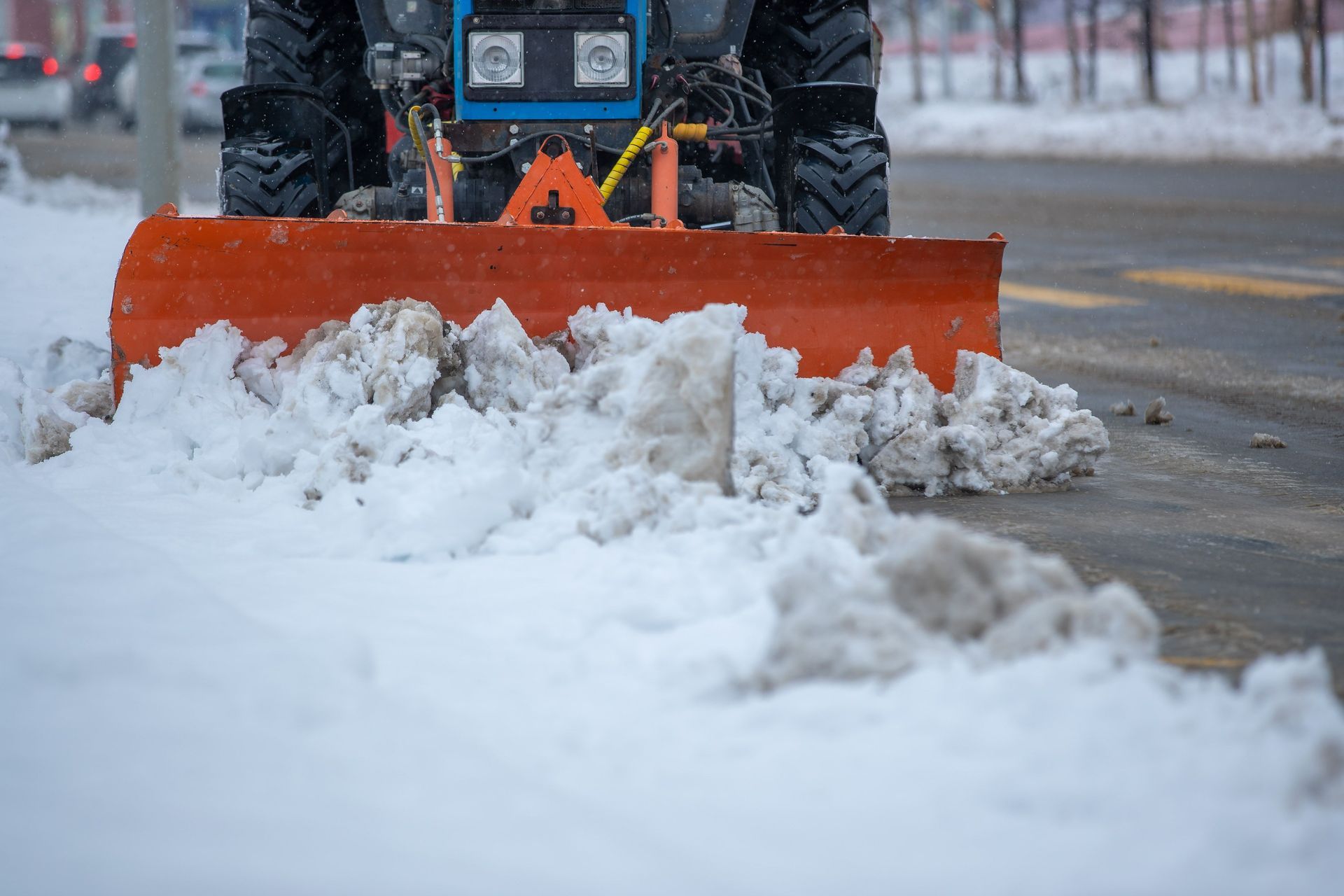
Person operating an orange snow plow clearing slush from a snowy road
By Brad Caton • October 5, 2026
Switching commercial snow removal providers takes more than a phone call — termination clauses, auto-renewal traps, and a coverage gap can all bite you. See the safe sequence for switching before winter, from a PNW snow contractor that's covered the I-5 corridor since 1990. Request a quote.
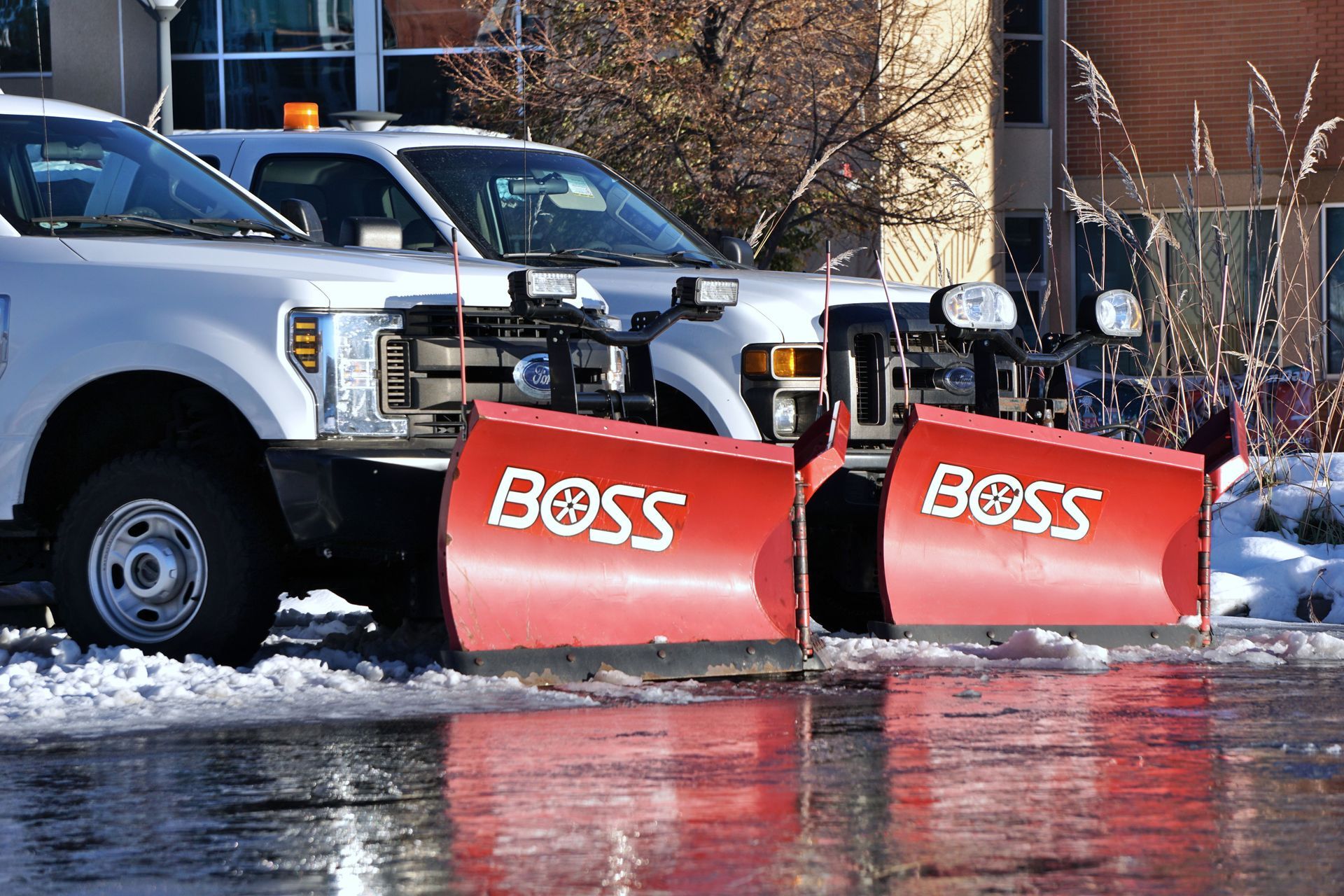
Fleet of commercial snowplow trucks staged in a yard before a winter storm in the Pacific Northwest
By Brad Caton • October 2, 2026
Snow removal equipment and staffing capacity is the best predictor of whether your site gets serviced in the worst storm of the season. Invictus breaks down the capacity math, real response-time standards, and the questions that expose an overextended contractor. Request a quote.
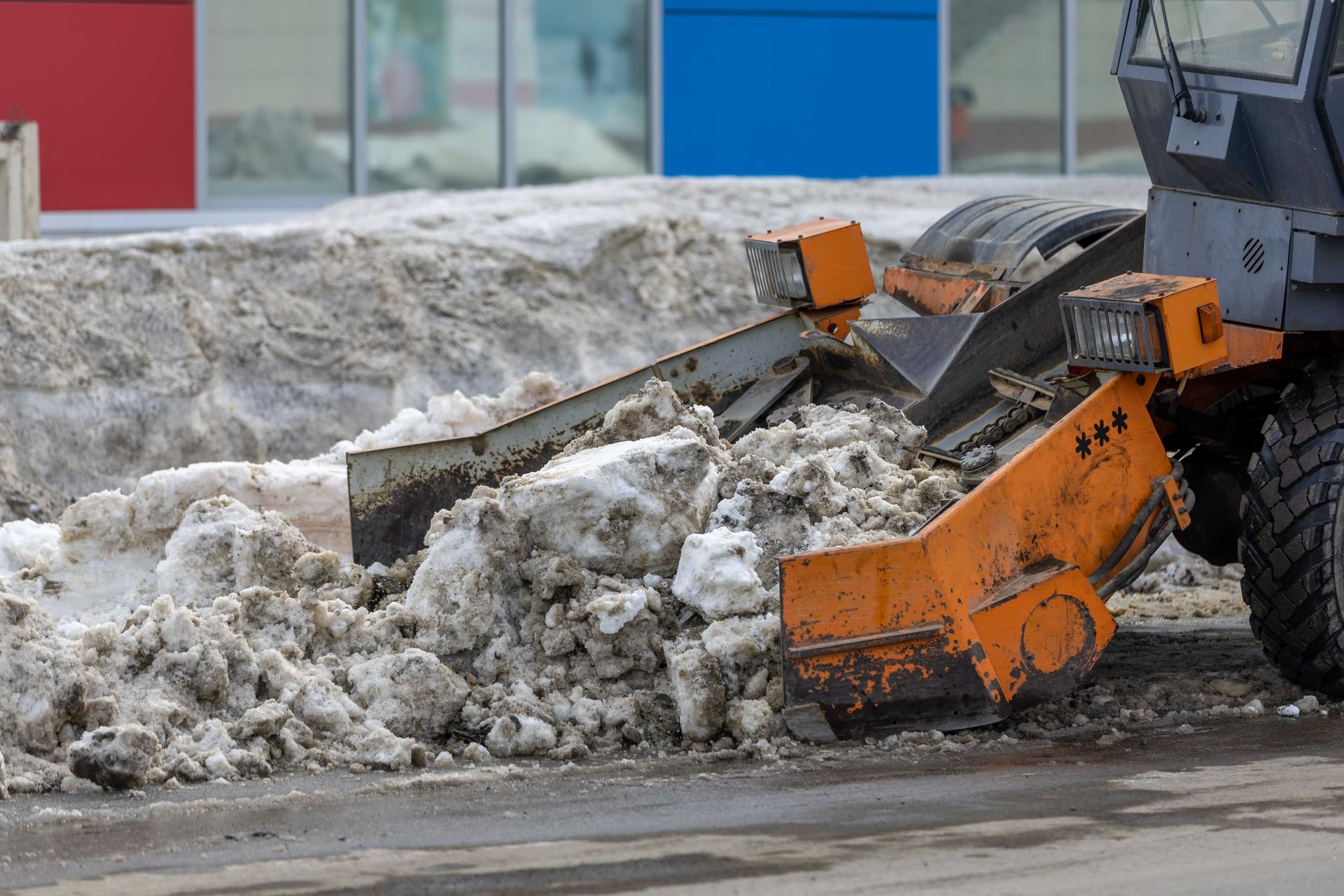
Orange snowplow clearing a large snowbank on a street beside colorful buildings
By Brad Caton • October 1, 2026
Industrial and manufacturing plant snow removal must meet OSHA's general industry standards for walking-working surfaces and powered trucks. See what ISO SN9001-certified Invictus recommends before winter. Get a quote.
Orange snowplow trucks clearing a snowy parking lot in winter
By Brad Caton • September 30, 2026
Snow removal contractor insurance shouldn't be assumed. See what coverage and documentation ISO SN9001-certified Invictus verifies before every contract. Get a quote.

Downtown Vancouver skyline in winter snow with the North Shore mountains
By Brad Caton • September 28, 2026
A record El Niño winter is forecast. What it means for snow and ice on Metro Vancouver commercial properties, what history shows, and what to do before the first arctic outflow.
Show More