
Property Maintenance Vendor Consolidation: A Practical Guide

Brad Caton • October 16, 2026

Share this article

Every commercial property manager who has coordinated a snow event, a landscaping cleanup, and a parking lot sweep in the same week already knows the real cost of the job: it isn't the invoices, it's the coordination. Three vendors mean three points of contact, three sets of paperwork, and three different people to chase when something falls through. Multiply that across a portfolio of properties and the administrative load can rival the maintenance work itself.

Vendor consolidation, bringing more of that maintenance workload under fewer, more capable providers, is a standard cost and time-saving strategy in facilities management generally. It's less commonly applied deliberately to winter services, even though snow and ice management is often the highest-stakes, most time-sensitive line item on a commercial property's maintenance calendar. Mid-summer, with no storm on the horizon, is the right time to look at that relationship and ask whether it should be doing more.

The Hidden Cost of Managing Multiple Property Maintenance Vendors

Facility management aggregator CLS Facility Services lays out the problem plainly: a facility team overseeing even a modest portfolio typically manages a roster of vendors that ranges from several to more than a dozen, each with its own onboarding process, its own work order system, and its own invoicing quirks. CLS's breakdown of vendor consolidation identifies the workload this creates: building and maintaining relationships, handling paperwork and financial transactions, resolving service issues, and reviewing vendor performance, on top of the actual maintenance work getting done.

First Citizens Bank's small business guidance frames the upside from a different angle. Its analysis of vendor consolidation notes that reducing vendor count cuts the employee hours spent managing those relationships, can reduce product and management costs, and, when done with strategic partners rather than commodity providers, moves the relationship from reactive to proactive. The bank also points out that outside of IT, most small and mid-sized businesses already default to one or two vendors per category, payroll, accounting, insurance, precisely because juggling more than that rarely pays off.

Winter services are often the exception. Property managers who consolidate almost everything else still treat snow removal as a seasonal, standalone contract, signed separately from landscaping, parking lot maintenance, and general property upkeep. That's worth reconsidering.

What Vendor Consolidation Actually Means for a Property Portfolio

Consolidation doesn't mean handing one contractor every task on the property, regardless of whether they're actually good at it. It means identifying which vendors are core to the properties running safely and well, and deepening those relationships instead of spreading the same scope across more providers than the portfolio needs. For a multi-property commercial owner, that usually starts with whichever vendor already carries the highest-stakes, most time-critical responsibility.

For properties in the Pacific Northwest, that's almost always snow and ice management. A missed snow removal window creates a life-safety and liability exposure that a missed landscaping visit simply doesn't. A provider that has already proven it can hit that bar under pressure is a reasonable starting point for expanding the relationship, not a random pick.

Why Snow Removal Is a Natural Anchor for a Consolidated Relationship

Invictus built its winter operations around theFirst Responder Unitstandard: dedicated, equipment-matched crews staged and ready before a storm hits, not scrambling to source trucks after the snow starts falling. That same operational discipline, procuring enough equipment and staff before taking on a contract rather than after, is exactly the kind of reliability a property manager wants from a maintenance partner they're trusting with more of the property, not less.

The company's geographic footprint reinforces the case. Invictus is the only operator running snow removal in Vancouver, snow removal in Seattle, and snow removal in Portland with its own crews, covering the full I-5 corridor on both sides of the US-Canada border. A property manager overseeing a multi-city portfolio who consolidates winter services with a provider that already spans all three markets removes a geography problem before it starts, instead of managing a different local vendor in each city.

The company's own transcript from a recent brand interview makes the point directly: beyond snow and ice, Invictus already handles adjacent site work for some clients, including concrete paving and hard-surface court maintenance, precisely because a property manager who trusts a vendor with the highest-stakes seasonal work is often glad to hand them more of the calendar, rather than manage it in pieces.

What to Look for in a Provider Before You Consolidate

Not every winter contractor is a candidate for a broader relationship. Before expanding scope with any provider, a few things are worth confirming:

  • Equipment and crew capacity are dedicated, not shared. A provider that overcommits during storm season will overcommit on every other service line too. Ask how contracts are staffed before they're signed, not after a missed visit.
  • Documentation is built in, not an afterthought.Our guide to vetting a snow removal company covers the specific questions worth asking here, and most of them, insurance, service verification, response-time commitments, apply just as well to a broader maintenance relationship.
  • Pricing structure is transparent across service lines. A clear pricing guide for the winter contract is a reasonable proxy for how the same company will price additional work; vague or bundled-without-detail pricing on one service line tends to repeat on the next.
  • One point of contact, for emergencies and everything else. This is the single benefit CLS's research keeps coming back to: the same person who answers when a pipe bursts should be the same person a property manager calls about a snow event.

How to Start the Conversation With Your Current Provider

Mid-summer is a better time to have this conversation than October. Snow removal contractors aren't fielding storm calls, sales teams have time for a real scoping conversation instead of a rushed signature, and property managers still have a full off-season to test any new service line before winter puts it under real pressure.Locking in a winter contract during the summeralready carries its own advantages; using that same window to talk through a broader relationship costs nothing extra.

Start with an honest scope conversation: what is the vendor already doing well, what additional site work does the portfolio actually need, and does the vendor have real capacity in those areas or would they be subcontracting it out, which erodes much of the single-point-of-contact benefit in the first place. A provider'sservice level agreementis a useful anchor document for this conversation, since the response-time and documentation standards a property manager already negotiated for snow removal are a reasonable baseline to hold any additional service to. It's also worth revisiting how the portfolio budgets for maintenance broadly;how we recommend budgeting for winter services annuallyextends naturally to a consolidated scope.

Common Pitfalls: When Consolidation Goes Wrong

Consolidation isn't automatically the right call, and First Citizens' own guidance is candid about the risk: concentrating too much of a property's maintenance budget with one vendor can leave a portfolio exposed if that vendor runs into a problem, whether that's a capacity issue, a financial issue, or simply being spread too thin across services it isn't built for.

The way to manage that risk isn't to avoid consolidation, it's to consolidate deliberately. Keep the vendor's core competency, in this case winter response, as the anchor, and expand scope only into adjacent work the same crews and management systems can genuinely support. A provider that has demonstrated it won't overcommit equipment during a storm is a reasonable bet for the same discipline elsewhere; a provider that has never proven that under pressure is not.

Frequently Asked Questions

  • Does consolidating with a snow removal provider mean giving up separate landscaping or maintenance contracts entirely?

    No. Consolidation is about reducing the number of vendors to the ones that can genuinely support more of the scope, not defaulting everything to a single contractor regardless of fit. Start with the highest-value adjacent service and expand only as the vendor proves it out. 


  • Is summer really the right time to have this conversation?

    Yes. Winter contractors have far more availability for a real scoping discussion outside storm season, and a property has a full off-season to evaluate any expanded service before it matters most. 

  • What's the biggest red flag when evaluating a provider for a broader relationship?

    Subcontracting. If a provider is expanding into new service lines by handing the work to subcontractors rather than staffing it directly, much of the single-point-of-contact and accountability benefit disappears. 

  • Does a multi-city portfolio change the calculation?

    It strengthens the case for consolidation. A provider with real operations across every city in the portfolio, rather than a single-market contractor, removes the need to manage a different local vendor relationship in each location. 

Bring It Under One First Responder Relationship

A snow and ice contractor that has already proven it won't overcommit crews under pressure, and that documents every visit rather than relying on handwritten notes, is a reasonable place to start when deciding which vendor relationship is worth deepening. For property managers across the I-5 corridor, that conversation is worth having before the season, not during it.

Invictus works with commercial property managers across Vancouver, Seattle, and Portland who are evaluating exactly this kind of consolidated relationship. Reach out to talk through what's already on your maintenance calendar and where a single, accountable provider could simplify it.

Recent Posts

Snowplow clearing a large commercial parking lot for a multi-property portfolio contract in the Pacific Northwest
By Brad Caton • October 14, 2026
Multi-property snow removal contracts consolidate a fragmented, sole-proprietor-heavy market into one accountable partner. See what portfolio bundling actually saves, what to verify first, and the one trade-off to watch. Request a quote.

Yellow snowplow and front loader clearing a snowy parking lot in winter
By Brad Caton • October 12, 2026
How much snow removal equipment does your commercial property really need? Learn to evaluate a vendor's fleet capacity before the storm hits. ISO SN9001-certified Invictus serves the Pacific Northwest I-5 corridor. Request a quote.
Snow plow clearing a commercial parking lot in the Pacific Northwest at dawn
By Brad Caton • October 9, 2026
Trigger depth clauses tell you when a plow shows up — not when your property becomes a liability. See what a trigger depth actually covers, what SIMA's own guidance says it misses, and how Invictus Snowfighters' First Responder model closes the gap across the I-5 corridor. Request a quote.
Snowplow clearing snow from a road, with a bright orange blade pushing slush forward
By Brad Caton • October 7, 2026
In-house vs. outsourced snow removal: how Pacific Northwest property managers can weigh liability, equipment costs, and staffing. ISO SN9001-certified Invictus explains what to ask. Get a quote.
Person operating an orange snow plow clearing slush from a snowy road
By Brad Caton • October 5, 2026
Switching commercial snow removal providers takes more than a phone call — termination clauses, auto-renewal traps, and a coverage gap can all bite you. See the safe sequence for switching before winter, from a PNW snow contractor that's covered the I-5 corridor since 1990. Request a quote.
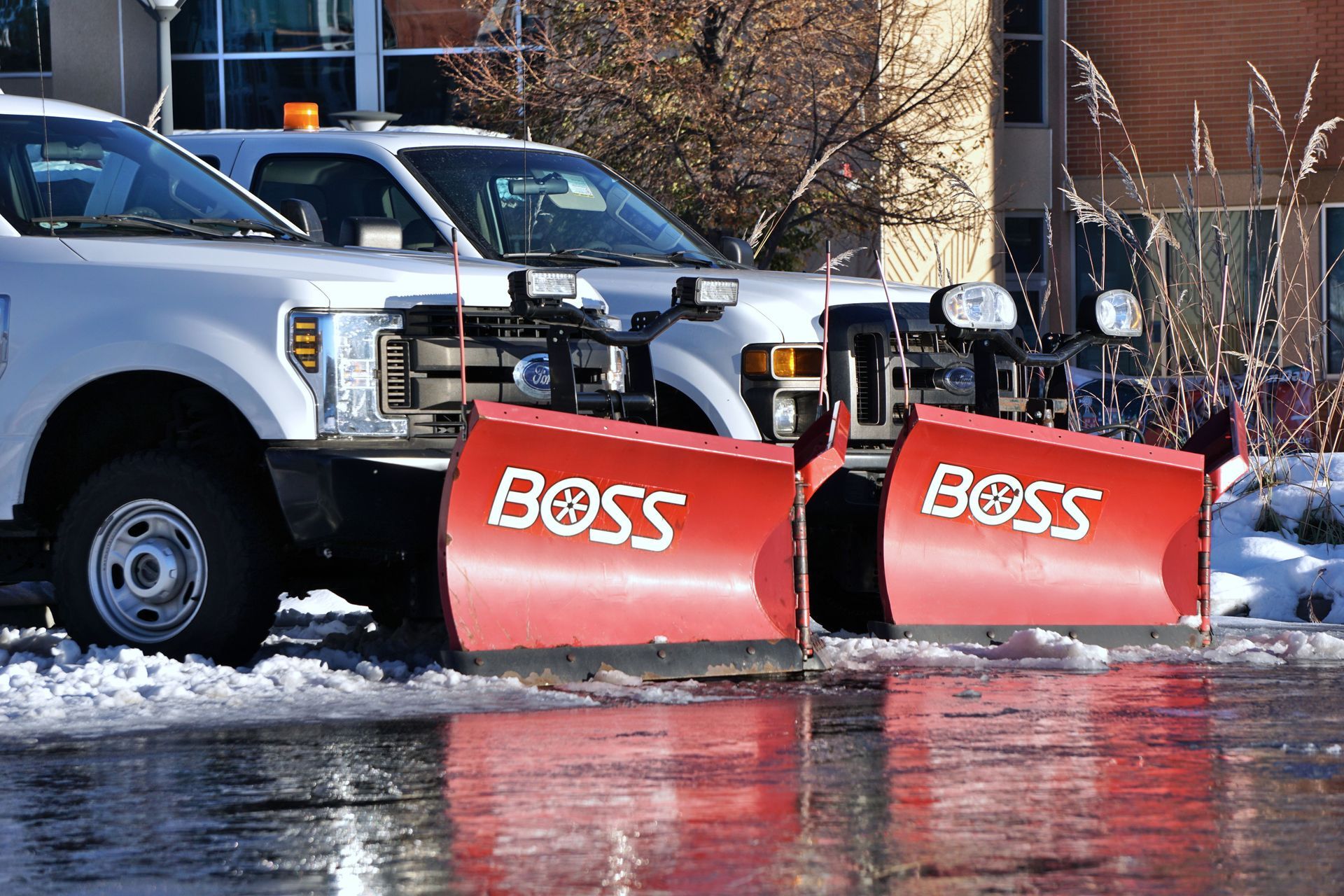
Fleet of commercial snowplow trucks staged in a yard before a winter storm in the Pacific Northwest
By Brad Caton • October 2, 2026
Snow removal equipment and staffing capacity is the best predictor of whether your site gets serviced in the worst storm of the season. Invictus breaks down the capacity math, real response-time standards, and the questions that expose an overextended contractor. Request a quote.
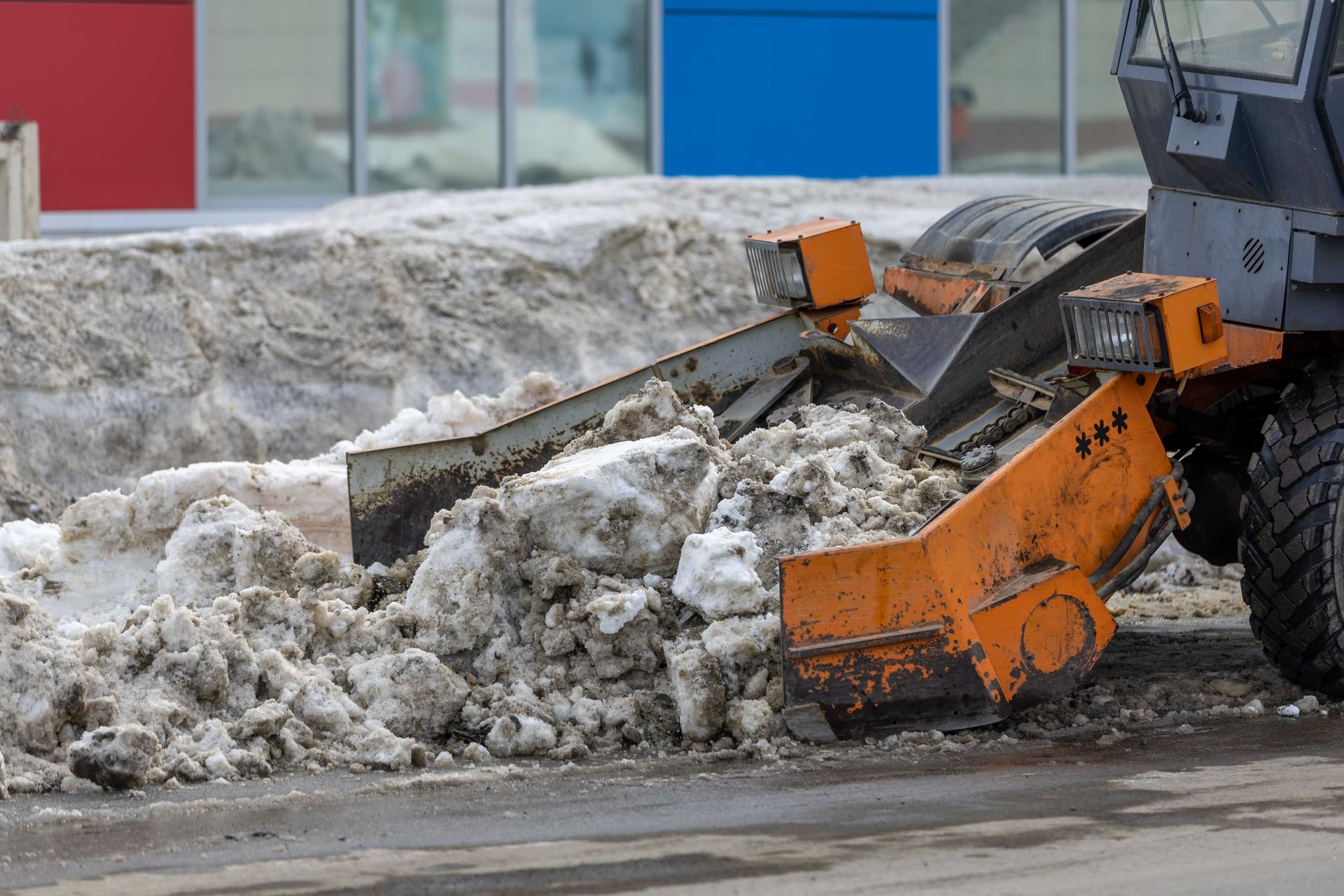
Orange snowplow clearing a large snowbank on a street beside colorful buildings
By Brad Caton • October 1, 2026
Industrial and manufacturing plant snow removal must meet OSHA's general industry standards for walking-working surfaces and powered trucks. See what ISO SN9001-certified Invictus recommends before winter. Get a quote.

Orange snowplow trucks clearing a snowy parking lot in winter
By Brad Caton • September 30, 2026
Snow removal contractor insurance shouldn't be assumed. See what coverage and documentation ISO SN9001-certified Invictus verifies before every contract. Get a quote.

Downtown Vancouver skyline in winter snow with the North Shore mountains
By Brad Caton • September 28, 2026
A record El Niño winter is forecast. What it means for snow and ice on Metro Vancouver commercial properties, what history shows, and what to do before the first arctic outflow.

Downtown Seattle skyline in winter snow with the Space Needle and Mount Rainier
By Brad Caton • September 28, 2026
A record El Niño is forecast. What it means for snow and ice on Seattle-area commercial properties, why 2019 and 1996 still matter, and what to do before the first cold snap.
Show More