

Snow Removal Invoice Disputes: How GPS Documentation Protects You | Invictus Snowfighters

Brad Caton • August 27, 2026

Share this article

A storm hits. Your snow removal vendor says they plowed every lot in your portfolio overnight. The invoice arrives a week later listing eight visits across three properties but you weren't there, your tenants didn't see a truck, and there's no way to check whose account of the night is accurate. That gap between what a vendor bills and what a property manager can actually verify is where most commercial snow removal invoice disputes start. It isn't usually fraud. It's the absence of a record.

For property managers overseeing multi-property portfolios across the Pacific Northwest, that gap gets worse with scale. One property is easy to eyeball. Twenty properties spread across Vancouver, Seattle, and Portland are not. This post looks at why snow removal billing disputes happen, what GPS-verified, geo-fenced documentation actually does to close that gap, and what to require from any vendor servicing your portfolio.

Why Commercial Snow Removal Invoices Get Disputed

Snow and ice management has historically run on trust and paper. A driver finishes a route, jots down which lots got plowed and how much salt went down, and that note becomes the basis for an invoice days later. Multiply that across a storm week with dozens of properties and multiple subcontracted crews, and small gaps in recordkeeping compound into invoices nobody can fully verify.

Invictus Snowfighters, the ISO SN9001-certified snow and ice management company serving the I-5 corridor from Vancouver, BC through Seattle to Portland, has seen this play out from the inside. Before formalizing its own documentation systems, the business ran on the same handwritten habits common across the industry — notes taken in the field and reconstructed later for invoicing. That works for a two-truck operation. It breaks down the moment a portfolio spans multiple cities and dozens of properties, because there's no shared, timestamped record both sides can point to when a bill is questioned.

The dispute itself is rarely about dishonesty. It's about the property manager and the vendor working from two different, unverifiable accounts of the same night.

What "Proof of Service" Means in Practice

Outside the snow industry, the fleet and field-service world has already standardized around a fix: GPS-based proof of service. GPS Tracking America's explainer on proof-of-service tracking describes it as a digital service record built from vehicle location data, timestamps, and geofence entry and exit events — a record that exists independent of what anyone remembers or writes down after the fact. US Fleet Tracking's guide to GPS tracking for snow removal services makes the same case specifically for winter operations: location data tied to route and timestamp data gives the vendor and the customer the same account of what happened, which is what actually resolves a billing dispute rather than prolonging it.

The Snow & Ice Management Association (SIMA), the industry's own non-profit trade association, describes its mission as empowering snow and ice professionals to "adhere to the highest industry standards" — and documentation of service is a core part of what separates a professional operation from an informal one.

How Geo-Fenced Documentation Actually Works

In practice, geo-fenced service verification means every property on a contract gets a digital boundary. When a plow or crew enters that boundary, the system logs the time. When they leave, it logs that too. Combined with photo documentation and a timestamped service report, that produces a record that says, unambiguously, "a truck was on this property from 2:14 a.m. to 2:41 a.m." No property manager has to take a vendor's word for it, and no vendor has to rely on a driver's memory three days after a storm.

Invictus builds this into its standard operations across every contract: geo-fenced service records for every visit, real-time photo documentation, and a phone app that gives property managers live status updates during a storm instead of a summary invoice a week later. That's the operational backbone behind commercial snow removal in Vancouver, Seattle, and Portland — the same documentation standard applies everywhere Invictus operates, because a portfolio spanning cities only works if every property is held to the same record-keeping standard. It's also part of why prevention gets documented the same way response does: pre-storm applications of Easy Ice Melt, Invictus's LEED-compliant liquid de-icing system, get logged on the same timestamped record as the plow visits that follow.

Why This Matters More for Multi-Property Portfolios

A single-property owner who disputes one invoice is dealing with one relationship and one bill. A property manager running a portfolio across Vancouver, Seattle, and Portland is dealing with dozens of invoices from what may be multiple vendors, each with its own recordkeeping habits — and every unverifiable line item adds friction to the accounting process. Consolidating a portfolio under one vendor with one documentation standard doesn't just simplify who to call during a storm; it means every invoice, across every city, can be checked against the same kind of geo-fenced record.

That consolidation is part of why Invictus built its coverage the way it did: boots-on-the-ground operations across the whole I-5 corridor rather than sourcing work out to a patchwork of local subcontractors with inconsistent reporting standards. A portfolio with properties in, say, Burnaby and the Seattle suburb of Bellevue gets the same geo-fenced record from both, on the same invoice, from the same vendor. A property manager comparing five separate vendor invoices, five different note-taking habits, and five different definitions of "serviced" is doing accounting work that consistent documentation is built to eliminate.

Documentation Does Double Duty: Billing and Liability

Invoice verification isn't the only reason documentation matters in this industry — and it may not even be the most important one. Snow and ice management is a life-safety service. People are injured, sometimes seriously, in slip-and-fall incidents on unmanaged ice. When that happens, the same geo-fenced, timestamped service record that verifies an invoice is also the record that shows a property was serviced on schedule, which matters if a claim is ever filed.

That's a deliberate part of how Invictus operates: the geo-fencing technology and documentation built for accurate billing double as the record property managers and their insurers need if a slip-and-fall claim ever goes to litigation. A vendor that can't produce a timestamped service record for a specific property on a specific night can't answer either question — was the invoice accurate, or was the lot serviced on schedule — and a property manager is exposed on both fronts at once.

What to Ask Any Snow Removal Vendor About Documentation

Before signing or renewing a commercial snow removal contract, property managers overseeing multi-property portfolios should get clear answers to a short list of questions:

  • Does the vendor use GPS geofencing to log entry and exit times for every property, or does documentation rely on driver notes?
  • Is photo documentation captured and timestamped at the time of service, not reconstructed afterward?
  • Can the vendor produce a service record for a specific property on a specific date within minutes, not days?
  • Is the same documentation standard applied across every city in the portfolio, or does it vary by subcontractor?
  • Does the vendor's invoicing tie directly to the service record, or is it assembled separately from field notes?

A vendor that can answer all five without hesitation has built documentation into its actual operations. A vendor that can only answer the first one or two is still running on the trust-based system that creates disputes in the first place.

Frequently Asked Questions

  • What causes most commercial snow removal billing disputes?

    Most disputes trace back to a lack of independent, timestamped proof that a property was actually serviced not deliberate overbilling. When a vendor's only record is a driver's handwritten notes, both sides are working from an account that can't be checked. 

  • How does GPS-verified documentation resolve an invoice dispute?

    Geo-fenced service records log the exact time equipment entered and left a property, independent of anyone's memory or notes. That timestamped record gives both the property manager and the vendor the same account of what happened, which is what actually settles a dispute. 


  • Is this only useful during a billing disagreement?

    No. The same geo-fenced, timestamped record that verifies an invoice also serves as documentation that a property was serviced on schedule — which matters directly if a slip-and-fall claim is ever filed against the property. 

  • Does this matter more for a multi-property portfolio than a single site?

    Yes. A portfolio spanning multiple cities multiplies the number of invoices and vendor relationships a property manager has to verify. Consolidating under one vendor with one consistent documentation standard removes most of that reconciliation work. 

Protecting Your Portfolio This Winter

Snow removal billing disputes are almost always a documentation problem, not a trust problem — and it's a problem the industry already knows how to solve. GPS-verified, geo-fenced service records give property managers the same account of a storm night that their vendor has, which is what actually prevents disputes rather than just resolving them after the fact.

Invictus Snowfighters has built geo-fenced documentation, real-time photo records, and consistent reporting into every contract across Vancouver, Seattle, and Portland — the same standard whether a portfolio has one property or fifty. If your current vendor can't produce a verifiable service record for a specific property on a specific night, that's worth asking about before the next storm, not after the next disputed invoice.

Recent Posts

Property manager and maintenance contractor shaking hands in a commercial parking lot
By Brad Caton • October 16, 2026
Managing five property maintenance vendors instead of one costs hours every month. See how commercial property managers consolidate winter service with the rest of their maintenance calendar, from a company serving 500+ Pacific Northwest properties for 30+ years. Get a quote.
Snowplow clearing a large commercial parking lot for a multi-property portfolio contract in the Pacific Northwest
By Brad Caton • October 14, 2026
Multi-property snow removal contracts consolidate a fragmented, sole-proprietor-heavy market into one accountable partner. See what portfolio bundling actually saves, what to verify first, and the one trade-off to watch. Request a quote.

Yellow snowplow and front loader clearing a snowy parking lot in winter
By Brad Caton • October 12, 2026
How much snow removal equipment does your commercial property really need? Learn to evaluate a vendor's fleet capacity before the storm hits. ISO SN9001-certified Invictus serves the Pacific Northwest I-5 corridor. Request a quote.
Snow plow clearing a commercial parking lot in the Pacific Northwest at dawn
By Brad Caton • October 9, 2026
Trigger depth clauses tell you when a plow shows up — not when your property becomes a liability. See what a trigger depth actually covers, what SIMA's own guidance says it misses, and how Invictus Snowfighters' First Responder model closes the gap across the I-5 corridor. Request a quote.
Snowplow clearing snow from a road, with a bright orange blade pushing slush forward
By Brad Caton • October 7, 2026
In-house vs. outsourced snow removal: how Pacific Northwest property managers can weigh liability, equipment costs, and staffing. ISO SN9001-certified Invictus explains what to ask. Get a quote.
Person operating an orange snow plow clearing slush from a snowy road
By Brad Caton • October 5, 2026
Switching commercial snow removal providers takes more than a phone call — termination clauses, auto-renewal traps, and a coverage gap can all bite you. See the safe sequence for switching before winter, from a PNW snow contractor that's covered the I-5 corridor since 1990. Request a quote.
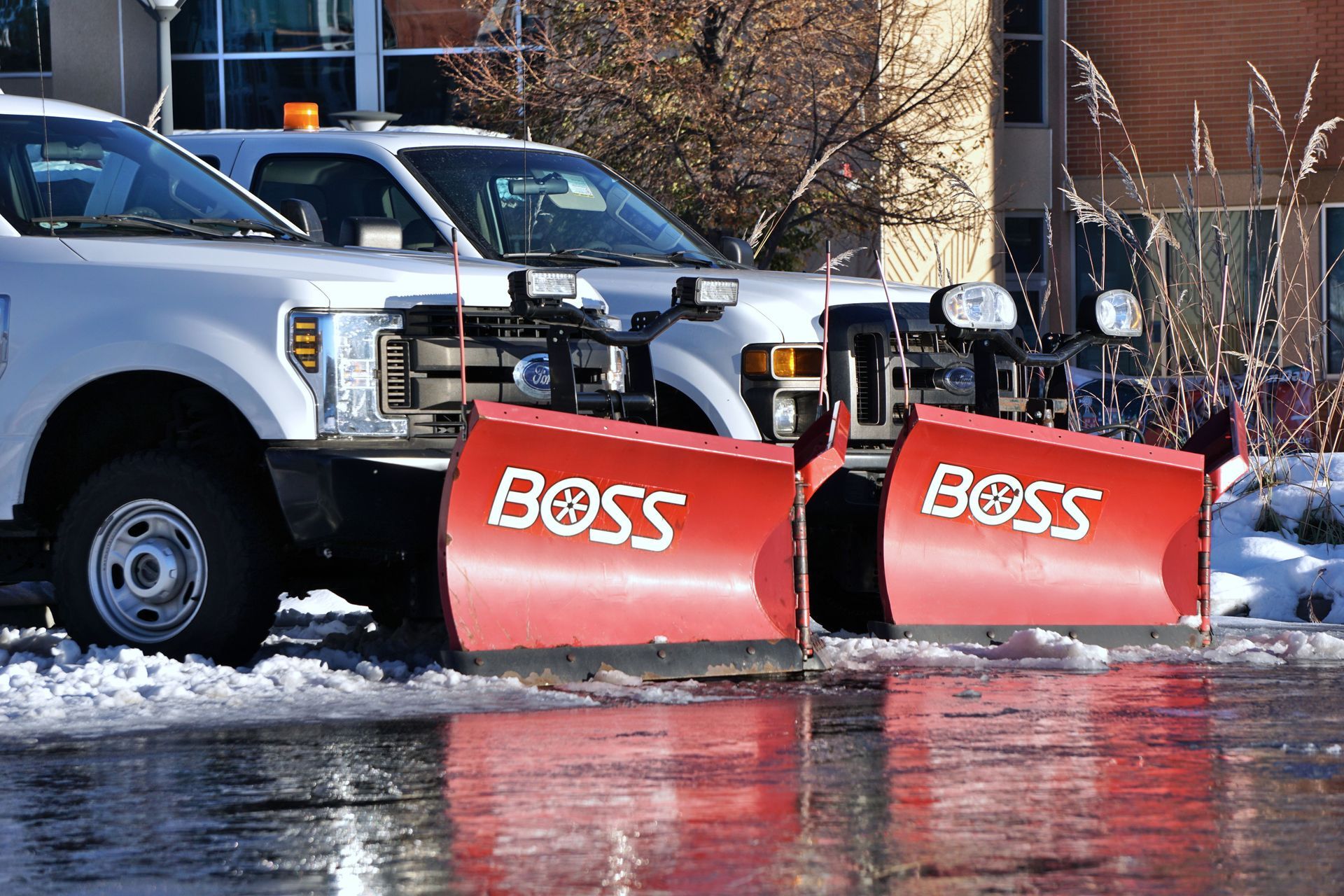
Fleet of commercial snowplow trucks staged in a yard before a winter storm in the Pacific Northwest
By Brad Caton • October 2, 2026
Snow removal equipment and staffing capacity is the best predictor of whether your site gets serviced in the worst storm of the season. Invictus breaks down the capacity math, real response-time standards, and the questions that expose an overextended contractor. Request a quote.
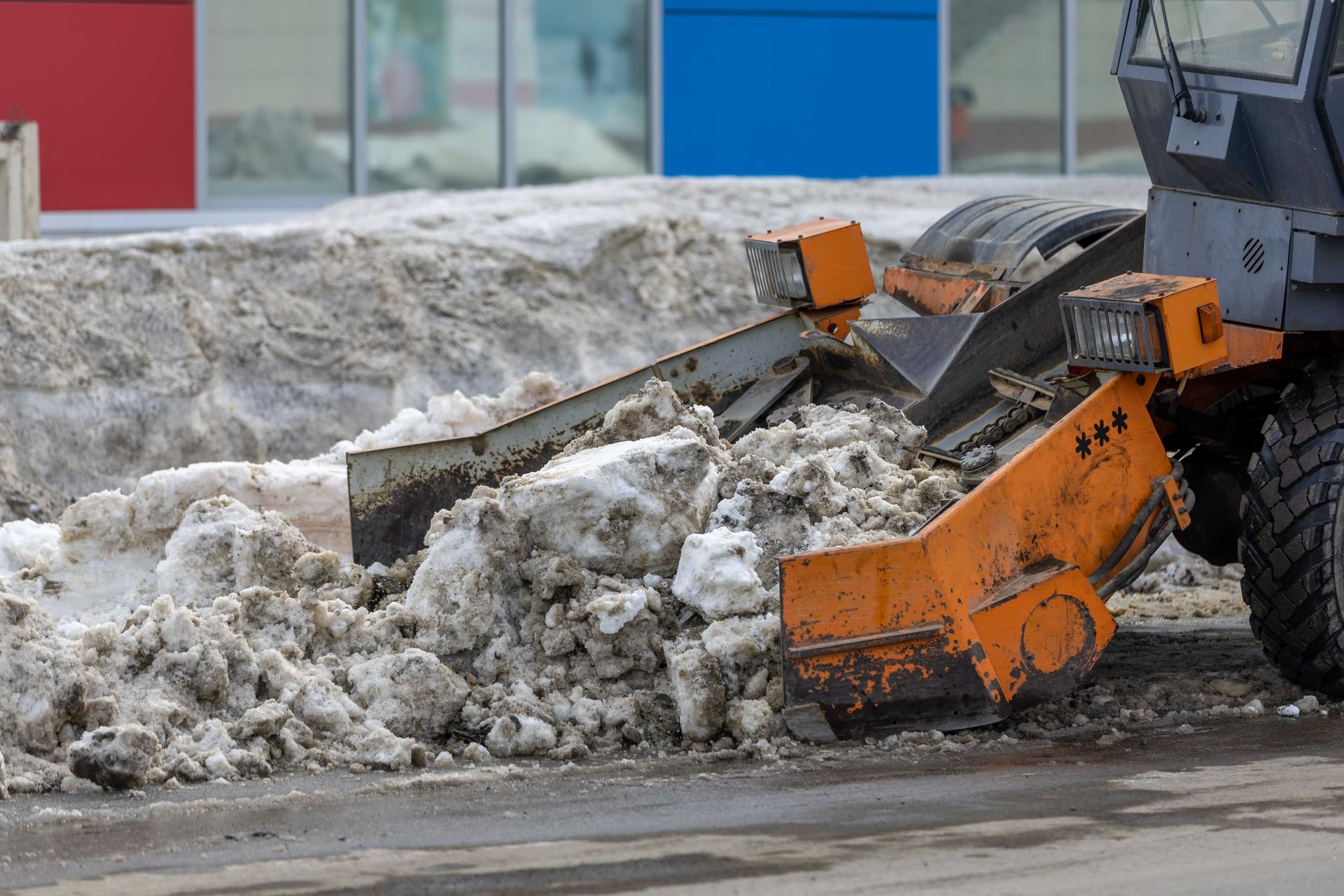
Orange snowplow clearing a large snowbank on a street beside colorful buildings
By Brad Caton • October 1, 2026
Industrial and manufacturing plant snow removal must meet OSHA's general industry standards for walking-working surfaces and powered trucks. See what ISO SN9001-certified Invictus recommends before winter. Get a quote.

Orange snowplow trucks clearing a snowy parking lot in winter
By Brad Caton • September 30, 2026
Snow removal contractor insurance shouldn't be assumed. See what coverage and documentation ISO SN9001-certified Invictus verifies before every contract. Get a quote.

Downtown Vancouver skyline in winter snow with the North Shore mountains
By Brad Caton • September 28, 2026
A record El Niño winter is forecast. What it means for snow and ice on Metro Vancouver commercial properties, what history shows, and what to do before the first arctic outflow.
Show More