
Snow Removal for Senior Living & Healthcare Facilities: Why Standard SLAs Fall Short | Invictus Snowfighters

Brad Caton • August 12, 2026

Share this article

A parking lot with a two-inch dusting of snow is an inconvenience for most commercial properties. At a senior living community or an outpatient clinic, that same two inches is a different kind of problem entirely. The people crossing it are more likely to fall, more likely to be seriously hurt if they do, and more likely to need to cross it at 3 a.m. in an emergency than at any office park or retail strip in the region. Yet most senior living and healthcare facilities in the Pacific Northwest are still buying snow removal the same way a suburban office campus does: a service level agreement (SLA) built for 9-to-5 foot traffic and a workforce that can wait out a storm.

That mismatch is where liability gets created. Below is what makes these properties different, where a standard commercial snow SLA falls short for them, and what a contract should actually require if the population on the other side of that parking lot is elderly, mobility-impaired, or medically fragile.

Why Senior Living and Healthcare Properties Carry a Different Risk Profile

Fall risk among older adults is not a marginal statistic. According to the National Safety Council, 43,020 older adults died from preventable falls in 2024, and nearly 3.85 million were treated in emergency departments for fall-related injuries ( National Safety Council, Injury Facts). The CDC Foundation puts the annual rate even higher in raw terms: more than one in four adults age 65 and older experiences a fall every year, resulting in roughly 3 million emergency department visits ( CDC Foundation, Preventing Older Adult Falls and Fall Injuries). Neither figure is specific to ice and snow, but both describe the exact population that fills the parking lots, entrances, and walkways of senior living communities and healthcare campuses every winter.

Layer icy pavement onto a population that already falls at that rate, and the math changes. A resident using a walker crossing an unsalted entrance ramp, a home health aide reporting for a 6 a.m. shift before a plow has been through, a family member visiting a hospice patient after visiting hours — these are not edge cases at a senior living or healthcare property. They are the normal traffic pattern. We've said it plainly before: snow and ice management is first responder work, not a landscaping add-on. That framing matters most at properties where the people walking across the ice are the ones least able to catch themselves.

Where a Standard Commercial Snow SLA Falls Short for These Properties

Most commercial snow contracts are written around a trigger depth (say, one or two inches) and a service window measured in hours after the snow stops falling. That structure works reasonably well for a retail center or an office building that closes at night and reopens at 8 or 9 a.m. It fails at properties that never close.

A senior living community or hospital campus runs shift changes around the clock, has ambulance and emergency vehicle access that cannot wait for a standard response window, and has residents and patients moving between buildings regardless of the hour. A "clear by 7 a.m." commitment does nothing for the aide arriving at 5 a.m. or the ambulance bay that needs to stay passable at 2 a.m. during an overnight storm. Standard SLAs also tend to treat all walkways the same, when in reality an entrance used exclusively by mobility-impaired residents needs a different, more conservative standard than an employee parking lot at the back of the property.

What a Higher-Standard SLA Should Actually Require

A snow removal contract for a senior living or healthcare property should be written around the risk profile of the people using it, not a generic square-footage rate. At minimum, that means:

A Zero-Tolerance Standard on High-Risk Walkways

Primary entrances, resident/patient walkways, and ambulance bays should be held to continuous, not scheduled, clearing during an active storm — not a "we'll get to it once it stops" trigger. This is the same standard we hold ourselves to with our on-site first responder units at large commercial sites: equipment and ice-melt product staged on the property so a crew doesn't have to be dispatched from across town when conditions turn.

Documented, Verifiable Service Delivery

If a slip-and-fall claim is filed — and given the fall rates above, at some point one likely will be — the facility needs more than a contractor's word that the walkway was cleared. It needs a timestamped, geo-fenced service record showing exactly when a crew was on-site and what was done. We've written in detail about what premises liability law actually requires for snow removal documentation — for a senior living or healthcare property, that documentation standard isn't optional, it's the single best defense a facility has.

ADA-Compliant Accessible Routes, Not Just Sidewalks

A cleared sidewalk that ends at a snow-packed accessible parking space or curb cut doesn't meet the standard these properties need. Every accessible route — parking, ramp, and entrance — has to be treated as part of the same continuous path, not an afterthought once the main walkway is done. We cover the specific compliance requirements in our guide to ADA snow removal compliance for commercial properties.

Response Time Benchmarks Tied to Population, Not Property Size

A generic SLA prices response time by square footage. A senior living or healthcare SLA should price it by consequence: how long can a facility with medically fragile residents actually tolerate an unsafe entrance before someone gets hurt? That number should be written into the contract, not left to a contractor's discretion once winter starts.

How Invictus's First Responder Model Fits This Risk Profile

Invictus started as a commercial cleaning company in 1990, and the shift into snow and ice management in the early 2000s came from a client asking for help — not a marketing plan. What we learned the hard way, during a week-long storm that left us short on equipment and crews stretched across too many sites at once, is that a snow removal company that hasn't over-invested in equipment and manpower will eventually leave someone unprotected on the worst day of the season. Senior living and healthcare campuses are exactly the properties where that failure mode isn't acceptable.

We're the only company covering the full Pacific Northwest I-5 corridor with local crews — Vancouver, Seattle, and Portland — rather than subcontracting out regions we don't service directly. For a healthcare or senior living operator managing more than one campus across that corridor, that means one point of accountability and one documentation standard across every property, instead of stitching together separate vendors with separate service levels in each city. It's also the basis for the economy-of-scale pricing we can offer portfolios that bundle multiple properties under one contract rather than negotiating site by site.

Questions to Ask Before You Sign

Vetting a snow removal vendor for a standard office property and vetting one for a senior living or healthcare campus should not be the same exercise. Beyond the general due diligence in our 20 questions to ask before hiring a commercial snow removal company, a facility director should be asking specifically: Does the SLA distinguish between resident/patient walkways and general-use areas? Is there a documented, geo-verified service record, or just a promise? What's the actual response time commitment during an active overnight storm, in writing? Our guide to what an SLA should require before you sign covers the baseline every commercial property should demand — for senior living and healthcare, treat that baseline as the floor, not the ceiling.

Frequently Asked Questions

  • Does a standard commercial snow removal contract meet ADA requirements for a healthcare facility?

    Not automatically. A contract that only specifies "clear the sidewalks" can leave accessible parking spaces, curb cuts, and ramps unaddressed. The SLA needs to name accessible routes specifically as part of the required service, not assume they're covered by a general walkway clause. 

  • How is snow removal for a senior living community different from a standard office property?

    The biggest differences are population risk and hours of operation. Senior living and healthcare properties operate around the clock with residents, patients, staff, and visitors who are more likely to be injured by a fall than the general population, so the SLA needs continuous coverage during active storms rather than a scheduled post-storm response. 

  • What documentation should a senior living facility require from its snow removal vendor?

    At minimum, a timestamped service record showing when crews were on-site, what areas were treated, and with what product. Geo-fenced verification (GPS-confirmed service logs) is the strongest standard, since it creates an objective record if a slip-and-fall claim is ever filed. 

  • Does Invictus service multi-site senior living and healthcare portfolios across the Pacific Northwest?

    Yes. Invictus is the only snow and ice management company with local crews covering the full I-5 corridor from Vancouver, BC through Seattle to Portland, which lets multi-property operators consolidate service under a single contract and a single documentation standard. Contact our team to talk through what a portfolio-level SLA should look like for your properties. 

If your organization operates a senior living community, assisted living facility, hospital, or outpatient clinic anywhere along the Vancouver-Seattle-Portland corridor, now — not November — is the time to put a real standard in writing. Review our snow and ice management programs or reach out directly to start building a contract that actually matches the risk your residents, patients, and staff face this winter.

Recent Posts

Snowy urban alley with a person sweeping near green bins and brick buildings in the background
By Brad Caton • October 23, 2026
Richmond's snow removal bylaw (Traffic Bylaw 5870) requires commercial, industrial, and undeveloped properties to clear sidewalks by 10am daily or face a $125 fine per violation. See what the City's own guidance requires, and how Invictus keeps Richmond properties compliant before the first snowfall.
Snowy sidewalk beside a fenced path, with a black dog walking away toward a crosswalk sign.
By Brad Caton • October 21, 2026
Burnaby's snow removal bylaw fines commercial properties up to $400 per violation. Here's what Section 31 requires, what the city's own guidance says, and how Invictus keeps Burnaby properties compliant before the first snowfall.
Snow-covered driveway outside a brick building with parked cars and a covered entrance
By Brad Caton • October 19, 2026
Surrey's snow removal bylaw requires commercial properties to clear sidewalks by 10am next day or face daily fines. See what Bylaw 13007 requires. Request a quote.
Property manager and maintenance contractor shaking hands in a commercial parking lot
By Brad Caton • October 16, 2026
Managing five property maintenance vendors instead of one costs hours every month. See how commercial property managers consolidate winter service with the rest of their maintenance calendar, from a company serving 500+ Pacific Northwest properties for 30+ years. Get a quote.
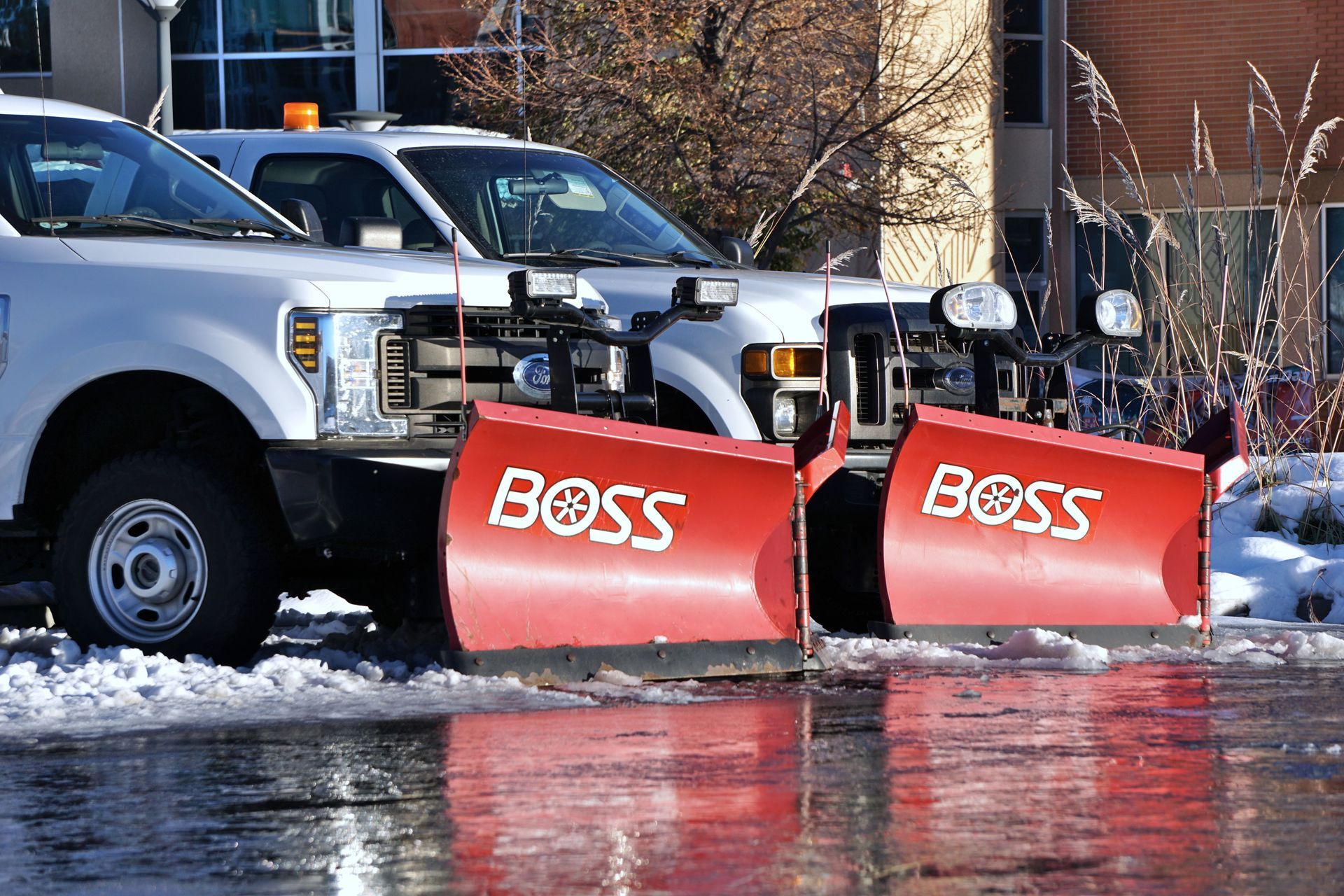
Snowplow clearing a large commercial parking lot for a multi-property portfolio contract in the Pacific Northwest
By Brad Caton • October 14, 2026
Multi-property snow removal contracts consolidate a fragmented, sole-proprietor-heavy market into one accountable partner. See what portfolio bundling actually saves, what to verify first, and the one trade-off to watch. Request a quote.
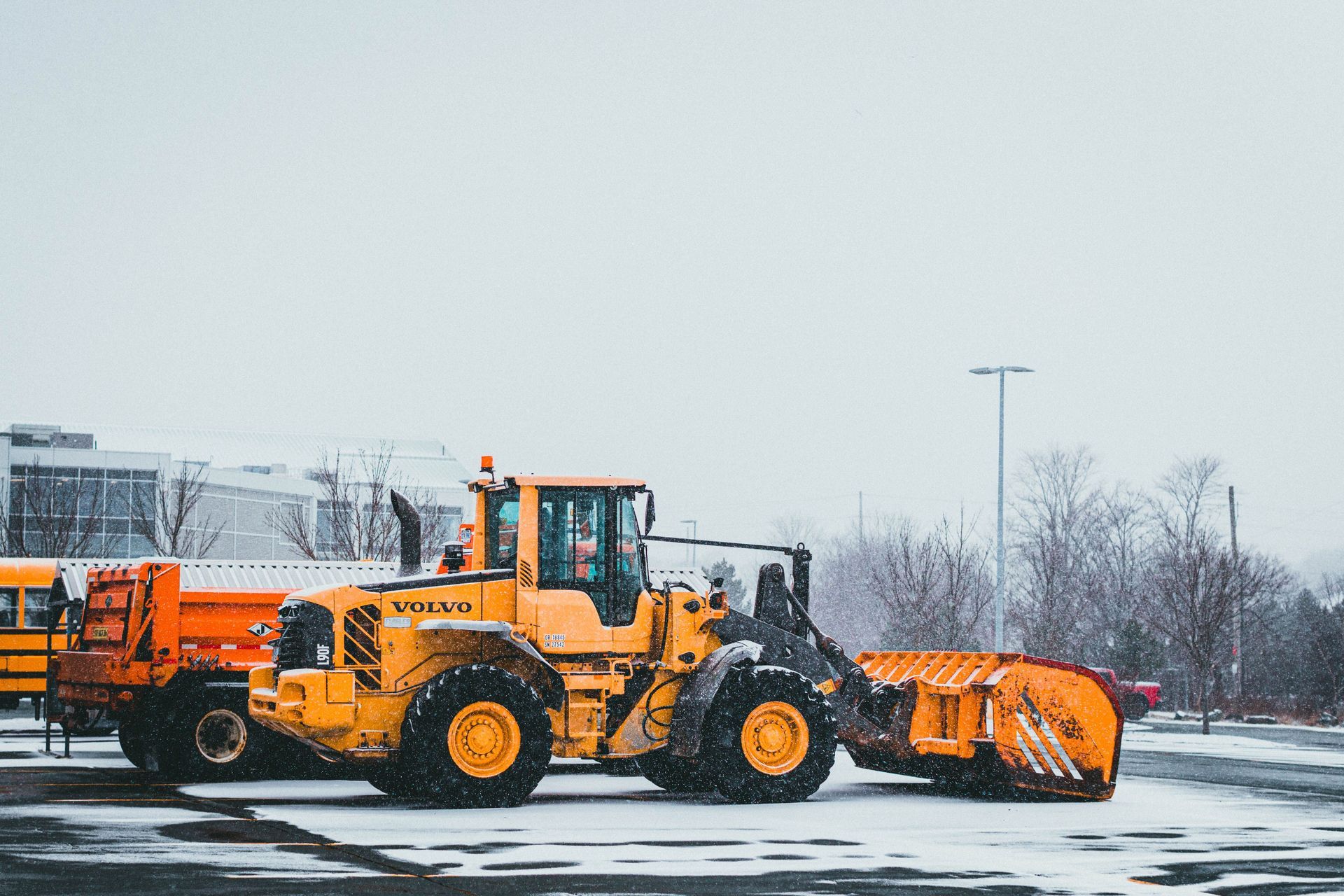
Yellow snowplow and front loader clearing a snowy parking lot in winter
By Brad Caton • October 12, 2026
How much snow removal equipment does your commercial property really need? Learn to evaluate a vendor's fleet capacity before the storm hits. ISO SN9001-certified Invictus serves the Pacific Northwest I-5 corridor. Request a quote.
Snow plow clearing a commercial parking lot in the Pacific Northwest at dawn
By Brad Caton • October 9, 2026
Trigger depth clauses tell you when a plow shows up — not when your property becomes a liability. See what a trigger depth actually covers, what SIMA's own guidance says it misses, and how Invictus Snowfighters' First Responder model closes the gap across the I-5 corridor. Request a quote.
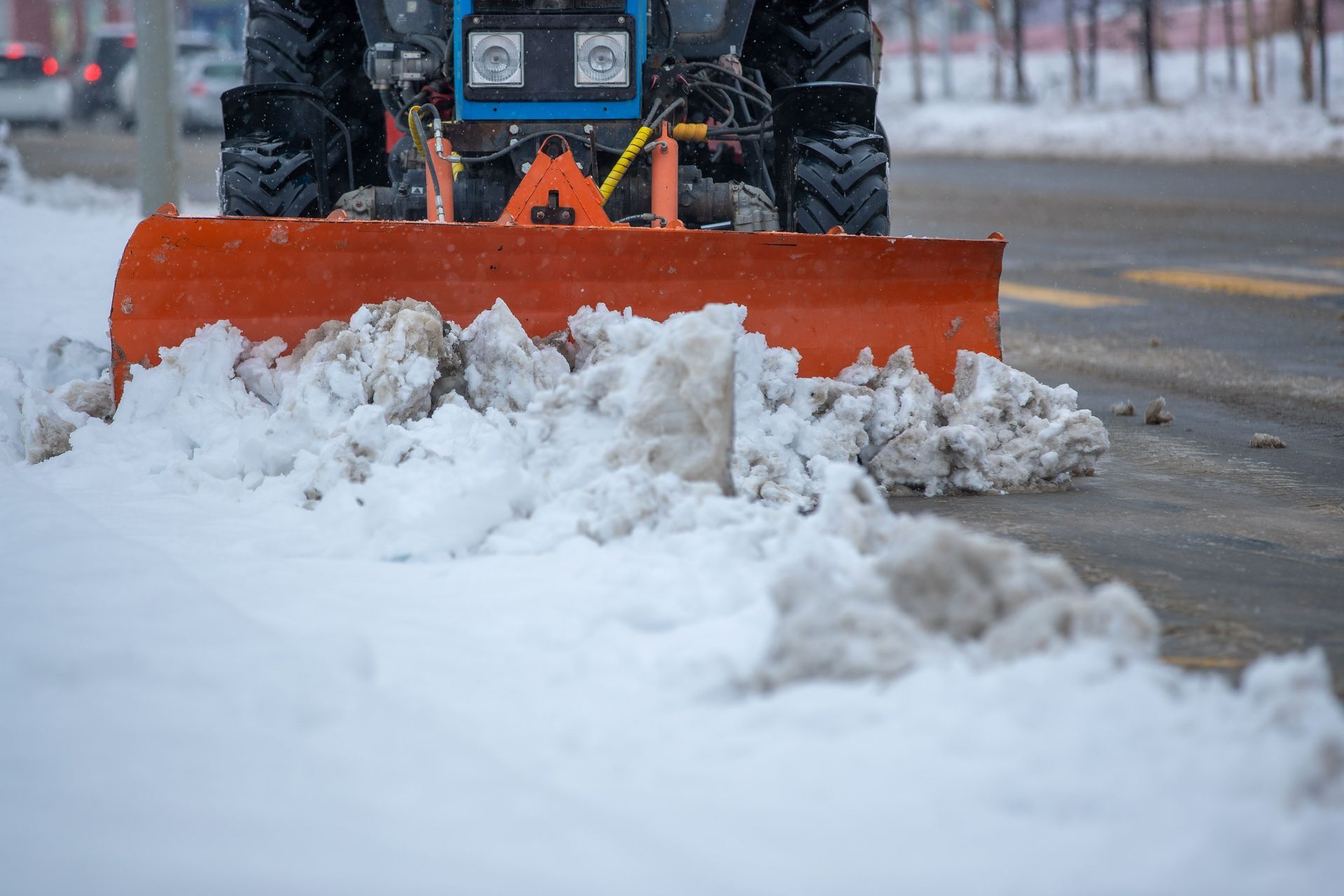
Snowplow clearing snow from a road, with a bright orange blade pushing slush forward
By Brad Caton • October 7, 2026
In-house vs. outsourced snow removal: how Pacific Northwest property managers can weigh liability, equipment costs, and staffing. ISO SN9001-certified Invictus explains what to ask. Get a quote.
Person operating an orange snow plow clearing slush from a snowy road
By Brad Caton • October 5, 2026
Switching commercial snow removal providers takes more than a phone call — termination clauses, auto-renewal traps, and a coverage gap can all bite you. See the safe sequence for switching before winter, from a PNW snow contractor that's covered the I-5 corridor since 1990. Request a quote.
Fleet of commercial snowplow trucks staged in a yard before a winter storm in the Pacific Northwest
By Brad Caton • October 2, 2026
Snow removal equipment and staffing capacity is the best predictor of whether your site gets serviced in the worst storm of the season. Invictus breaks down the capacity math, real response-time standards, and the questions that expose an overextended contractor. Request a quote.
Show More