In-House vs. Outsourced Snow Removal: A Decision Framework for Property Managers | Invictus Snowfighters
Brad Caton • October 7, 2026
Why the In-House vs. Outsourced Decision Matters More Than It Looks
Every commercial property manager in the Pacific Northwest eventually asks the same question: should we buy the truck, hire the crew, and handle snow and ice ourselves, or bring in a contractor who already has both? On paper it looks like a budget line. In practice, it's a decision about who carries the risk when a storm hits harder than the forecast said it would, and who's on the hook when a tenant or visitor slips on a patch of ice that didn't get cleared in time.
Invictus Snowfighters has served both sides of this conversation for over three decades, first in commercial cleaning starting in 1990 and in snow and ice management since 2002. We've watched property managers self-perform successfully, and we've watched others take on more than their equipment or staff could realistically cover. This guide lays out the real trade-offs, not just the sticker price, so you can make the call with your eyes open.
What "Doing It Yourself" Actually Requires
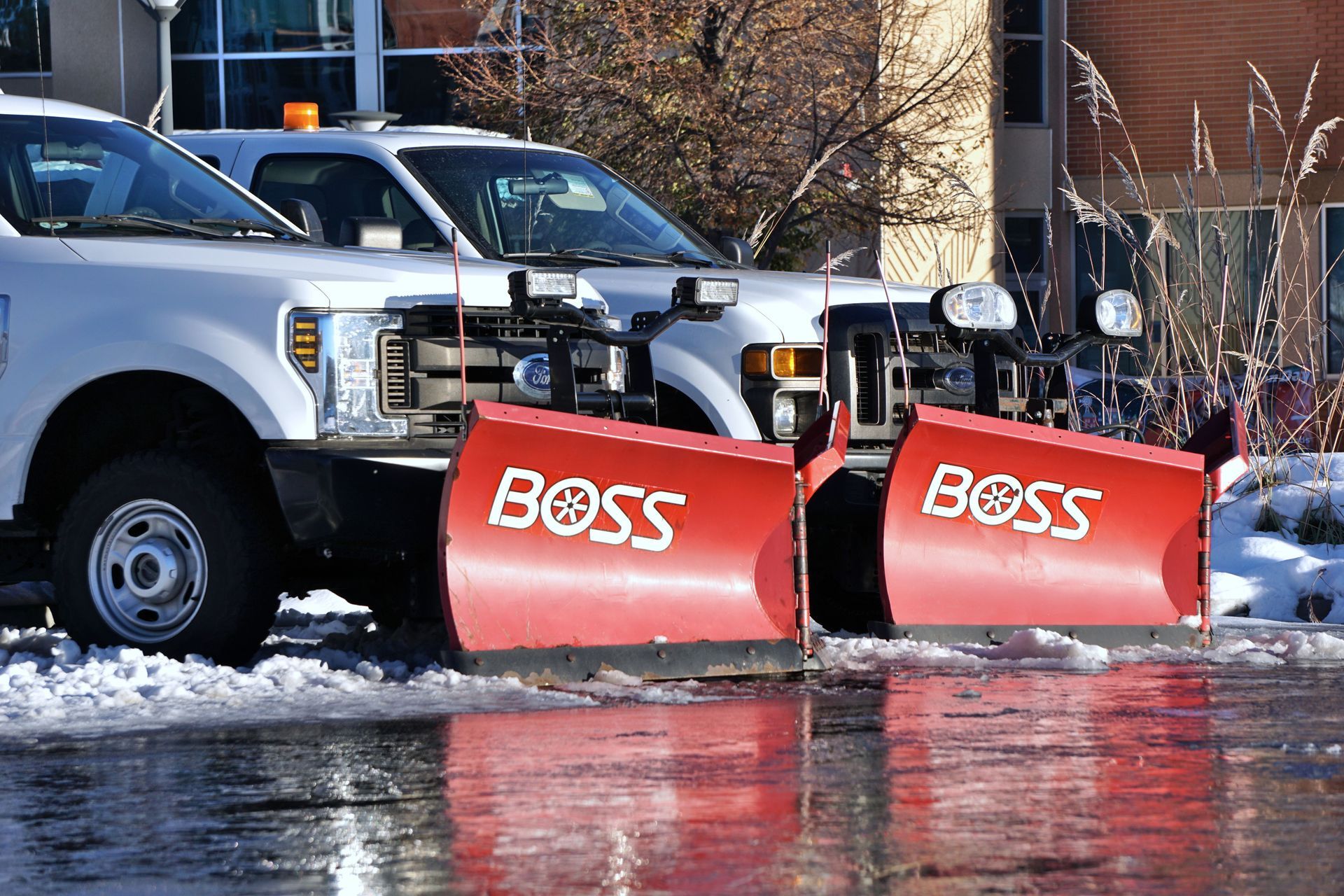
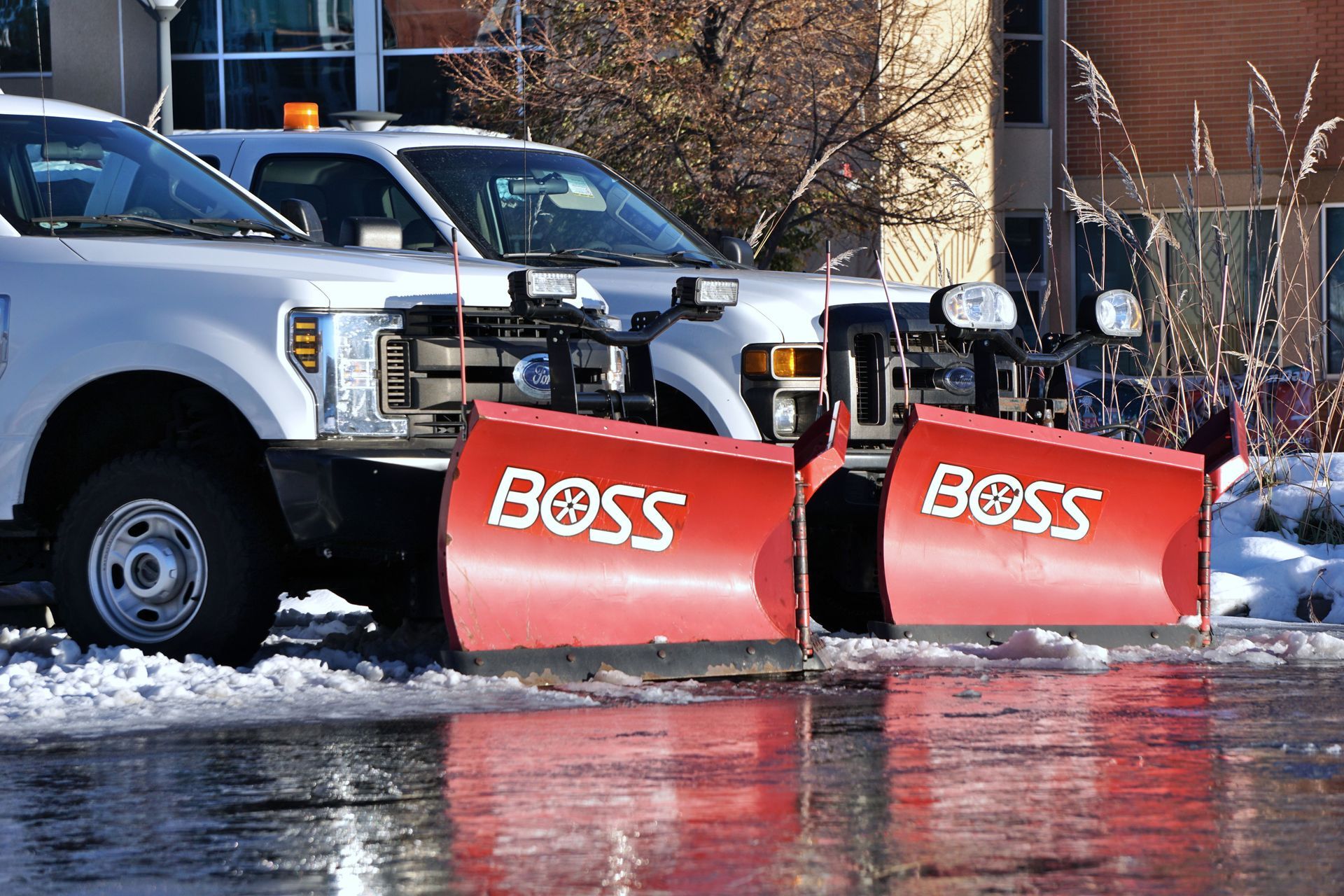
In-house snow removal sounds simple until you price out what it actually takes to do it reliably. You need equipment that sits idle most of the year but has to work the moment it's needed: a plow-equipped truck or skid steer, ice melt storage, and often a second machine as backup, because a single-point-of-failure fleet means one breakdown takes your whole response offline. You need staff who are trained, available on short notice, and willing to work overnight or through a holiday when the storm doesn't check the calendar. And you need someone managing all of it, from dispatch to route sequencing to knowing which section of a parking lot pools water and refreezes first.
None of that is a reason self-performing is a bad idea. Some property owners have the scale, the maintenance staff, and the equipment already in place from other seasonal work, and for them, in-house makes sense. The mistake we see most often isn't choosing to self-perform, it'sunderestimating the equipment and staffing capacitya real winter actually demands.
What You're Actually Buying When You Outsource
Hiring a contractor isn't just paying someone else to swing the plow. You're buying standby capacity you don't have to store or maintain year-round, a crew that's already trained for the specific hazards of snow and ice work, and a company whose entire business depends on showing up when the forecast is at its worst. You're also buying documentation: route logs, timestamps, and geo-fenced service records that matter enormously if a slip-and-fall claim ever gets filed against your property.
The catch is that not every contractor delivers all of that. Some landscaping companies add snow removal as an off-season add-on without the equipment depth or crew training to back it up, and some sell the contract themselves but subcontract the actual plowing to a third party you'll never meet and can't vet. Before you sign anything, it's worth knowingwhether a company actually self-performs or just subcontracts the work out, and reviewing thecontract red flagsthat separate a real snow and ice management company from a landscaper with a plow attachment. A contractor with dedicated, geographically concentrated coverage tends to answer these questions more directly than one juggling snow as a side service across a wide, thin territory.
The Liability Question Almost Nobody Asks Up Front
Whoever performs the work carries a different set of legal obligations, and this is where the in-house vs. outsourced decision stops being just a budget question. In the United States, the Occupational Safety and Health Act's General Duty Clause requires every employer to "furnish to each of his employees employment and a place of employment which are free from recognized hazards that are causing or are likely to cause death or serious physical harm" (29 U.S.C. § 654). If you self-perform, that duty sits with you directly, for every employee you send out into icy conditions, at every hour of the storm.
North of the border, British Columbia's Occupiers Liability Act adds a second layer worth understanding. Under Section 5, if damage is caused by the negligence of an independent contractor you've engaged, you are generally not liable for it under the Act, provided you "exercised reasonable care in the selection and supervision of the independent contractor" and it was reasonable that the work be contracted out at all. In plain terms: hiring a properly vetted, insured snow and ice contractor can shift a meaningful share of your liability exposure to that contractor. Self-performing keeps that exposure with you. Neither path eliminates risk entirely, which is whydocumentation that actually holds up in a slip-and-fall claimmatters regardless of which side of this decision you land on.
The Equipment and Staffing Math Most Property Managers Underestimate
Our own founder learned this the hard way in Invictus's early years in the snow business. In one stretch, three feet of snow fell over a week straight, and a four-person crew with limited equipment simply couldn't keep pace. Since then, the rule at Invictus has been to procure more equipment than a typical season requires, not less, because the cost of being short on a bad week is always higher than the cost of a machine sitting idle on a good one. That's a lesson worth borrowing whether you outsource or self-perform: whatever capacity you think you need, a real storm will test the margin above it, not the average.
This is also where scale changes the math. A property manager overseeing a single building has a very different equation than one overseeing a multi-property portfolio. Building an in-house fleet large enough to cover several sites at once, with redundancy for breakdowns and enough operators to run more than one route simultaneously, means duplicating that overcapacity problem at every property. For portfolios,consolidating under one vendor instead of coordinating fiveoften produces real savings throughbundled, portfolio-wide contracts, an option that isn't available at all if you're building an in-house fleet property by property. A single vendor covering every site also means one point of accountability instead of several, which matters the moment something goes wrong at 2 a.m. during a storm.
Certification Is the Line Between a Snow Crew and Whoever's Available That Morning
One factor that rarely makes it into the in-house vs. outsourced conversation is professional certification. The Snow & Ice Management Association's Certified Snow Professional program requires candidates to complete six exam modules and, once certified, renew every two years by submitting 15 continuing education credits. That's a real, ongoing training commitment, not a one-time class. Crews built in-house from existing maintenance or landscaping staff rarely carry that kind of structured, renewing credential, simply because snow isn't their core job. It's worth asking any contractor you're evaluating whether their crew leads hold it, and asking yourself honestly whether an in-house team pulled together each winter would meet the same bar.
A Practical Framework for Making the Call
Rather than defaulting to whichever option feels cheaper on paper, walk through these questions for your specific property or portfolio:
- Frequency and severity: How many measurable snow events does your market actually see in a typical year, and how much does that vary in a heavy one?
- Standby cost: Can you justify owning equipment that sits unused most weeks of the year, or is that capital better spent elsewhere?
- Liability appetite: Are you prepared to carry direct employer and occupier liability for every icy walkway, or would you rather transfer part of that exposure to a vetted contractor?
- Documentation needs: Do you have the systems to log service times, routes, and conditions the way a slip-and-fall defense requires?
- Portfolio scale: If you manage multiple properties, would consolidating your snow removal budget under one accountable vendor outperform piecing it together in-house at each site?
There's no universally right answer. What matters is that the decision gets made deliberately, with the equipment, liability, and staffing realities on the table, instead of by default because "we've always just handled it ourselves" or "we've always just called whoever's cheapest." Revisit the answer periodically, too. A portfolio that grows from two properties to eight, or a market that swings from a mild winter to a record snow year, can flip the math from one season to the next.
Frequently Asked Questions
Is it ever cheaper to handle snow removal in-house?
It can be, particularly for a single large property with maintenance staff and equipment already in place for other seasonal work. The math changes quickly for multi-property portfolios or markets with unpredictable, severe storms, where standby equipment and overtime staffing costs add up fast.
Does outsourcing snow removal eliminate our liability?
No. Outsourcing can shift a meaningful share of liability to a properly vetted, insured contractor, but property owners retain a duty of care for the condition of their premises. Reasonable care in selecting and supervising your contractor still matters.
What should we ask a contractor before deciding to outsource instead of self-perform?
Ask whether they self-perform or subcontract, what certifications their crew leads hold, how they document service visits, and how they handle a storm that exceeds normal seasonal volume.
How does Invictus Snowfighters help with this decision?
We work across Vancouver, Seattle, and Portland, and we're upfront with property managers about whether self-performing or contracting out makes more sense for their specific portfolio. Explore our commercial snow and ice management services or reach out for a property-specific assessment.
Recent Posts