
Snow Removal SLA: What to Require Before You Sign | Invictus Snowfighters

Brad Caton • July 24, 2026

Share this article

Most snow removal contracts get reduced to a single number: the trigger depth. Two inches, and the plows roll. But the document you actually sign — what the industry's own standards body calls a Level of Service — is a lot longer than that, and the gap between "two inches" and a real Service Level Agreement (SLA) is exactly where liability, missed response times, and disputed invoices live. If you manage a commercial property anywhere along the I-5 corridor, the paperwork you sign this summer is the only thing standing between you and a 2 a.m. phone call when the first storm actually hits. Here's what a real snow removal SLA has to define, according to the national standard that governs it, and how Invictus Snowfighters builds its own Level of Service around those same rules.

What a Snow Removal SLA Actually Defines (Not Just Trigger Depth)

The Snow & Ice Management Association's SIMA-10-2025 Standard Practice for Procuring and Planning Snow and Ice Management Services — an American National Standard first adopted by ANSI in 2020 and updated in 2025 — defines a Level of Service (LOS) as "a description of the expected outcome(s) on a site or set of sites from the completed performance of snow and ice management services," and notes plainly that LOS is a synonym for Service Level Agreement. That's a broader definition than most contracts actually deliver.

Two terms get conflated constantly, and the standard treats them as distinct: Trigger Depth is "the agreed upon measurable amount of accumulated snow or ice wherein snow and ice management services will be dispatched." Accumulation Threshold is a related but separate idea — "the agreed-upon maximum amount of snow or ice accumulation acceptable" once service is underway. A contract that only states a trigger depth says nothing about what happens if snow keeps falling after the crew arrives — which is exactly the scenario that produces disputes during a multi-day system.

The standard also introduces a wider concept most RFPs never mention: the Service Initiator , defined as "a contractually defined start of one or more snow and ice management services," which can include not just trigger depth but a weather forecast, a written client request, an automated work order, or an established patrol protocol. A property that only dispatches on trigger depth has no contractual path to request service for black ice or a fast-moving freezing-rain event that never produces measurable accumulation.

The Six Things SIMA's ANSI Standard Says Your Level of Service Must Include

Section 3.2 of the standard lists what an LOS should define, at minimum. Most commercial contracts skip half of it:

  • Description of outcomes — what "done" actually looks like. Notably, the standard cautions that outcome language "should not exceed the term 'substantially clear of hazards'" — a guardrail against vendors overpromising a bare-pavement standard that Pacific Northwest storm intensity can't always deliver, and against property managers assuming a guarantee that was never actually made.
  • Service initiation — the trigger(s), plus any scenario where the threshold changes for extended or severe events.
  • Timeframes — not just response time, but the hours that matter: shift changes, delivery windows, lighting schedules, and how those interact with when the crew shows up.
  • Service priorities — which areas get cleared first: emergency-responder access, sidewalks, entrances, ADA stalls, delivery ramps.
  • Post-storm requirements — what happens after the plows leave, including thaw-refreeze checks and extended-event expectations.
  • Service controls and a documented service-call system — who has authority to add, stop, or escalate service, and a working communication channel for complaints, incidents, and damage reports.

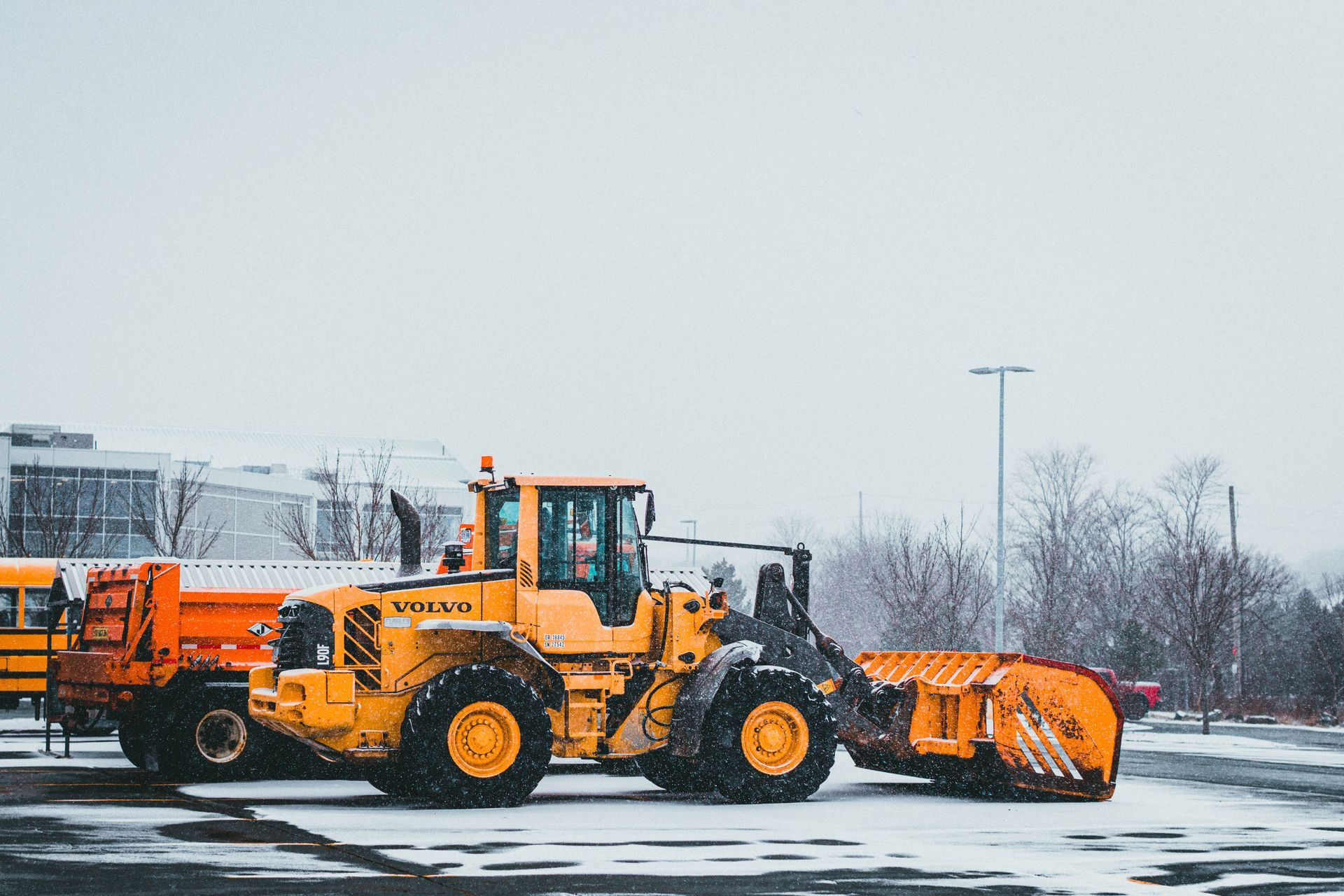
Orange snowplow and loader clearing a snowy parking lot on a winter day

Trigger Depths and Response Windows: What's Actually Reasonable

Once the LOS structure is in place, the numbers still matter. Property management platform Buildium's guidance for snow removal vendor agreements puts the typical commercial trigger at two inches, with a one-inch trigger common for multifamily properties with a large elderly population, and a three-inch trigger acceptable for lower-traffic commercial sites. Response windows in real contracts commonly read "parking lots cleared within four to six hours of snowfall ending" — and Buildium notes that a real SLA should carry a penalty clause for missed deadlines, citing a 10% service discount as one common structure.

Buildium also recommends organizing the site into priority zones rather than treating the whole property as one clearance job: primary (fire lanes, entrances, ADA routes), secondary (main lots, walkways), and tertiary (overflow parking, storage areas) — which lines up directly with the "service priorities" requirement in the SIMA standard above.

Geography changes what's reasonable to write into any of this. A single-site trigger depth means little without a plan for a portfolio spread across multiple microclimates — which is exactly the gap Invictus was built to close, covering the full I-5 corridor from Vancouver, BC through Seattle to Portland with crews already staged in each market rather than dispatched from a single yard.

Why September 1 Is the Real Deadline (Not November)

Here's the number that should reset your calendar: per SIMA-10-2025 Section 2.1, "the RFP process should begin no later than May to allow sufficient time to review sites, update site assessments, allocate time to eliminate or mitigate hazards, negotiate pricing and ensure contracts for sites and portfolios of sites are awarded no later than September 1." That's the national standard's own procurement timeline — not a sales deadline invented by a contractor. If you're reading this in July with no signed contract, you're inside the standard's window, but the runway is shorter than it looks once site assessments and hazard mitigation are factored in.

The standard also recommends a minimum one-year term (multi-year or annually renewable where possible) with cancellation clauses for both parties, specifically to account for winter volatility — a seasonal handshake deal with no term protects neither side. If you haven't started evaluating vendors yet, our guides on writing a commercial snow removal RFP and scoring the proposals that come back walk through the rest of the process this same standard is built to support.

The Documentation Clause That Decides Your Slip-and-Fall Case

A property management company covered in Beverly Companies' breakdown of common snow removal contract mistakes faced a lawsuit after a shopper slipped on black ice — the vendor did carry insurance, but the property manager had never been named as an Additional Insured on that policy, leaving the management company personally exposed for damages a properly worded contract clause would have covered.

Documentation is the other half of that protection, and SIMA-10-2025 Section 5.3 specifies exactly what a compliant service record should contain: site name and location, names of the operator and on-site manager, start and end times of service (including patrols), site condition at both start and completion, weather conditions at time of service, services rendered, equipment used, materials applied, and GPS recordkeeping where available. A contract that doesn't require this from the vendor leaves you defending a claim with nothing but memory. We've covered the underlying premises-liability standard in more depth in what premises liability law actually requires for documentation, and the broader exposure question in slip-and-fall liability for commercial snow removal.

How Invictus Builds Its Level of Service Around the First Responder Model

Every clause above is a floor, not a differentiator — any vendor can technically comply with the SIMA standard's minimums. What a property manager is actually buying is what a vendor does above that floor. Invictus's founder puts the industry's biggest misconception this way: "This is first responder business. People die in snow and ice situations... It's not like cutting a lawn." That framing is why Invictus stages First Responder units — 40-foot containers pre-loaded with ice melt product — directly on large job sites, so treatment begins the moment conditions turn rather than when a truck leaves a dispatch yard miles away.

The same geo-fencing and service-record technology behind the documentation clause above also drives the economy-of-scale advantage for portfolio clients: because Invictus already has boots on the ground across the full Vancouver-Seattle-Portland footprint, a multi-property owner can bundle sites under one Level of Service agreement instead of coordinating separate vendors for every market, with the response-time and documentation standards held consistent site to site.

Hands reviewing documents on a conference table with a glass of water nearby

If your current contract doesn't name a trigger depth separate from an accumulation threshold, doesn't specify a documentation standard, or doesn't have a signed date on it yet, this is the month to fix that before the September 1 window the standard itself recommends closes. Request a quote and we'll walk your portfolio through what a compliant Level of Service actually looks like.

FAQ: Snow Removal SLAs

  • When should I actually sign a commercial snow removal contract?

    SIMA-10-2025 recommends starting the RFP process no later than May and having contracts awarded no later than September 1, to leave time for site assessments and hazard mitigation before the season starts.

  • What's the difference between a trigger depth and an accumulation threshold?

    Trigger depth is the snowfall amount that starts service. Accumulation threshold is the maximum buildup considered acceptable once service is underway — they govern different moments in the same storm, and SIMA-10-2025 defines them as separate contractual terms.

  • What should a snow removal SLA include besides trigger depth?

    At minimum: a description of outcomes, service initiation triggers, critical timeframes, service priority zones, post-storm requirements, and a documented service-call and escalation system.

  • What documentation should my snow removal vendor provide after every storm?

    A compliant service record includes site name and location, operator names, start and end times, site condition before and after, weather conditions during service, materials applied, and GPS recordkeeping where available.

Recent Posts

By Brad Caton July 16, 2026
Commercial snow removal pricing varies by contract model, not just lot size — SIMA's own procurement guide names four fee structures the industry uses. See real 2026 rate ranges and how Invictus, the only snow removal company covering the full I-5 corridor, prices multi-property portfolios. Request a quote.
By Brad Caton July 9, 2026
Snow removal RFP proposals in? Learn the weighted scoring matrix municipalities use to separate the right vendor from the cheapest bid, plus red flags that should disqualify any proposal outright.
By Brad Caton July 2, 2026
NOAA confirms El Niño is replacing two years of La Niña. See what that means for Pacific Northwest commercial snow removal contracts — and why Invictus still plans for every storm, not just the forecast.
By Brad Caton June 30, 2026
First Responder snow removal in the Pacific Northwest: Invictus installs on-site ice melt caches staged directly at your commercial property, so treatment begins when conditions turn — not when a truck leaves the dispatch yard. Learn how it changes your liability equation.
By Brad Caton June 23, 2026
Over 30,000 slip-and-fall claims are filed annually against snow contractors and property owners across the U.S. and Canada. Washington law requires documented proof of reasonable care, not just service. Learn the four evidence categories courts recognize — and how geo-fencing creates your automatic defense record before the first flake falls.
By Brad Caton June 18, 2026
Commercial snow removal liability in the Pacific Northwest is real — last winter's storms triggered $6.7B in insured losses. Learn your legal exposure, what documentation protects you, and what your snow removal contract must include.
Two professionals reviewing a commercial snow removal contract at an office desk in the Pacific Northwest
By Brad Caton June 16, 2026
Waiting until fall to secure a commercial snow removal contract in the Pacific Northwest? By then, the best contractors are booked. Learn which contract type fits your property portfolio, what to negotiate before signing, and why Invictus covers the full I-5 corridor from Vancouver to Portland.
By Brad Caton March 12, 2026
Winter incident reports are your best legal protection against slip-and-fall claims. Learn what to document, when to document it, and how to build a system that protects your property.
Orange traffic barrel with snow on top, seen through a chain-link fence in a parking lot.
By Brad Caton March 10, 2026
When your snow removal contractor is a no-show during a winter storm, every minute counts. Here's exactly what commercial property managers should do — and how to prevent it.
Bobcat snowplow clearing snow from a paved surface.
By Brad Caton March 5, 2026
Before signing a snow removal contract, ask these 20 critical questions. Protect your property, avoid liability gaps, and find the right commercial snow contractor in BC.
Show More