

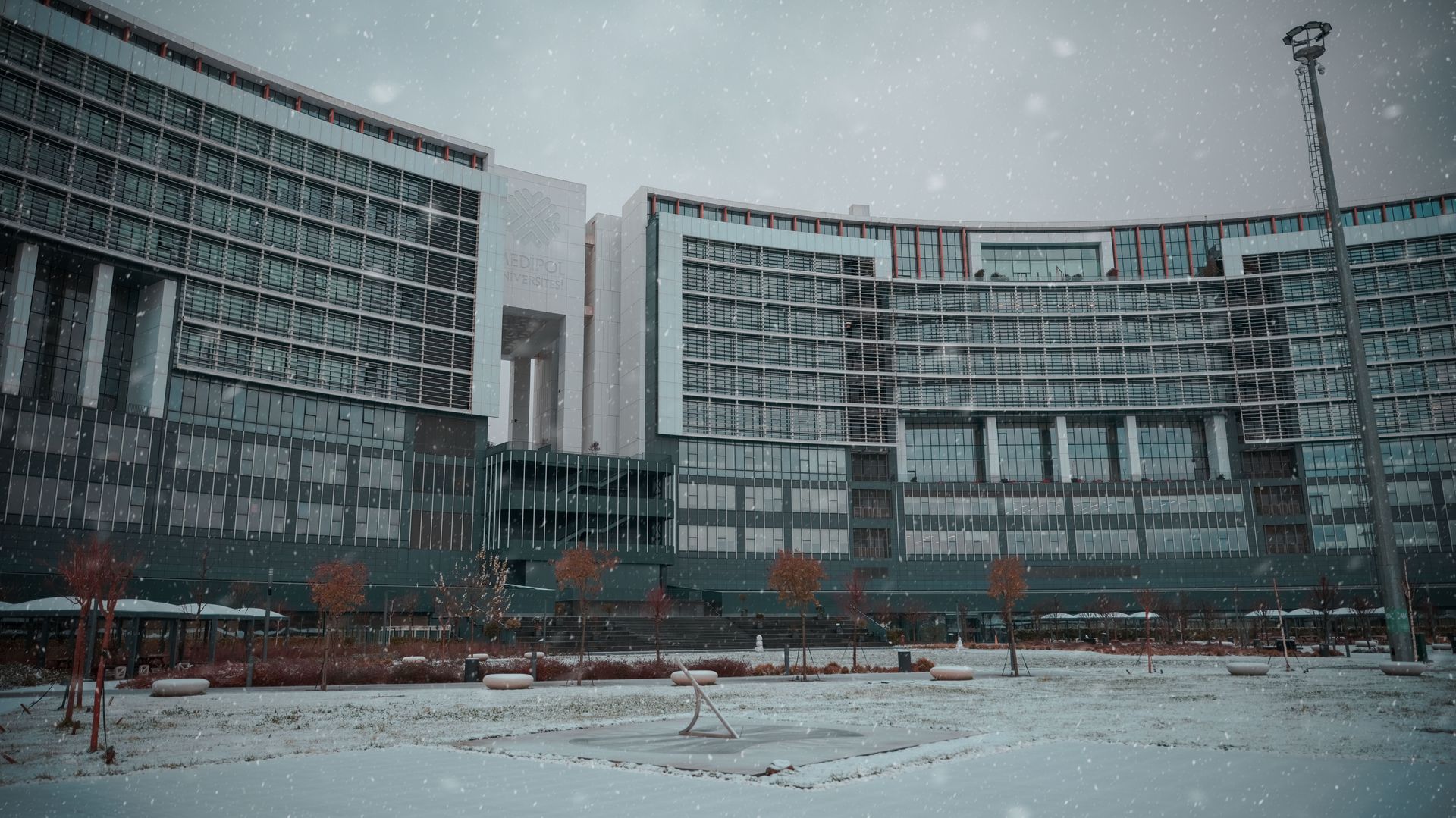
Corporate & Tech Campus Snow Removal in the Pacific Northwest

Brad Caton • November 18, 2026

Share this article

Snow and ice on a single-tenant office building is a maintenance problem. Snow and ice on a corporate or tech campus is an operations problem, spread across multiple buildings, parking structures, courtyards, and shift changes that don't pause for weather. Facilities and security teams responsible for these properties face a different set of exposures than the manager of one building with one entrance: OSHA duties that extend past the lobby door, ADA-accessible routes scattered across a site plan, and enough square footage that a single truck and crew can't realistically cover it before the first employees arrive.

This guide breaks down what a corporate or tech campus in the Pacific Northwest actually needs in a snow removal contract, and why those requirements differ from a standard single-building commercial lease.

Why a Campus Isn't Just a Bigger Building

A single-building property has one main entrance, one loading dock, and one parking lot to clear. A campus has several of each, plus courtyard walkways connecting buildings, structured parking with ramps that ice before flat lots do, and overnight security and janitorial staff who need clear access hours before the first shift badges in. Clearing "the property" on a campus really means clearing a network of interdependent surfaces in a sequence that matches how people actually move through the site.

Much of the Pacific Northwest's corporate and tech campus footprint clusters in a handful of submarkets: the Eastside corridor running through Redmond, Bellevue, and Kirkland; corporate office parks around Burnaby, BC; and Hillsboro's tech corridor west of Portland. Invictus has served commercial properties across this same footprint for more than 30 years, with ISO SN9001-certified operations covering the full I-5 corridor from Vancouver to Portland — the only company with boots on the ground across all three metros, according to the company's own service record.

The OSHA Duty That Doesn't Stop at the Lobby Door

Many facilities teams assume OSHA's reach ends at the building envelope. It doesn't. Under 29 CFR 1910.22, OSHA's walking-working surfaces standard, employers must ensure that "walking-working surfaces are maintained free of hazards such as sharp or protruding objects, loose boards, corrosion, leaks, spills, snow, and ice," and that surfaces are inspected regularly and hazardous conditions corrected before an employee uses them again. That duty applies to the surfaces the employer controls, which on a leased or owned campus typically includes employee parking, the walk from the parking structure to the building, and any exterior path staff are required to use.

We've written a deeper breakdown of how this standard applies to logistics facilities in ourOSHA compliance guide for warehouse and distribution properties, and covered the crew-safety side of winter operations in ourOSHA cold-stress guidance— both are worth a read if your campus also has its own facilities crew working outside during storms.

ADA Access Doesn't Pause for Snow

A single building typically has one accessible entrance and one van-accessible parking area to keep clear. A campus usually has several of each, spread across multiple buildings and parking structures, and a snowstorm doesn't excuse a blocked accessible route any more than it excuses a blocked employee entrance. We cover the specific federal and Washington requirements in our guide toADA snow removal compliance for commercial properties. On a multi-building site, the practical takeaway is that "the accessible entrance is clear" has to be true at every building, not just the one closest to the main lot.

What "First Responder" Coverage Means for a Campus That Opens at 7 AM

Invictus's founder describes winter service in blunt terms: "This is first responder business. People die in snow and ice situations." That framing matters most on a campus, where hundreds of employees can arrive within the same narrow window and a single icy stretch of walkway becomes a concentrated risk rather than an isolated one.

The operational answer to that risk is what the company calls itsFirst Responder Unit— equipment and ice-melt product staged on-site so crews aren't driving across the region mid-storm to restock. Paired with an equipment-matched service guarantee, which means dedicated equipment and crew capacity is procured for a site before the contract is signed rather than shared across too many properties at once, it's the difference between a campus that's clear by the time the first shift arrives and one that's still waiting on a truck. Geo-fenced, timestamped service records back it up, giving facilities teams actual proof of when each building and lot was serviced rather than a phone call after the fact.

One Vendor Beats a Patchwork of Five

Campuses with multiple buildings, or portfolios with campuses in more than one city, often end up with a different snow vendor per address simply because that's how the leases and property managers got assigned over time. That patchwork creates the exact problem covered in our guide towhy one vendor beats five for multi-property portfolios: inconsistent response times, five sets of invoices to reconcile, and no single point of accountability when something gets missed. Consolidating a campus, or a portfolio of campuses across the I-5 corridor, under one vendor also unlocks economy-of-scale pricing that a single-site contract can't reach.

Structured parking adds a wrinkle worth flagging separately: the wrong de-icing chemical can accelerate corrosion in reinforced concrete parking garages, which is common on denser campus sites. We break down the tradeoffs in our guide toparking garage de-icing and salt damage, and it's worth confirming your vendor's product choice matches your structure type before the first storm, not after.

What to Put in Your Campus Snow Removal Contract

Before signing, a facilities or security team overseeing a corporate or tech campus should require:

  • A written response-time commitment for each building and lot, not just "the property" as a whole — see our guide on what to require in a snow removal SLA before you sign.
  • Proof that the vendor has procured dedicated equipment and staffing for your site specifically, not shared capacity that gets stretched thin across their whole book of business. Our guide on evaluating a vendor's equipment and staffing capacity covers the questions to ask.
  • Verified credentials rather than a vendor's own claims — our breakdown of what ASCA, SN9001, and CSP certifications actually verify explains what each one does and doesn't confirm.
  • Geo-fenced, timestamped documentation for every building and lot, so you have an actual record if a slip-and-fall claim comes in.
  • A single point of contact across the entire campus or portfolio, even when buildings span multiple cities or the US/Canada border.

Hand holding a document with blue tabs on a desk

Frequently Asked Questions

  • Does OSHA require us to clear snow from the parking lot, not just the building entrance?

    OSHA's walking-working surfaces standard, 29 CFR 1910.22, requires employers to keep walking-working surfaces free of hazards including snow and ice, and applies to the surfaces an employer controls. On a leased or owned campus, that generally includes employee parking areas and the walkways connecting them to the building, not just the interior. 

  • How is campus snow removal different from single-building commercial service?

    A campus multiplies the number of entrances, accessible routes, parking structures, and pedestrian paths that need to be cleared on the same timeline, and often has a much tighter window before a large number of employees arrive at once. It requires more equipment and crew capacity staged on-site, not just a bigger version of a single truck's route. 


  • What's a First Responder Unit, and does our campus need one?

    It's equipment and ice-melt product are staged on-site so a crew can respond immediately rather than driving in from another job. It's most valuable for larger campuses and properties where a delayed response creates concentrated risk, such as a shift-change window with hundreds of employees arriving at once. 

  • Can one vendor handle a campus or portfolio that spans Vancouver, Seattle, and Portland?

    Invictus is the only ISO SN9001-certified company with boots-on-the-ground operations across the entire I-5 corridor, including cross-border coverage between Canada and the US, which lets multi-city portfolios consolidate under a single vendor and contract. 

If your campus spans multiple buildings, multiple cities, or the US/Canada border, a patchwork of local vendors makes the contract harder to enforce, not easier. Request a quote from Invictus Snowfighters at 888.459.0994 to consolidate your campus or portfolio under one ISO SN9001-certified vendor covering the full Pacific Northwest.

Recent Posts

Snowy modern office buildings in a city plaza under overcast skies
By Brad Caton • November 16, 2026
Data center snow removal isn't standard plowing — Tier III/IV uptime guarantees depend on generator and cooling access that snow can block. See what PNW facility managers need. Invictus covers Vancouver, Seattle & Portland.
Snow-covered hotel entrance in the Pacific Northwest with a cleared walkway
By Brad Caton • November 13, 2026
Hotel and resort snow removal in the Pacific Northwest carries guest-safety and reputation stakes standard commercial plans miss. See what ISO SN9001-certified Invictus recommends before winter arrives. Call 888-459-0994 for a quote.

Snow-covered industrial buildings and machinery in a winter landscape, with a crane on the right.
By Brad Caton • November 11, 2026
Construction site snow and ice management carries fall and struck-by risks OSHA won't let GCs ignore. ISO SN9001-certified Invictus explains what to plan for. Get a quote.
Snow-covered municipal government building parking lot in Washington state with a cleared walkway
By Brad Caton • November 9, 2026
Municipal and government facility snow removal in Washington falls under RCW 39.12 prevailing wage law, even for maintenance contracts with no minimum value. See what your agency must require before work begins, from ISO SN9001-certified Invictus. Request a quote.
Snow removal technician documenting a cleared commercial parking lot at dawn
By Brad Caton • November 6, 2026
Church and nonprofit boards often assume Good Samaritan law protects a volunteer who shovels snow. It doesn't. See what Washington's RCW 4.24.670 actually covers, where it leaves your organization exposed, and the service records that hold up. Request a quote before winter.
Snow-covered commercial property in the Pacific Northwest
By Brad Caton • November 4, 2026
Business interruption insurance doesn't automatically cover a winter storm closure. See what actually triggers coverage, what's excluded, and what ISO SN9001-certified Invictus recommends Pacific Northwest property owners verify. Get a quote.
Snow-covered brick building with a metal roof and blue and red doors in bright sunlight
By Brad Caton • November 2, 2026
Loading dock snow and ice are named hazards under OSHA's walking-working surfaces rule — yet most snow removal contracts stop at the parking lot. See what's required, and how ISO SN9001-certified Invictus Snowfighters covers docks across the I-5 corridor. Request a quote.
Snowy sidewalk by brick building with a tree and red curb marked “FIRE LANE NO PARKING”
By Brad Caton • October 30, 2026
A snow-covered fire lane or hydrant is a fire code violation, not just an inconvenience. ISO-certified Invictus Snowfighters breaks down what NFPA 1 and the fire code actually require. Request a quote.
Snow plow clearing a commercial parking lot at dawn in the Pacific Northwest
By Brad Caton • October 28, 2026
WorkSafeBC winter safety requirements mean BC employers must run a documented risk assessment before snow hits. Invictus Snowfighters, the region's only ISO-certified provider, breaks down what to verify and how to prepare. Contact us before the season starts.
Snow-covered street beside a brick building with parked cars and a lit entrance
By Brad Caton • October 26, 2026
White Rock's snow removal bylaw requires property owners to clear sidewalks by 10 a.m. See what Bylaw 1529 requires, the real fine under Bylaw 1929, and how ISO SN9001-certified Invictus keeps White Rock properties compliant. Request a quote.
Show More