Hotel & Resort Snow Removal in the Pacific Northwest: A Winter-Readiness Guide | Invictus Snowfighters
Brad Caton • November 13, 2026
A guest who slips on an icy walkway doesn't just file an incident report. They post a review. For a hotel or resort, a single bad winter one unshoveled entrance, one un-treated valet drive can show up in a guest's memory long after the ice has melted, in a way a warehouse's loading dock never will. Hospitality properties carry a version of the snow and ice problem that most commercial buildings don't: the people walking across your parking lot are also the people deciding whether to book you again.
Property managers overseeing hotels, resorts, and extended-stay properties across the Pacific Northwest face the same premises liability exposure as any commercial building plus a guest-experience layer that raises the stakes on every square foot from the porte-cochère to the pool deck. This guide covers what a winter-ready plan for a hospitality property actually needs to include, the areas standard commercial snow plans routinely miss, and how documentation protects you when a claim follows a fall.
Why Hotels Face a Different Snow and Ice Standard Than Other Commercial Properties
Falls are a leading cause of preventable injury nationally. According to the National Safety Council, 844 workers died in falls in 2024 17% of all workplace fatalities and nearly 480,000 more were injured badly enough to require days off work. Those figures cover workplaces broadly, but they underline a simple point: falls are common, they are frequently disabling, and property owners are expected to plan for them, not react to them after the fact.
A hotel's exposure compounds that baseline risk in three ways a typical office building or retail strip doesn't share. First, hotel guests are unfamiliar with the property they don't know which walkway ices first or where the curb drops off, the way a daily employee would. Second, hotel foot traffic runs at hours a standard 8-to-5 snow plan doesn't cover: late check-ins, early airport shuttles, 2 a.m. arrivals after a delayed flight. Third, and most consequential for the business itself, a guest injury doesn't stay contained to an insurance claim. It becomes a review, a refund request, or a story a guest tells the next time someone asks where to stay.
We covered the legal side of this in detail in our guide to what premises liability law actually requires Pacific Northwest property managers to document. The short version: Washington, Oregon, and British Columbia all reject the "natural accumulation" defense and hold commercial property owners to a duty of reasonable care. For a hospitality property, "reasonable care" gets judged against a guest's reasonable expectation of a safe arrival a bar most standard commercial snow contracts weren't written to clear.
The Guest Safety Stakes: What a Fall Costs Beyond the Claim
A slip-and-fall claim against a hotel is expensive in the obvious way — legal exposure, insurance costs, a potential settlement. What often gets underweighted is the reputational cost. Academic research on hotel booking behavior consistently finds that negative reviews carry a disproportionately strong influence on booking decisions compared to positive ones — a single credible account of an unsafe arrival experience can outweigh dozens of favorable reviews in a prospective guest's decision-making. Unlike a warehouse or an office park, a hotel's winter safety record is public, searchable, and permanently attached to the property's online reputation.
That reputational exposure is exactly why guest-facing properties can't treat snow and ice management as a maintenance line item to be handled by whichever vendor plows the parking lot fastest. It has to be built around the same first-responder mindset we apply across every Invictuswinter service— treating each snow event as a life-safety response, not a routine cleanup.
Six Areas of a Hotel Property Standard Snow Plans Routinely Miss
Most commercial snow contracts are written around a single building entrance and a parking lot. A hotel or resort has more surface area at stake, much of it easy to overlook until a guest finds it first.
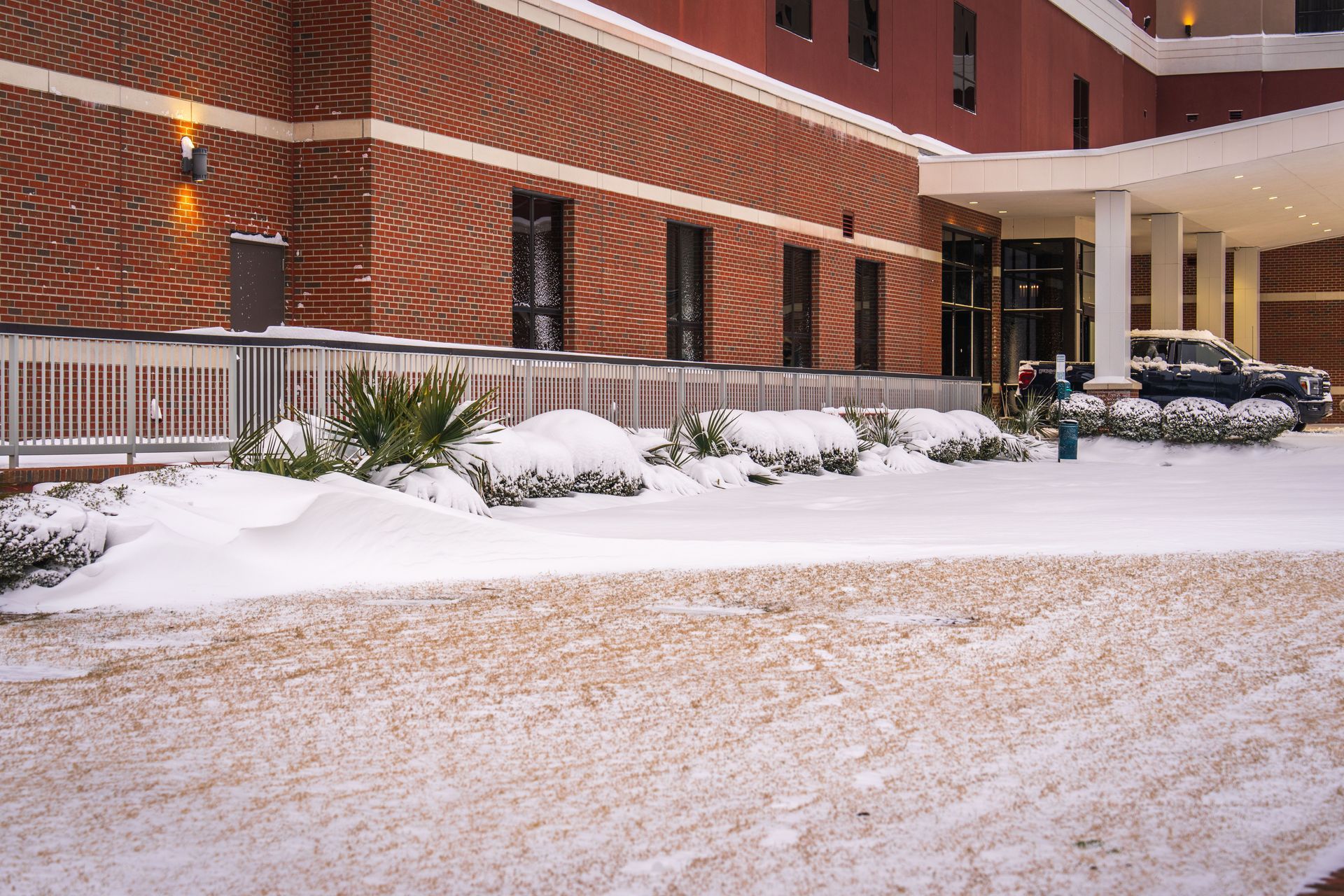
1. The Porte-Cochère and Valet Drive
This is the property's first impression and its highest-traffic pedestrian zone — guests stepping out of vehicles, often carrying luggage, frequently distracted. It needs pre-treatment before the first snowfall, not reactive plowing after.
2. Guest Parking, Not Just the Main Lot
Overflow lots, ADA-designated spaces, and employee parking areas are often serviced last, if at all, on a standard route. A guest parked in overflow parking at 11 p.m. after a long drive doesn't know — or care — that it wasn't part of the "primary" service zone.
3. Connective Walkways Between Buildings
Resort and campus-style properties with multiple buildings, breakfast rooms, or fitness centers in separate structures create walkway segments that a single-entrance snow plan simply doesn't account for.
4. Pool Decks and Patio Areas
Even when closed for the season, pool decks and patios accumulate ice on frequently-trafficked adjacent walkways and often sit outside the boundary of a standard service map.
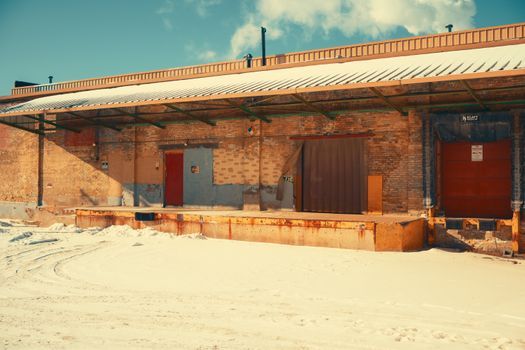
5. Loading Docks and Back-of-House Access
Housekeeping carts, food and beverage deliveries, and staff shift changes move through back-of-house areas at volume. An injury to an employee here carries the same documentation requirements as a guest injury out front.
6. Stairwells and Secondary Entrances
A Washington Supreme Court case we cover in our premises liability guide above turned in part on a property that cleared its main walkway but left a lesser-used area untreated with no record the hazard had even been assessed. Secondary stairwells and side entrances are exactly the kind of area that decision put on notice.
Building a Winter-Ready Snow and Ice Plan Before Fall Booking Season
Late summer and early fall — before the first booking surge of the season and before winter contracting demand peaks — is the right window to build this plan, not November. A property-specific plan should map every guest and staff-facing surface, not just the main entrance, and assign trigger thresholds (the accumulation depth that initiates service) separately for high-traffic guest zones versus secondary areas.
It should also account for the hours a hospitality property actually operates. Airport shuttle pickups, late check-ins, and early continental breakfast service mean the property needs coverage outside the standard business-day window a typicalcommercial snow removal contractassumes. If your current contract doesn't specify 24/7 response, that's the first gap to close.
Multi-property hotel groups managing locations across the I-5 corridor face an additional wrinkle: consistency. A guest who has a safe, well-documented winter experience at one property and an unsafe one at a sister location under the same brand doesn't distinguish between the two when leaving a review. Consolidating winter service under one vendor across a portfolio — the same approach we recommend forsenior living and healthcare facilities, where consistency of care carries similar weight — closes that gap and standardizes the documentation trail across every location.
Why Documentation Matters as Much as the Plow for Hotel Properties
When a claim does arrive — and given the volume of guest traffic a hotel handles across a winter season, one eventually will — the question isn't whether the property was serviced. It's whether you can prove it. A paper log signed by a driver at the end of a shift tells you what the crew reported doing. It doesn't independently verify when they were on-site, which specific zones they covered, or what conditions existed when they arrived.
Geo-fenced service records solve that gap. Timestamped, GPS-verified documentation of when equipment entered each zone, which areas were physically treated, and what product was applied creates an evidentiary record that exists independent of anyone's memory of a chaotic overnight shift. For a hospitality property fielding claims from guests who were on-site for one or two nights and are now back in another state or country, that independent record is often the only reliable account of what happened.
What to Look for in a Snow Removal Partner for Hospitality Properties
Not every commercial snow contractor is built for a guest-facing property. Before signing a contract for the coming season, property managers should ask a vendor directly whether they can service porte-cochère and valet zones on a shorter trigger threshold than the general lot, whether their crews are trained to work around active guest and vehicle traffic rather than an empty overnight parking lot, and whether service records are delivered in a format you can retain and produce years later if a claim surfaces after checkout.
It's also worth confirmingwhether the company self-performs the work or subcontracts it out— a subcontracted crew unfamiliar with your property's specific pinch points is a real risk at a hotel, where the layout knowledge that prevents a missed walkway often comes from repeat familiarity with the site. Our own20 questions to ask before hiring a commercial snow removal companycovers the broader evaluation framework this builds on.
Invictus serves hospitality and multi-property portfolios across Vancouver, Seattle, and Portland with on-site First Responder Units and LEED-compliant Easy Ice Melt pre-treatment designed to stop ice from forming on guest-facing surfaces before it becomes a hazard.
Frequently Asked Questions
How is snow removal for a hotel different from a standard commercial contract?
A hotel needs coverage for guest-facing zones a standard commercial route doesn't prioritize, valet drives, overflow parking, connective walkways between buildings and service hours that match actual guest traffic (late check-ins, early shuttles), not a standard business day.
Who is liable if a guest slips on ice at a hotel entrance?
In Washington, Oregon, and British Columbia, commercial property owners have a duty of reasonable care to keep premises safe for guests, and courts in the region have rejected the defense that snow and ice are simply "natural" and therefore not the property's responsibility. Documentation of service timestamps, coverage, and treatment records is what demonstrates that duty was met.
Do pool decks and patios need winter snow service if they're closed for the season?
Yes. Adjacent walkways and access points to pool and patio areas remain in use by staff and, in some cases, guests, even when the pool itself is closed, and ice accumulation there creates the same liability exposure as any other walkway.
When should a hotel finalize its winter snow removal contract?
Before fall booking season ramps up and before contracting demand peaks in early fall. Waiting until the first snowfall limits your choice of vendors to whoever still has capacity, not necessarily the one best suited to a guest-facing property.
Recent Posts