
Car Dealership Snow Removal: Protecting Inventory, Customers, and Liability | Invictus Snowfighters

Brad Caton • September 8, 2026

Share this article

A car dealership isn't a parking lot with a showroom attached. It's a display floor that happens to be outdoors every space between the entrance and the back row is inventory customers are meant to walk up to, touch, and get into. That changes what "snow removal" has to accomplish. Clearing pavement isn't enough. The service has to keep vehicles visible, keep customers moving safely between them, and keep the dealership's liability exposure in check the whole time it's happening. Most commercial snow removal contracts aren't written with any of that in mind.

Why a Dealership Lot Isn't Like Any Other Commercial Property

A standard commercial snow removal contract is built around one goal: clear pavement so people can walk and drive on it safely. That's the right goal for an office park or a warehouse. It's incomplete for a dealership lot, where the pavement is also a sales floor. Snow pushed into the wrong pile can bury a row of vehicles a salesperson needs visible from the street. A plow route that clears the drive lane but skips between-row spacing can leave customers stepping over windrows to reach the car they came to see. And unlike most commercial properties, a dealership lot sees a mix of pedestrian shoppers, test-drive traffic, and staff moving vehicles between rows all at once often during the exact hours a storm is still active.

None of that shows up in a generic snow removal scope of work. It has to be specified.

Sales staff feel the gap first. A salesperson walking a customer to a specific trade-in or a specific trim level needs that path clear and that vehicle visible not buried behind a windrow the plow crew pushed there because it was the fastest route to finish the lot. Multiply that across a full sales floor during a storm, and a snow removal plan that only accounts for "clear pavement" starts costing the dealership actual showroom traffic, not just creating a liability exposure.

The Liability Exposure Most Dealerships Underestimate

Dealership premises liability claims are already a well-documented exposure independent of weather. Zurich Insurance's auto dealer risk guidance walks through an actual large claim: an elderly customer tripped on an exposed conduit at a dealership less than an inch off the ground, covered in gray sheathing, in place for two years before anyone acted on it. The claimant sued for $24 million. The case ultimately cost the dealership $4 million to resolve. Zurich's point wasn't that the conduit itself was unusual; it was that small, overlooked hazards in high-traffic dealership areas turn into material claims, and that regular walkthroughs plus prompt hazard mitigation are what actually prevent them.

Snow and ice are a far more common version of that same exposure. A dealership lot generates constant foot traffic in the exact conditions wet pavement, freshly plowed snow, refreezing overnight that produce slip-and-fall claims. The Zurich case is a reminder that dealerships already carry meaningful premises liability risk before a single flake falls; winter conditions add a hazard that's harder to control and easier to overlook between service visits. Vancouver, Seattle, and Portland dealerships all carry this exposure regardless of which side of the border they're on.

Protecting Inventory From Plow and Blade Damage

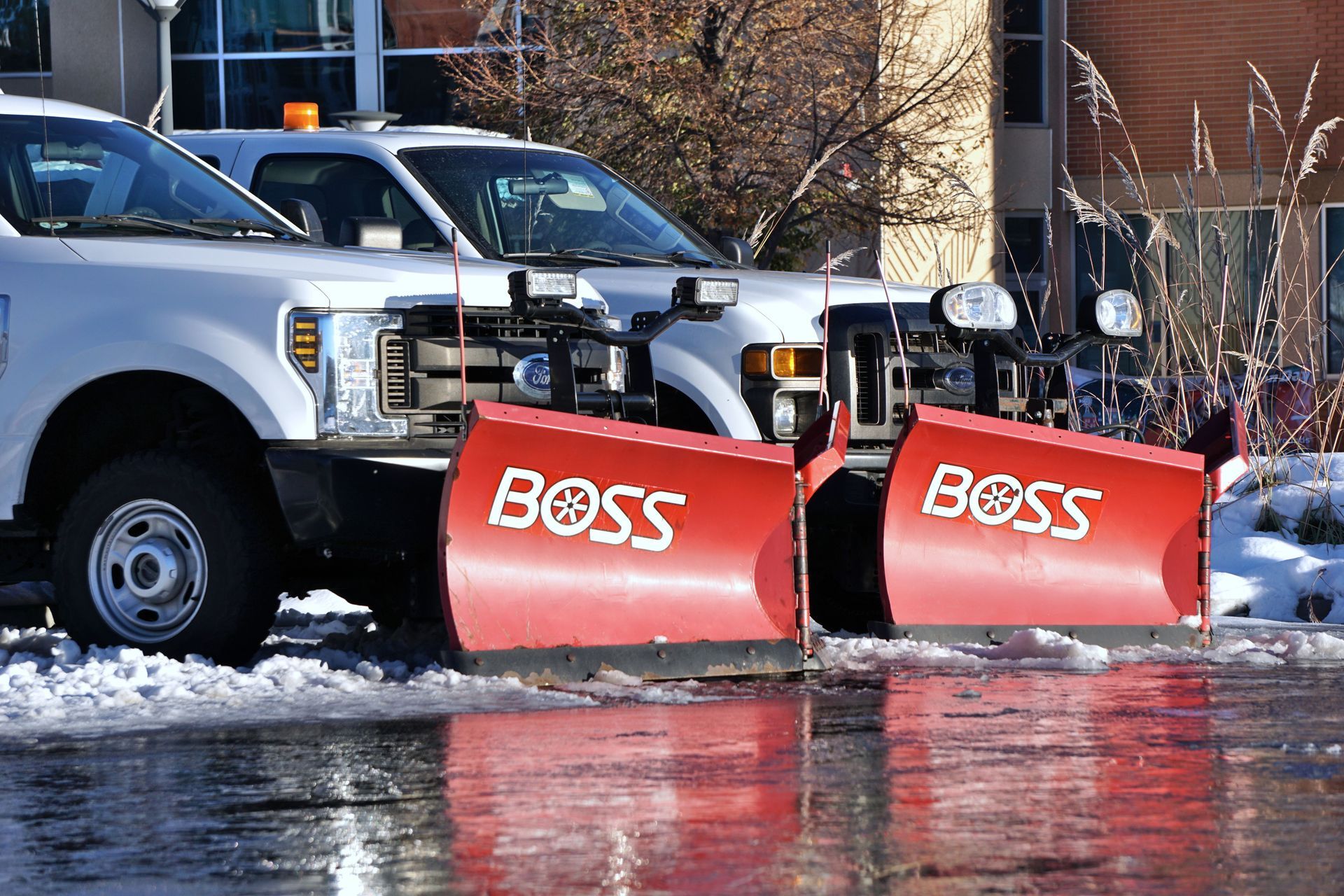
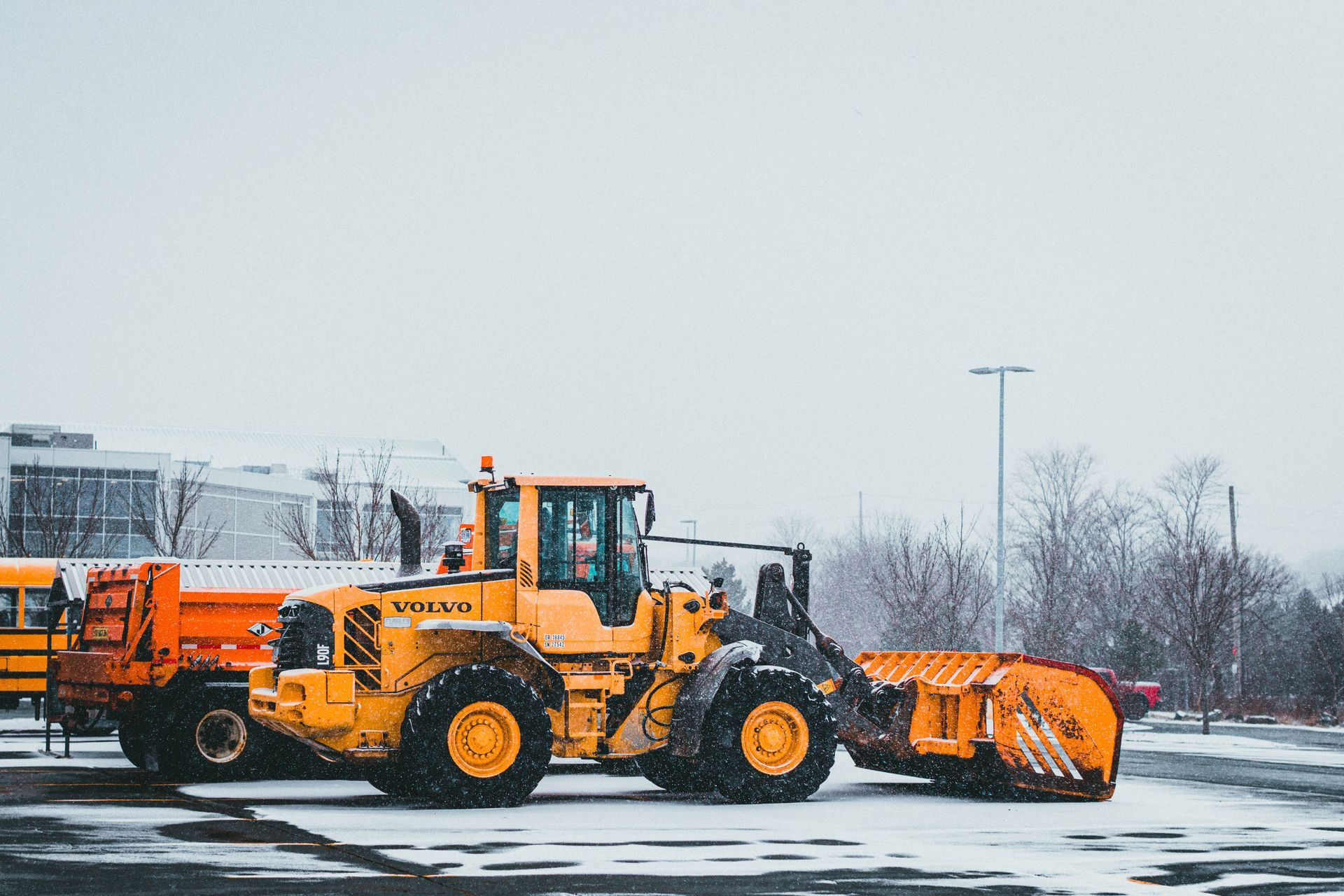
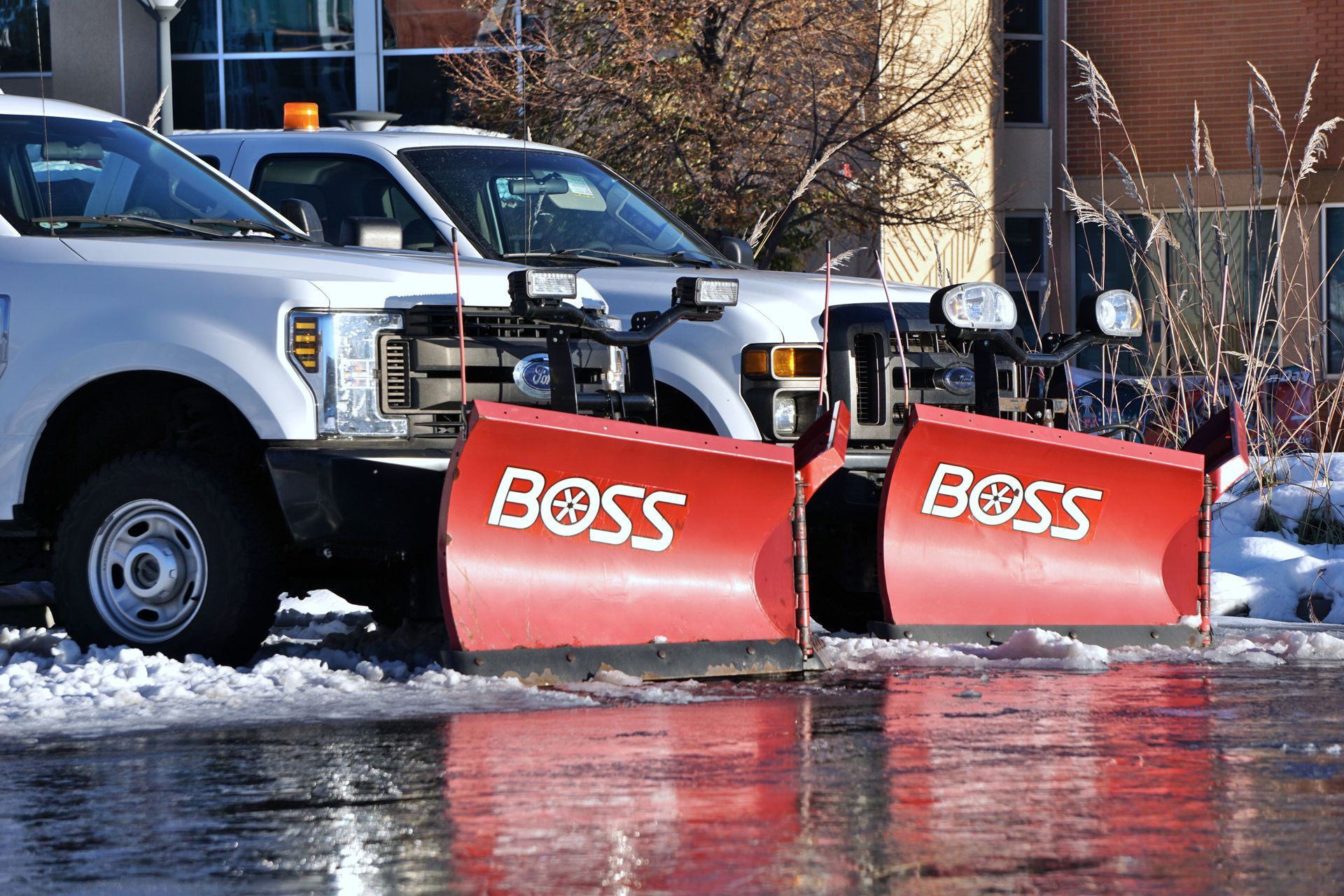
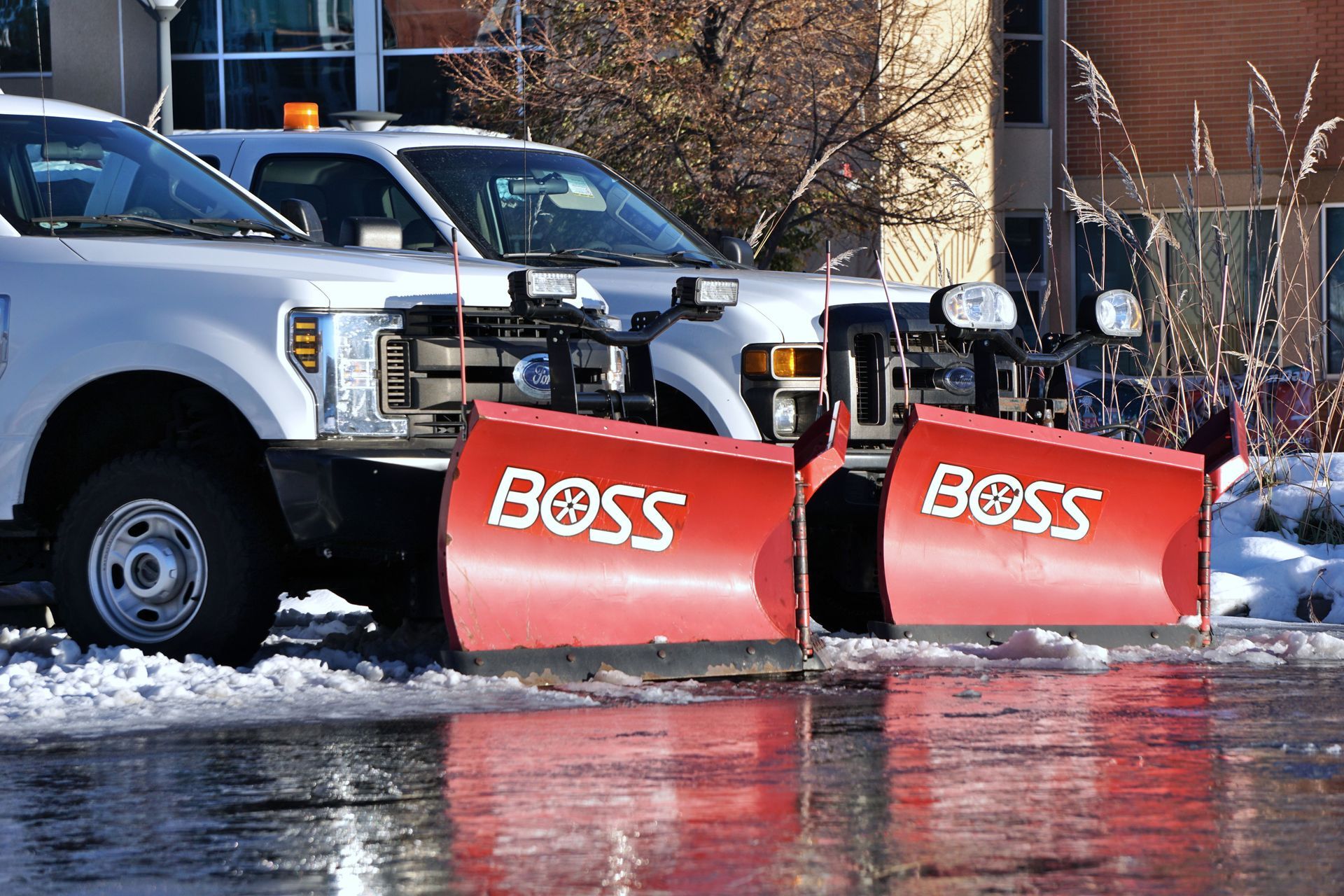
The hazard isn't only to people. It's to the vehicles themselves. Steel cutting edges are still the most common plow blade on the market Winter Equipment Company estimates they're on 60–75% of plows currently in circulation, largely because they're inexpensive and effective against hard-packed ice. But steel is rigid. When it strikes an obstruction — a wheel stop, a low bumper, a misjudged curb it doesn't flex, and it can transfer that impact directly into whatever it hit. Rubber and polyurethane cutting edges behave differently: they contour to the surface, absorb shock on contact, and glide over obstructions instead of striking them, which is exactly why they're the standard choice for decorative pavement and tight-clearance areas.

For most commercial lots, that distinction is a maintenance preference. On a dealership lot, staged inches from rows of inventory the dealership can't easily replace, it's a liability decision. A crew running steel edges through standard drive lanes and switching to rubber or poly edges for close-quarter work around parked vehicles is a small operational detail that a generic snow removal contract will never specify but a dealership-aware one should.

Keeping Sightlines and Customer Access Clear

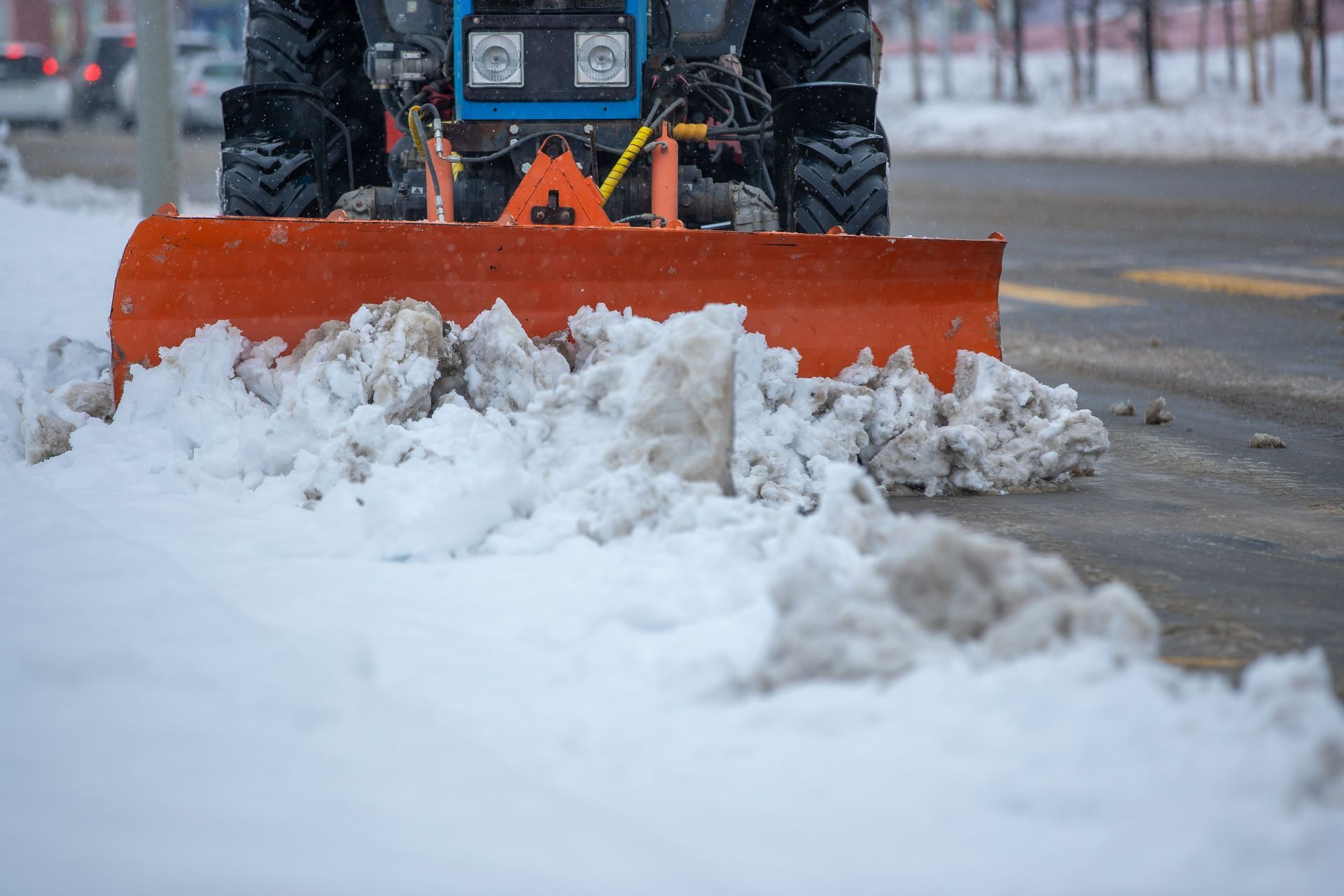
Where snow gets pushed matters as much as whether it gets pushed. A crew working a dealership lot needs a pre-agreed snow storage plan that doesn't bury display rows, block sightlines from the street, or eliminate the walking path between vehicles a customer is actively comparing. That means walking the lot with the general manager before the season, not improvising storage locations during the first storm.

It also means accessible parking can't become an afterthought. Federal and state law require accessible spaces and the routes leading to them stay clear of snow and ice, not just cleared "eventually" — we cover the specific requirements in our guide to ADA-compliant snow removal for commercial properties. On a dealership lot, those spaces are frequently closest to the showroom entrance — exactly where foot traffic and liability exposure are both highest.

What a Dealership-Specific Snow Removal Contract Should Include

A contract written for a generic commercial lot leaves too much to interpretation on a dealership property. At minimum, it should specify:

  • A snow storage map, agreed on before the season, that protects inventory sightlines and customer walkways
  • A blade-type requirement — rubber or poly cutting edges within a defined distance of parked inventory
  • Response-time triggers that account for extended showroom hours, not just a standard business-day window
  • Accessible parking and route clearance treated as a first-priority zone, not a secondary pass

These specifics belong in the SLA itself, not a verbal understanding with the crew. Our breakdown of what a snow removal SLA should require covers the baseline every commercial property needs; a dealership adds the inventory- and sightline-specific terms on top of it. And because contractor calendars fill early, our guide on why summer is the time to lock in a commercial snow removal contract still applies — dealership-specific terms are easiest to negotiate before the season, not during the first storm.

Multi-rooftop dealer groups with locations spread across the region face an added wrinkle: coordinating separate vendors per city usually means separate storage plans, separate response standards, and separate invoices to reconcile. We work with multi-property portfolios spanning Vancouver, Seattle, and Portland under one contract and one standard, which is only possible because Invictus is the only snow removal company with crews covering the full I-5 corridor.

Documentation: Your Defense If Something Goes Wrong

If a claim is ever filed, the dealership's best defense is proof of when the lot was serviced, what conditions looked like at the time, and how quickly the crew responded once conditions changed. That's what our documentation guide for slip-and-fall claims walks through in detail — geo-fenced timestamps and photo records beat a vague memory of "we sent someone out that morning" every time. Invictus also stages First Responder Units — on-site ice melt caches — at high-priority commercial properties, so treatment can begin the moment conditions turn instead of waiting for a truck to leave the yard. For a lot where every minute of exposure is a minute of liability, that head start matters.

As our founder Brad Caton puts it: "This is first responder business. People die in snow and ice situations." That's not marketing language for a dealership client — it's the operating standard behind how the crew is dispatched and documented.

Frequently Asked Questions

  • Is a standard commercial snow removal contract enough for a dealership?

    Usually not on its own. A standard contract clears pavement for safe walking and driving, but it doesn't address inventory sightlines, blade type near parked vehicles, or accessible-parking priority — all of which need to be written into the SLA specifically. 

  • Can plowing actually damage vehicles staged on the lot?

    A rigid steel blade striking a wheel stop, curb, or low bumper transfers that impact directly, since steel doesn't flex on contact. Rubber and poly cutting edges contour to the surface and glide over obstructions instead, which is why they're the safer choice for close-quarters work around inventory. 

  • What should a multi-location dealer group look for in a regional vendor?

    One contract, one response standard, and one point of contact across every rooftop — rather than reconciling separate vendors, separate storage plans, and separate invoices in every city the group operates in. 

  • How quickly should a dealership expect service once snow starts?

    That depends on the response-time trigger negotiated in the SLA, but it should account for extended showroom hours rather than a standard business-day window, since a dealership lot sees traffic well outside a typical 9-to-5. 

  • Does accessible parking need special attention on a dealership lot?

    Yes. Accessible spaces and the routes leading to them are legally required to stay clear of snow and ice, not just cleared eventually, and on most dealership properties those spaces sit closest to the showroom entrance exactly where foot traffic is heaviest. 

Get Your Dealership Ready Before the First Snow

A dealership lot has to do two jobs at once during a storm: stay safe, and keep selling. That takes a snow removal partner who understands the difference between clearing a parking lot and protecting a showroom floor that happens to be outdoors. Invictus Snowfighters is the only ISO SN9001-certified snow removal company covering the full I-5 corridor from Vancouver to Seattle to Portland — request a quote before this year's contracts fill up.

Recent Posts

By Brad Caton September 7, 2026
A snow removal RFP that skips the details invites bids you can't fairly compare. See what property managers should include, from service triggers to equipment guarantees. ISO SN9001-certified Invictus serves Vancouver, Seattle, and Portland. Request a quote.
By Brad Caton September 4, 2026
Snohomish County snow removal rules vary by city: Everett requires sidewalks clear by noon, Seattle uses a timely manner standard. See what your property owes and how Invictus keeps multi-city portfolios compliant.
Snow accumulated on a flat commercial building roof in the Pacific Northwest
By Brad Caton September 3, 2026
Commercial roof snow load is a structural risk, not a parking lot one. See what IBC and ASCE 7 require, key warning signs, and a pre-winter checklist. Request a quote.
By Brad Caton September 2, 2026
Snow removal contractor insurance takes more than a certificate. See what an additional insured endorsement requires, per ISO SN9001-certified Invictus. Get a quote.
By Invictus Snowfighters September 1, 2026
Who's responsible for snow removal in a commercial lease, landlord or tenant? See how CAM clauses and city code assign it. ISO SN9001-certified across the Pacific Northwest. Request a quote.
By Invictus Snowfighters August 31, 2026
Snow removal contractor onboarding, explained: what happens after you sign, from site assessment to First Responder Unit staging. ISO SN9001 certified across the Pacific Northwest I-5 corridor. Request your free quote.
By Brad Caton August 28, 2026
Snow removal contract pricing is rising as BC, WA and OR raise minimum wage in 2026. See what it means for your budget and how to lock in reliable service.
By Invictus Snowfighters August 28, 2026
Snow removal insurance and landscaping insurance aren't the same policy. See where the coverage gap opens up, what a real snow-specific policy includes, and the questions to ask before you sign. Request a quote.
By Brad Caton August 27, 2026
Commercial snow removal gets expensive and unpredictable when a portfolio is split across five vendors. See what real economy-of-scale consolidation saves, and what to vet first. Request a quote from Invictus.
By Brad Caton August 27, 2026
Snow removal invoice disputes usually mean one thing: no verifiable service record. See how GPS-verified documentation protects PNW portfolios. ISO SN9001-certified. Get a quote.
Show More