
Snow Removal and Stormwater Compliance: What Pacific Northwest Property Managers Must Know | Invictus Snowfighters

Brad Caton • August 24, 2026

Share this article

Every commercial property manager along the I-5 corridor knows what a snowstorm does to a parking lot. Fewer know what it does to the storm drain at the edge of that lot. When snow melts and salt-treated pavement drains into a catch basin, that runoff is stormwater and in Washington, Oregon, and British Columbia, stormwater is regulated. For property managers who oversee commercial, institutional, or multi-property portfolios, understanding that connection isn't optional environmental trivia. It's part of the same liability picture as slip-and-fall risk and service documentation.

Why Snowmelt Counts as Stormwater

The U.S. Environmental Protection Agency defines stormwater runoff as water "generated from rain and snowmelt that flows over land or impervious surfaces, such as paved streets, parking lots, and building rooftops, and does not soak into the ground." That runoff can carry pollutants, including road salt and de-icing chemicals, directly into streams, lakes, and groundwater. Snowmelt from a treated parking lot is treated the same way as rainfall runoff under federal law it just happens to be carrying whatever was applied to the pavement before it melted.

This matters because EPA's National Pollutant Discharge Elimination System (NPDES) permitting program regulates stormwater discharges from municipal separate storm sewer systems (MS4s), industrial sites, and construction activity. Property owners and operators aren't automatically off the hook just because the discharge originates as melted snow rather than rain.

The Real Cost of Road Salt Runoff

Salt is the default de-icing tool for most snow removal operations, and it's effective. It's also corrosive and slow to break down once it enters the water cycle. The EPA's Southeast New England Program has documented that rock salt's corrosive effects on cars, bridges, and infrastructure result in approximately $5 billion in annual repair costs across the United States. Once chloride from road salt reaches surface water or groundwater, it doesn't filter out or degrade — it accumulates. The same EPA analysis notes that road salt can infiltrate drinking water reservoirs and wells, and that elevated chloride levels are toxic to fish, aquatic insects, and amphibians.

For a property manager, that translates into a real question: what is your snow removal vendor putting down, how much of it ends up in the storm drain instead of doing its job on the pavement, and does your service provider have a documented answer if a regulator or an environmental compliance audit ever asks?

The same EPA analysis points to what's actually worked to reduce this exposure elsewhere. Engineered porous pavement, which lets standing water seep through instead of pooling and refreezing, was found in one study to cut annual salt use by 77% compared to standard pavement. New Hampshire's statewide road-salt reduction initiative, built around calibrated "closed loop" spreading equipment instead of visual-estimate application, cut the state's road salt use by 20% within a few years. Neither example is unique to New England — the underlying lesson, that calibrated, documented application beats over-salting by default, applies just as directly to a commercial parking lot in Bellevue or Beaverton as it does to a state highway.

Snow shovel clearing a path through deep snow outdoors

Stormwater Permits and Snow Removal: What Pacific Northwest Property Managers Should Know

Washington's Department of Ecology is direct about where the line falls. Under the state's Construction Stormwater General Permit — reissued and effective January 1, 2026 — coverage is required any time there is a possibility that stormwater, including snowmelt, could leave a site or enter a waterway. The permit's own guidance states plainly: "If the location of your site poses no possibility that rainfall or snowmelt could leave the site or enter a waterway, you do not need a permit." In practice, Ecology notes that in almost every case, that possibility exists.

That standard is written for active construction sites, but the underlying logic extends to how regulators and insurers think about any commercial property's stormwater exposure: snowmelt is not treated as a special exception to runoff rules. Multi-property portfolios spanning Vancouver, Seattle, and Portland sit under separate state and provincial frameworks, but the throughline is consistent — stormwater discharge, including from snow and ice management, is a regulated activity, not an unregulated byproduct of winter maintenance.

For property managers, the practical takeaway isn't "call an environmental attorney every time it snows." It's understanding that the same due-diligence questions you already ask about slip-and-fall liability and your snow removal SLA should extend to how your vendor manages runoff, especially for portfolios that include properties near wetlands, waterfront, or municipal storm systems with stricter local requirements.

Portfolios spanning Vancouver, BC through Seattle and Portland add a wrinkle most single-city operators never have to think about: three separate regulatory environments. British Columbia's provincial water sustainability rules, Washington's Department of Ecology permits, and Oregon's Department of Environmental Quality framework don't share a single standard for stormwater discharge, sampling, or reporting. A property manager overseeing a cross-border or multi-state portfolio can't assume that what satisfies one jurisdiction automatically satisfies another — which is exactly why a single vendor with consistent, documented practices across the full I-5 corridor is worth more than a patchwork of local subcontractors, each interpreting "compliant" differently.

What a Lower-Impact Snow and Ice Management Plan Looks Like

Reducing environmental exposure from winter operations comes down to a few concrete practices: applying de-icing product before a storm rather than over-salting after the fact, using calibrated equipment instead of guesswork, and choosing lower-impact products where the application allows it. This is our own operating approach, not a claim about the industry as a whole: Invictus uses a LEED-compliant Easy Ice Melt liquid application that bonds to pavement surfaces before ice forms, which is designed to reduce the volume of product needed compared to reactive rock-salt spreading, and is formulated to be safer for pets and landscaping where it's used.

Just as important as the product is the record. Every Invictus service visit is geo-fenced and timestamped, which means a property manager has a documented history of when and where product was applied — useful for a slip-and-fall defense, and equally useful if a stormwater compliance question ever comes up during a lease audit, insurance review, or municipal inspection.

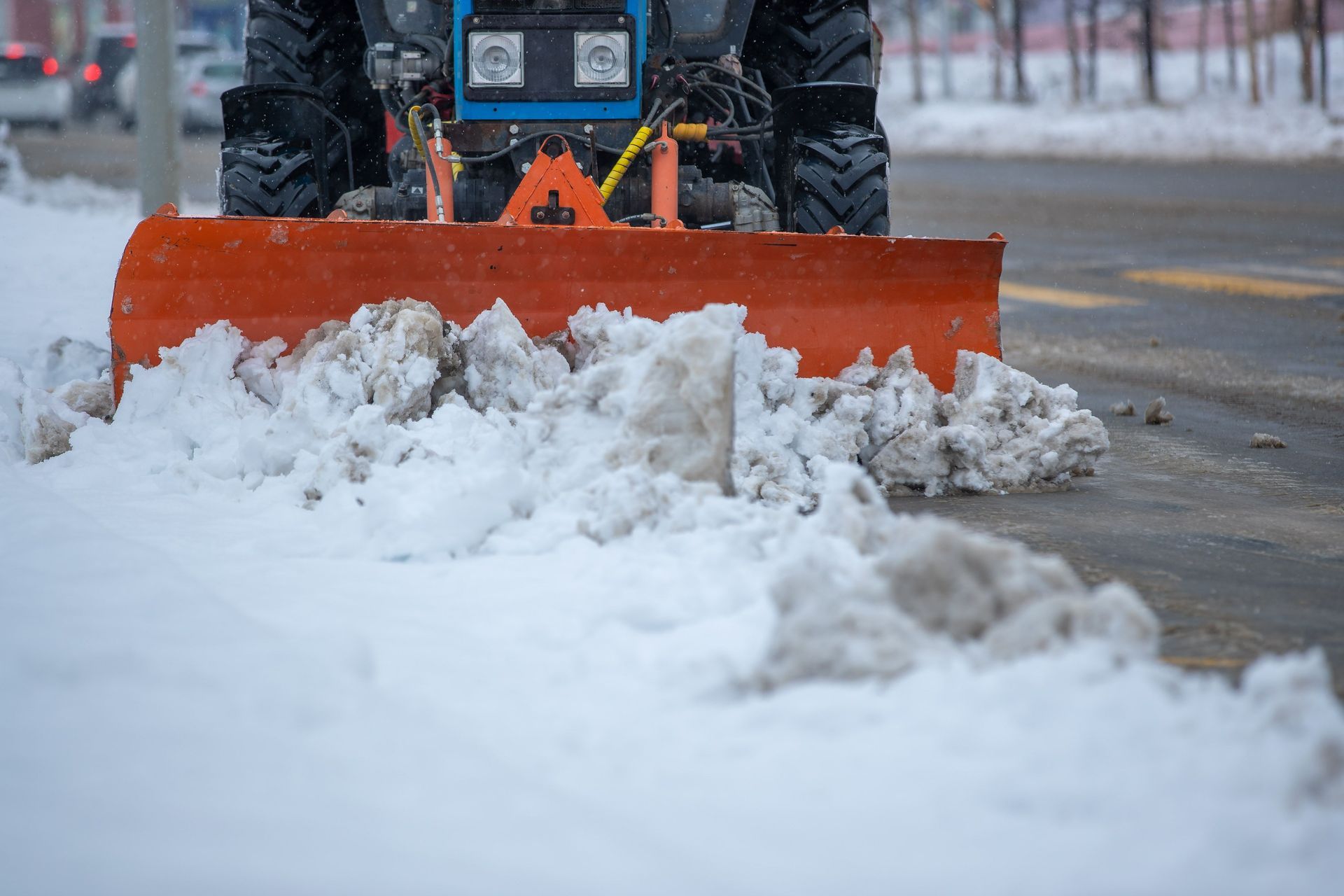
Snowplow clearing thick snow from a street, with a pedestrian crossing sign in the background

Questions to Ask Your Snow Removal Vendor About Environmental Compliance

Before this winter's contracts renew, a short list of questions can surface a gap before a regulator or an insurer does:

  • What de-icing product do you use, and is application rate calibrated to conditions rather than applied by eye?
  • Do you have documentation of where and when product was applied on my property?
  • Are you aware of any local or state stormwater requirements that apply to my specific site (proximity to a waterway, municipal storm system, or environmentally sensitive area)?
  • Does your snow removal contract specify how excess snow is disposed of, and where?
  • If my portfolio spans multiple cities — say, Vancouver, Seattle, and Portland — does your provider apply consistent standards across jurisdictions, or does practice vary by crew?

A vendor that can't answer these directly is a vendor whose practices you're inheriting the liability for, right alongside the more familiar risk of a missed slip-and-fall claim.

FAQ

  • Does snow removal require a stormwater permit?

    Not on its own. Stormwater permitting applies at the property or project level, not per-service. But if your property already requires coverage under a construction, industrial, or municipal stormwater permit, snowmelt and de-icing runoff fall under that same permit's scope, per Washington Department of Ecology guidance. 

  • Is road salt runoff actually regulated, or just discouraged?

    Chloride from de-icing salt is a documented water quality concern that state and federal agencies track under NPDES and related surface water programs. Whether a specific property faces a permit requirement depends on its size, location, and whether it discharges to a regulated waterway or municipal storm system but the underlying pollutant is one regulators actively monitor. 

  • My property is under an acre. Am I exempt?

    Acreage thresholds are relevant to some permit categories, like Washington's Construction Stormwater General Permit, but they aren't a blanket exemption for every stormwater obligation a property might have, particularly under municipal (MS4) requirements. Confirm your specific site's status with your local jurisdiction rather than assuming size alone settles the question. 

  • What can I ask for from my snow removal provider to reduce this exposure?

    Documentation of product type and application rate, a described disposal process for excess snow, and a point of contact who can speak to how service is adjusted for environmentally sensitive sites. 

Winter operations across the Pacific Northwest already carry enough liability considerations without adding an unexamined one. Invictus Snowfighters pairs ISO SN9001-certified service standards with documented, lower-impact de-icing practices across the full I-5 corridor. Request a quote to see how our approach holds up against your current provider's.

Recent Posts

By Brad Caton August 24, 2026
What can you enforce when a snow removal contractor breaches your SLA? A property manager's guide to liquidated damages, force majeure, and documentation, from ISO-certified Invictus Snowfighters.
By Brad Caton August 21, 2026
School and university snow removal liability isn't ordinary premises law. Learn what governmental immunity covers, where courts draw the line for enrolled students, and how documentation protects your campus.
By Brad Caton August 21, 2026
Parking garage de-icing salt slowly corrodes reinforced concrete. See what engineering research says about safer de-icers for PNW structures. Get a quote.
By Brad Caton August 20, 2026
Retail and shopping center snow removal carries a liability risk other properties don't: peak ice season lands during peak holiday foot traffic. See what NSC and NRF data show, and how ISO SN9001-certified Invictus keeps Pacific Northwest retail properties covered. Request a quote.
Snow-covered residential driveway and walkway in a Pacific Northwest neighborhood cleared by professional snow removal
By Brad Caton August 20, 2026
Looking for residential snow removal in the Pacific Northwest? Invictus Snowfighters has protected homes and driveways across Vancouver, Seattle, and Portland for over 30 years with ISO SN9001 certified, equipment-matched service. Book your winter coverage now, before the first storm fills our schedule.
By Brad Caton August 19, 2026
ADA snow removal rules require accessible parking spaces and routes stay clear of snow and ice, not just sidewalks. See what federal and Washington law require, and how Invictus keeps Pacific Northwest properties compliant this winter.
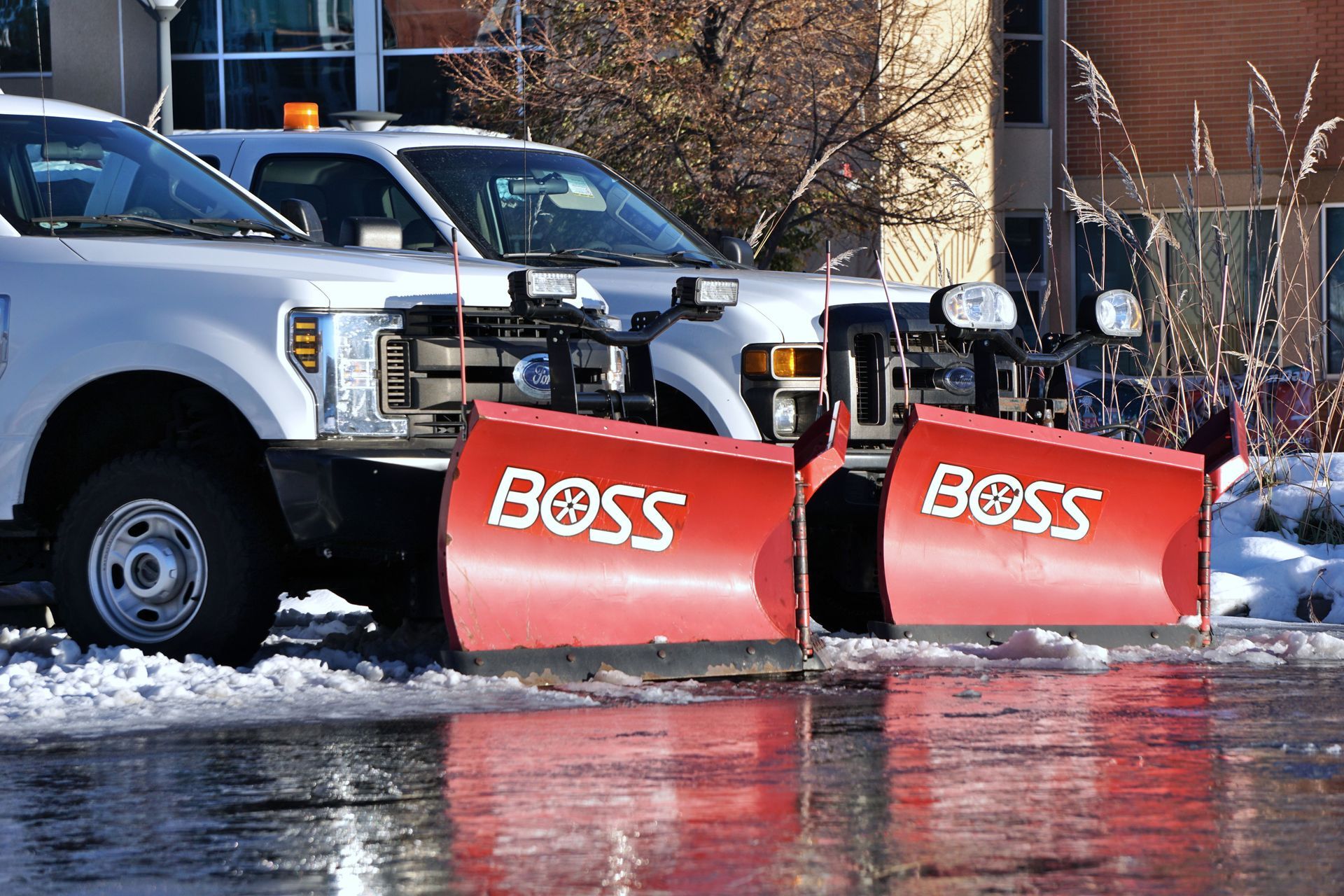
Commercial snow plow clearing a multi-property parking lot in the Pacific Northwest
By Brad Caton August 18, 2026
Cross-border snow removal keeps Vancouver, Seattle, and Portland portfolios under one vendor instead of three. Invictus is the only ISO SN9001-certified operator covering the full I-5 corridor. Request a quote.
By Brad Caton August 17, 2026
Cross-check last winter's snow removal invoices and incident reports before you renew. A checklist from ISO SN9001-certified Invictus. Call 888.459.0994.
By Brad Caton August 14, 2026
Commercial de-icing chemicals aren't interchangeable. See what EPA and Penn State research shows about concrete damage, corrosion, and chloride runoff, and how Invictus applies it across the I-5 corridor. Request a quote.
By Brad Caton August 13, 2026
HOA and condo association snow removal responsibility under Washington law, plus the 2026 rule that changes vendor approval. ISO SN9001 certified since 1998. Get a winter quote.
Show More