

Snow Removal Contract Breach: Remedies, Force Majeure, and What You Can Enforce

Brad Caton • August 24, 2026

Share this article

The lot didn't get plowed by 6 a.m. like the contract says. Someone slipped in the entrance before your crew even arrived, and now you're on the phone with your insurance broker instead of your snow removal company. Every property manager who has signed a commercial snow removal contract has wondered, at some point, exactly what recourse they actually have when the other side doesn't perform. The honest answer is: it depends on what the contract says, whether the failure was actually the contractor's fault, and what you can prove happened.

This guide walks through the remedies available when a snow removal contractor breaches its contract, how liquidated damages clauses work (and when courts will throw them out), why "force majeure" isn't the all-purpose excuse it's often treated as, and what to actually do in the hours after you suspect a breach. None of this is a substitute for advice from your own attorney on your specific contract, but it will tell you what questions to ask and what leverage you realistically have whether you're managing one site or reviewing terms the way we outlined in choosing a snow removal company in the first place.

Person in a gray suit flipping through papers at a desk in a modern office kitchen

The Remedies Available When a Snow Removal Contractor Breaches Its Contract

Contract law recognizes a specific, limited set of remedies for a breach, and they're not interchangeable. The Miller Law Firm's rundown of common breach-of-contract remedies lists six: compensatory damages, specific performance, injunctions, rescission, liquidated damages, and nominal damages. In a snow removal relationship, most of these narrow down fast.

Compensatory damages cover your actual, provable losses a slip-and-fall settlement, the cost of hiring an emergency backup contractor at a premium rate, lost rent from a tenant who broke a lease over an unsafe entrance. Specific performance (a court ordering the contractor to actually plow) is almost never practical for a time-sensitive service like snow removal; by the time a court rules, the storm is long over. Rescission canceling the contract outright is available for a material breach, meaning one serious enough to go to the heart of the agreement, not a single late response during an unusually chaotic storm. Liquidated damages, when your contract includes them, sidestep the need to prove actual losses at all more on that below.

The practical reality for most property managers is that liquidated damages and termination rights (if your contract has them) are the tools you can act on quickly. Compensatory damages usually mean litigation, which is slow and expensive relative to the size of a typical seasonal snow contract.

Liquidated Damages Clauses: What Makes Them Enforceable

A liquidated damages clause sets a specific dollar amount, or a formula, that the contractor owes if it fails to perform  agreed to by both sides before anything goes wrong. According to Cornell Law School's Legal Information Institute, liquidated damages exist precisely because actual damages from a breach are often "difficult or impossible to prove," and a pre-agreed figure saves both sides the cost of litigating what the real loss was.

But that same source is explicit about the limit: courts will not enforce a liquidated damages clause if it's punitive, unconscionable, or contrary to public policy. In practice, that means the number in your contract has to bear some reasonable relationship to what a breach would actually cost you not be set arbitrarily high to punish the contractor into compliance. If your snow removal contract has a liquidated damages clause, or you're negotiating one into a new agreement, that reasonableness test is the thing to keep in mind: a number that looks great on paper can be unenforceable if it's disconnected from real-world exposure.

This is one more reason the SLA you require before you sign matters as much as the price. A service level agreement that clearly defines trigger depth, response window, and documentation standards gives a liquidated damages clause something concrete to attach to — "contractor failed to begin service within X hours of the defined trigger" is enforceable in a way that "contractor didn't do a good job" is not.

Force Majeure: When Bad Weather Isn't a Breach at All

Not every missed or delayed service is a breach. Force majeure clauses exist to allocate the risk of events genuinely outside either party's control, and severe weather is the textbook example. The Engineers Joint Contract Documents Committee (EJCDC), which writes standard construction contract language used across the industry, notes that force majeure literally means "superior force" — delays that are the fault of neither party.

The catch, as EJCDC's own guidance points out, is that there's no universal legal definition of "abnormal weather." The committee cites a 2004 Armed Services Board of Contract Appeals ruling in which a contractor successfully argued that 54 days of unusually severe winter weather excused delay penalties but the board reached that conclusion only after a fact-specific comparison against historical weather data for the project's location. Even then, the standard construction contract language EJCDC drafted (Paragraph 4.05.C of its widely used general conditions) treats force majeure weather as grounds for a schedule extension only not a change in price, and not a blanket excuse from the underlying obligation.

The takeaway for a snow removal contract: force majeure protects a contractor from a genuinely extraordinary event, not from ordinary winter storms that a properly staffed, properly equipped provider should be able to handle within its contracted response window. If a contractor invokes force majeure every time it snows hard, that's a sign the clause is being stretched past what it was written to cover.

The Real Battleground: "Reasonable Efforts" and Documentation

Most snow removal disputes never reach a courtroom over force majeure doctrine. They turn on a much narrower, much more practical question: did the contractor make a reasonable effort under the conditions that actually existed? Ferrari & Associates, an insurance brokerage that works specifically with snow removal contractors, put it plainly in their guidance on changing risk exposure in the industry: "there is more disputes about what constitutes 'reasonable efforts' under a snow contract" as weather patterns grow less predictable, and "clear documentation is the only way to protect yourself. Logs, timestamps, and photo records are no longer optional…they are evidence."

That cuts both ways. If you're the property manager alleging a breach, your case is only as strong as your own documentation of what actually happened on your property — when the snow started, when it was reported, when (if ever) a crew showed up. If your contractor can't produce comparable records showing when they arrived, what conditions they found, and what they did, that absence of documentation is itself telling.

This is exactly why First Responder Units stocked with de-icing product and geo-fenced arrival/departure logging aren't just operational nice-to-haves — they're the evidentiary record that either supports a contractor's claim of reasonable performance or exposes its absence. A property manager evaluating a new provider, or trying to hold an existing one accountable, should ask directly what documentation the contractor generates automatically, without having to be asked for it after the fact.

What to Do the Moment You Suspect a Breach

The instinct when a lot doesn't get plowed is to call and vent. Do that, but do these things too, in roughly this order:

Orange snowplow clearing a dirty snowbank along a roadside near colorful buildings

Pull the contract's trigger and response terms first. Before assuming a breach occurred, confirm what was actually promised — the snowfall depth that triggers service, the response window once that threshold is hit, and whether the storm in question genuinely met it. A contractor who arrives within the contracted window after a one-inch dusting that didn't trigger the SLA hasn't breached anything.

Document the actual conditions on your property, with timestamps. Photos of unplowed walkways, the time you or a tenant reported the hazard, and any incident (a slip, a vehicle stuck, a tenant complaint) create the record you'd need for either a liquidated damages claim or, if it comes to that, a compensatory damages case.

Notify the contractor in writing, not just by phone. A written notice that references the specific SLA term you believe was missed starts the clock on any cure period your contract provides and creates a paper trail independent of your own memory of the call.

Check what your contract actually authorizes you to do next. Some agreements include a right to hire a substitute provider for that storm and back-charge the difference; others require a formal cure notice before you can terminate. Acting outside what your own contract permits can turn you into the breaching party.

Loop in your insurance broker if there's any injury or property damage exposure. A slip-and-fall claim runs on its own timeline separate from your contract dispute with the vendor, and early notice to your carrier protects your position on both fronts.

How Invictus Snowfighters Builds Contracts That Hold Up

We've written before about how to score a snow removal RFP and how snow removal pricing actually works in the Pacific Northwest, because most of the disputes we hear about from prospective clients trace back to a contract that was vague from the start. Our approach is built around not becoming the case study in this article. Geo-fenced arrival and departure logging on every property, our ISO-certified documentation practices, and First Responder Units pre-staged with ice melt at high-liability sites all exist for the same reason: when a storm hits, "we were there and here's proof" is worth more than any liquidated damages clause you'll ever have to invoke.

That matters most for the property managers we hear from most often — the ones running commercial portfolios in Portland, Tacoma, Bellevue, and growing Hillsboro-area commercial sites, who can't afford to find out mid-storm that their vendor's idea of "reasonable efforts" doesn't match theirs. If you'd rather have this conversation before you sign than after a bad storm, that's exactly the conversation the team at Invictus Snowfighters is built for.

FAQ: Snow Removal Contract Breach and Remedies

  • Is a single missed or late plow automatically a breach of contract?

    Not necessarily. It depends on whether the snowfall met your contract's defined trigger depth and whether the contractor responded within the agreed window. A late response after a trigger was clearly met is a stronger case than a general sense that "it should have been plowed sooner." 

  • Can I withhold payment if I believe my snow removal contractor breached the contract?

    Only if your contract specifically allows it, or the breach is material enough to justify rescission. Withholding payment outside those terms can put you in breach instead, so check your contract's language (or ask an attorney) before doing it. 

  • What's the difference between liquidated damages and just suing for actual damages?

    Liquidated damages are a pre-agreed dollar amount or formula written into the contract, so you don't have to prove your exact losses after the fact. Suing for compensatory damages means proving what you actually lost, which is slower and more expensive but isn't capped by a pre-set figure. 

  • Does a force majeure clause excuse a contractor from performing at all during a bad storm?

    Not entirely, and not automatically. Standard force majeure language, as used across the construction industry, typically excuses timing (an extension) rather than the underlying obligation, and only for events genuinely outside the contractor's control not for ordinary winter storms a properly equipped provider should be able to handle within its contracted response window. 

  • What's the single best thing I can do to protect my position before a dispute ever happens?

    Insist on documentation standards in the contract itself timestamped arrival/departure records, photo evidence, geo-fencing, or equivalent rather than relying on your own memory or your contractor's word after the fact. Disputes are won or lost on records, not recollections. 

Recent Posts

Property manager and maintenance contractor shaking hands in a commercial parking lot
By Brad Caton • October 16, 2026
Managing five property maintenance vendors instead of one costs hours every month. See how commercial property managers consolidate winter service with the rest of their maintenance calendar, from a company serving 500+ Pacific Northwest properties for 30+ years. Get a quote.
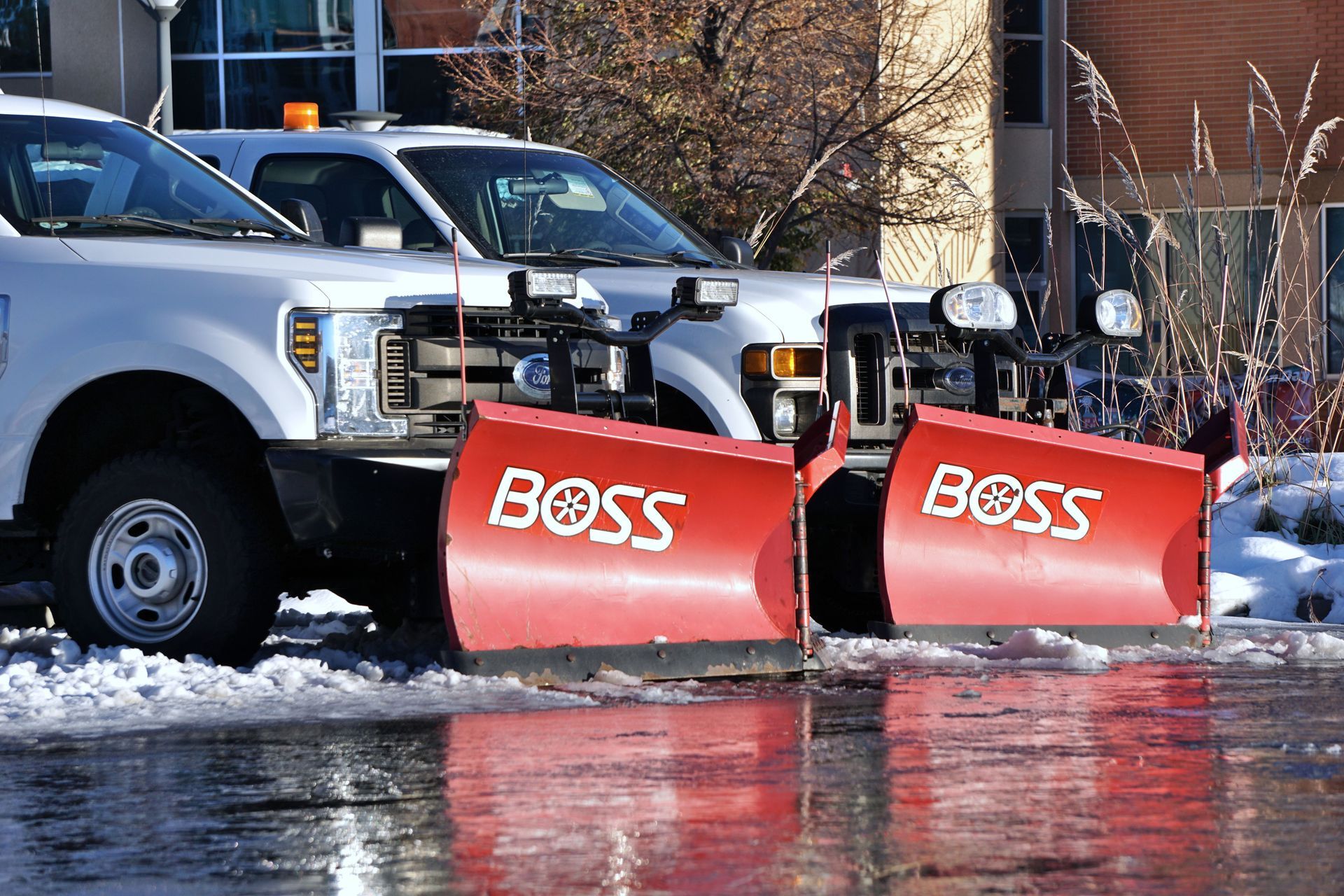
Snowplow clearing a large commercial parking lot for a multi-property portfolio contract in the Pacific Northwest
By Brad Caton • October 14, 2026
Multi-property snow removal contracts consolidate a fragmented, sole-proprietor-heavy market into one accountable partner. See what portfolio bundling actually saves, what to verify first, and the one trade-off to watch. Request a quote.
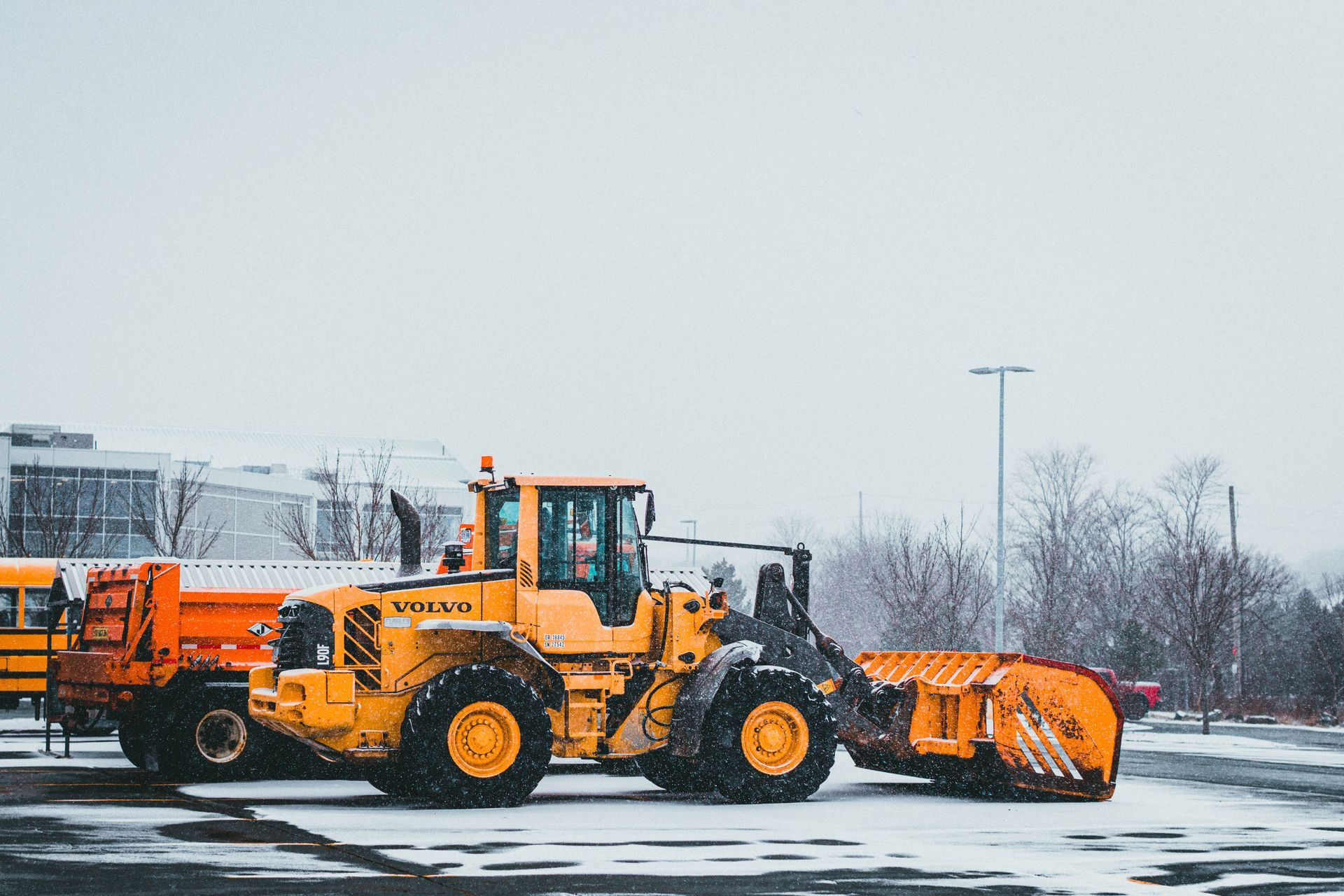
Yellow snowplow and front loader clearing a snowy parking lot in winter
By Brad Caton • October 12, 2026
How much snow removal equipment does your commercial property really need? Learn to evaluate a vendor's fleet capacity before the storm hits. ISO SN9001-certified Invictus serves the Pacific Northwest I-5 corridor. Request a quote.
Snow plow clearing a commercial parking lot in the Pacific Northwest at dawn
By Brad Caton • October 9, 2026
Trigger depth clauses tell you when a plow shows up — not when your property becomes a liability. See what a trigger depth actually covers, what SIMA's own guidance says it misses, and how Invictus Snowfighters' First Responder model closes the gap across the I-5 corridor. Request a quote.
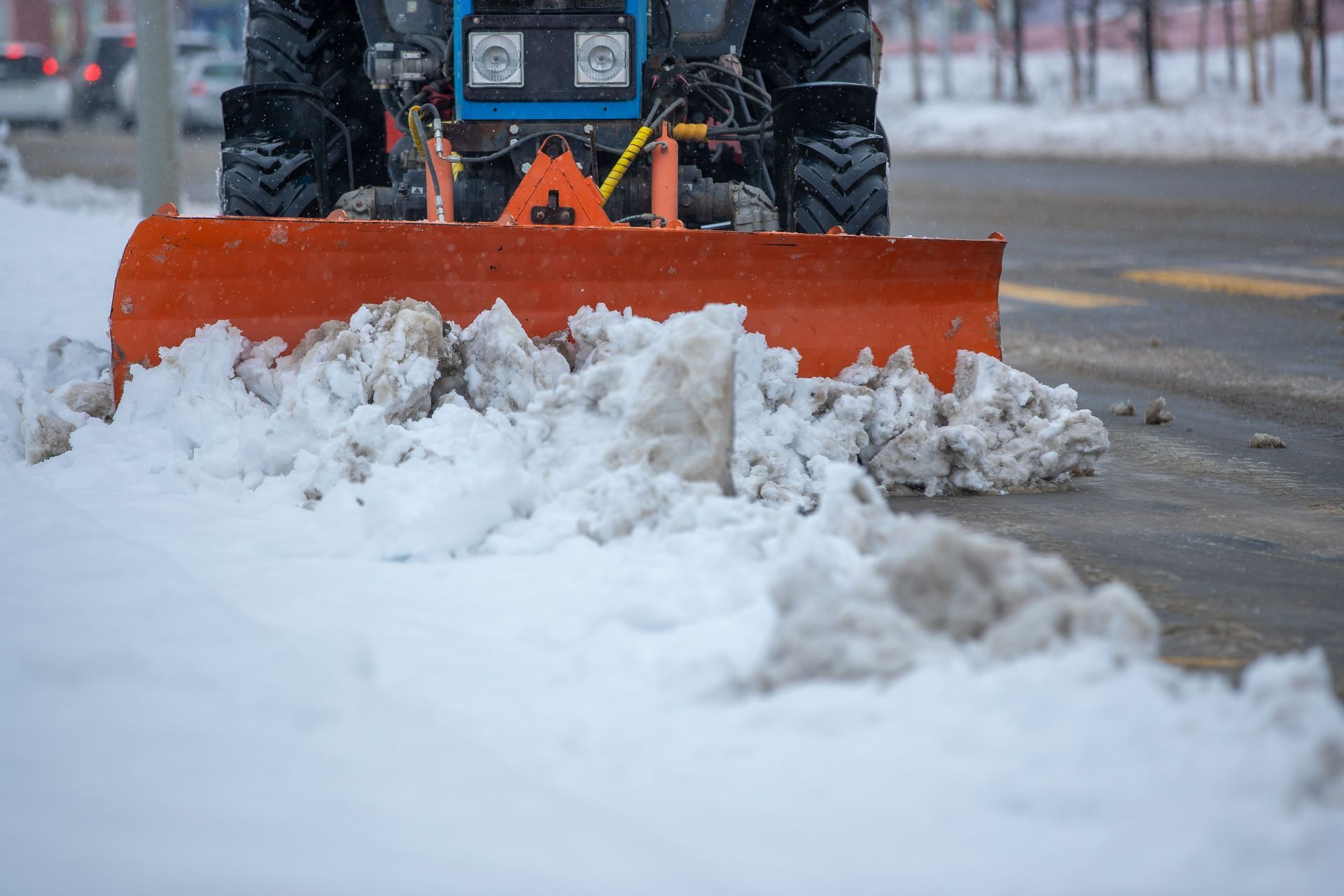
Snowplow clearing snow from a road, with a bright orange blade pushing slush forward
By Brad Caton • October 7, 2026
In-house vs. outsourced snow removal: how Pacific Northwest property managers can weigh liability, equipment costs, and staffing. ISO SN9001-certified Invictus explains what to ask. Get a quote.
Person operating an orange snow plow clearing slush from a snowy road
By Brad Caton • October 5, 2026
Switching commercial snow removal providers takes more than a phone call — termination clauses, auto-renewal traps, and a coverage gap can all bite you. See the safe sequence for switching before winter, from a PNW snow contractor that's covered the I-5 corridor since 1990. Request a quote.
Fleet of commercial snowplow trucks staged in a yard before a winter storm in the Pacific Northwest
By Brad Caton • October 2, 2026
Snow removal equipment and staffing capacity is the best predictor of whether your site gets serviced in the worst storm of the season. Invictus breaks down the capacity math, real response-time standards, and the questions that expose an overextended contractor. Request a quote.
Orange snowplow clearing a large snowbank on a street beside colorful buildings
By Brad Caton • October 1, 2026
Industrial and manufacturing plant snow removal must meet OSHA's general industry standards for walking-working surfaces and powered trucks. See what ISO SN9001-certified Invictus recommends before winter. Get a quote.
Orange snowplow trucks clearing a snowy parking lot in winter
By Brad Caton • September 30, 2026
Snow removal contractor insurance shouldn't be assumed. See what coverage and documentation ISO SN9001-certified Invictus verifies before every contract. Get a quote.

Downtown Vancouver skyline in winter snow with the North Shore mountains
By Brad Caton • September 28, 2026
A record El Niño winter is forecast. What it means for snow and ice on Metro Vancouver commercial properties, what history shows, and what to do before the first arctic outflow.
Show More