
Snow Removal Contractor Insurance: What to Verify Before You Sign

Brad Caton • September 30, 2026

Share this article

Why Insurance Verification Isn't Optional in Snow and Ice Management

Most property managers vetting a commercial snow removal contractor focus on trigger depths, response times, and per-push pricing. Insurance rarely makes the shortlist of questions until something goes wrong on the pavement. That's a mistake specific to this industry: snow and ice management carries a liability profile closer to emergency response than to landscaping. A slip-and-fall on an unsalted walkway, a plow that clips a parked car, or a crew member injured on a job site can turn into a claim that follows the property owner, not just the contractor, if the paperwork isn't in order.

Snow removal is also seasonal and weather-triggered, which means a contractor's insurance has to hold up under conditions that don't apply to most service categories: crews working before dawn, equipment moving fast across icy lots, and service obligations that can't be postponed because of visibility or road conditions. Before a commercialsnow removal contractis signed, the coverage behind it deserves the same scrutiny as the service-level terms.

The Core Coverage Types to Confirm Before You Sign

A commercial snow and ice management contractor should be able to speak clearly, and in writing, to each of the following coverage types. You don't need to be an insurance expert to ask for confirmation; you need to know what to ask for.

Commercial general liability (CGL). This is the baseline policy that responds to third-party bodily injury and property damage claims, the two most common exposures in snow removal: a slip-and-fall on a walkway, or plow damage to a curb, landscaping feature, or parked vehicle.

Commercial auto liability. Snow removal runs on trucks, plows, and loaders moving between sites, often in poor visibility. A contractor's auto policy should cover the vehicles actually used on your property, not just a single insured unit listed for compliance purposes.

Workers' compensation. Snow and ice work is physically demanding and happens in the conditions most likely to cause injury: ice, low light, and long shifts during active storms. A contractor without active workers' comp coverage can expose the property owner to third-party liability if an injured worker's own coverage falls short.

Umbrella or excess liability.For larger commercial sites, especiallymulti-property portfolioswhere one contractor is responsible for several locations, umbrella coverage extends the limits of the underlying CGL and auto policies once a serious claim exceeds them.

Ask each prospective contractor to confirm all four exist, in force, for the full winter season, not just at the time of the sales call.

Certificate of Insurance and Additional Insured Status: What to Request

A certificate of insurance (COI) is the standard proof a contractor's coverage is active. It should be requested and reviewed as part of the contracting process, not after a loss occurs. A usable COI for a commercial property should include:

  • The named insured matching the exact legal entity signing your contract, not a parent company or affiliate.
  • Policy effective and expiration dates that cover the full service term, including any shoulder-season provisions.
  • Your property or management company listed as an additional insured on the general liability policy, which extends a layer of the contractor's coverage to protect you in a claim arising from their work.
  • A cancellation notice provision, so you're notified if the policy lapses mid-contract rather than finding out after an incident.

Certificates should come directly from the insurance carrier or broker, not as a document the contractor edits and sends themselves. If a contractor is reluctant to have their broker issue a certificate directly to you, that reluctance is itself worth noting.

People reviewing documents at a desk with a pink folder, calculator, and notes

Documentation That Should Come With the Policy

Insurance coverage answers the question of whether a claim is covered. Documentation answers the harder question: what actually happened, and when. In a slip-and-fall dispute, the property owner and the contractor are often on the same side of the table, defending against a claim together, and the strength of that defense usually comes down to records, not memory.

Ask what a contractor can produce after a service event: time-stamped service logs, GPS-verified arrival and departure records for each site, and photo or video documentation of conditions before and after treatment. Property managers overseeing several sites benefit the most from this, since a single documented standard across a whole portfolio is far easier to defend than inconsistent, contractor-by-contractor recordkeeping.

This is also where equipment readiness matters. A contractor who can show they had sufficient trucks, operators, and material staged for your property, not just a general fleet somewhere in the region, is in a stronger position if a claim ever questions whether the response was reasonable for the storm on record.

Red Flags That Signal a Contractor Is Underinsured

A few patterns are worth treating as disqualifying rather than negotiable:

  • Hesitation to name you as additional insured. This is a standard, low-cost request for a properly insured contractor; resistance usually means a coverage or cost problem.
  • A COI that expires mid-winter. Confirm the policy term actually spans the full season you're contracting for, not just the date the certificate happened to be issued.
  • Subcontracted crews with no visibility into their coverage. If a contractor relies on subcontractors for overflow capacity, ask whether those crews carry their own policies or operate under the prime contractor's coverage, and get that confirmed in writing.
  • No documentation trail from past seasons. A contractor who can't produce a sample service log or GPS record from a prior job likely isn't generating one for yours either.

How Invictus Approaches Insurance, Documentation, and Liability Preparedness

Snow and ice management gets lumped in with landscaping more often than any other property service, and it's a comparison that undersells what's actually at stake. People get hurt in snow and ice situations, and a response that's treated casually shows up later in claims, not just in complaints. Invictus built its documentation and technology practices around that reality rather than around convenience.

Every job Invictus services is tracked through geo-fencing and detailed service documentation, built specifically so that if a claim, including a slip-and-fall dispute, ever needs to be defended, the record exists and it's specific to that property and that storm. On larger commercial sites, Invictus also stages on-site "first responder" units, fully stocked with ice melt and equipment, so response isn't dependent on a truck making it across town in the middle of an active storm.

The company's geographic footprint reinforces the same point: Invictus is the only snow and ice management provider with boots-on-the-ground crews across the full Vancouver, BC, Seattle, and Portland corridor, rather than a single crew stretched across a wide territory. For a property manager overseeing a multi-site portfolio, that means one insured, one documented standard, and one point of accountability across every location, instead of reconciling coverage and records from several regional vendors. Read more about Invictus's history and approach, or explore the full range of snow and ice management services before comparing proposals.

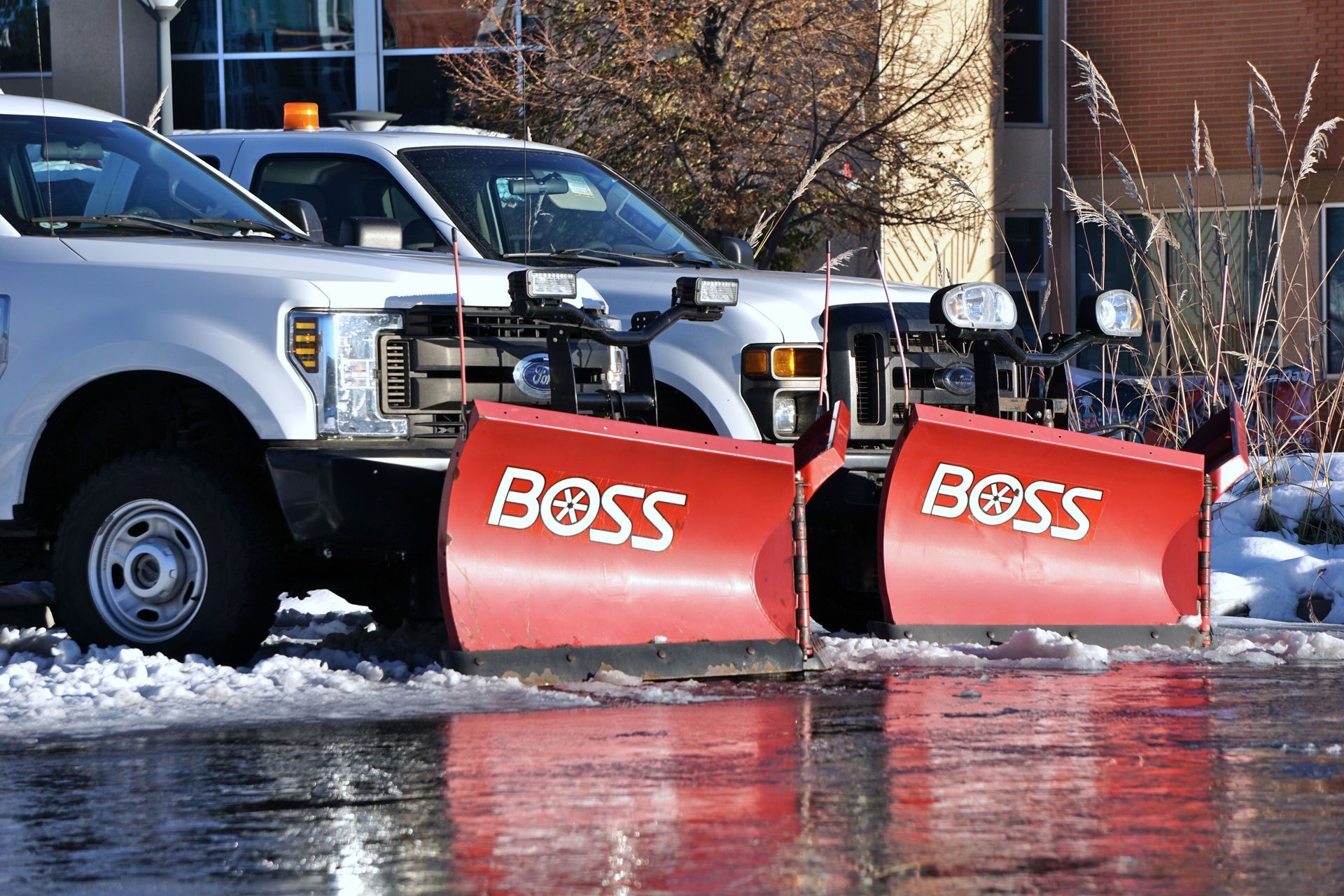
Snow plows with red BOSS blades lined up on a wet, snowy street

Turning This Into Part of Your Vendor Selection Process

Insurance and documentation review doesn't need to slow down a contracting decision if it's built into the process from the start rather than added at the end. A simple approach: request the COI and additional-insured endorsement alongside the proposal itself, not after you've already selected a vendor. If you're comparing this contractor against others using anRFP scoring process, insurance and documentation capability deserve their own line item, not a footnote.

Third-party credentials can also shortcut part of this review. A contractor holding anASCA, SN9001, or CSP certificationhas already been evaluated against a formal operating standard, which typically includes expectations around insurance, training, and documentation, though it's still worth confirming the specifics for your property directly.

FAQ

What's the difference between being named as an additional insured and just receiving a certificate of insurance?

A certificate of insurance simply confirms a policy exists. Additional insured status is a policy endorsement that extends a layer of the contractor's own liability coverage to protect you specifically for claims arising from their work on your property. A COI without additional insured status tells you the contractor is covered; it doesn't extend that protection to you.

Should insurance requirements be written into the contract itself, or is a certificate enough?

Both. The contract should specify the minimum coverage types and additional insured status required for the full service term, and the certificate is how that requirement gets verified. Relying on a verbal assurance or a one-time certificate with no contractual backing leaves you without recourse if coverage lapses mid-season.

Do subcontracted or overflow crews need to be covered separately?

Yes, or the arrangement needs to be confirmed explicitly. Some contractors bring on subcontractors during major storms to add capacity, and those crews may or may not be covered under the prime contractor's policy. Ask the question directly and get the answer in writing before assuming coverage extends to every crew working your property.

How often should insurance documentation be reviewed?

At minimum, before each new contract term, since policies renew annually and terms can change. For multi-year agreements, it's reasonable to request an updated certificate at the start of each winter season to confirm coverage hasn't lapsed or changed.

Insurance and documentation aren't the most exciting part of choosing a commercial snow removal contractor, but they're the part that matters most when something goes wrong. Contact Invictus to talk through what a fully documented, properly insured snow and ice management program looks like for your property.

Recent Posts

Snow removal technician documenting a cleared commercial parking lot at dawn
By Brad Caton • November 6, 2026
Church and nonprofit boards often assume Good Samaritan law protects a volunteer who shovels snow. It doesn't. See what Washington's RCW 4.24.670 actually covers, where it leaves your organization exposed, and the service records that hold up. Request a quote before winter.
Snow-covered commercial property in the Pacific Northwest
By Brad Caton • November 4, 2026
Business interruption insurance doesn't automatically cover a winter storm closure. See what actually triggers coverage, what's excluded, and what ISO SN9001-certified Invictus recommends Pacific Northwest property owners verify. Get a quote.
Snow-covered brick building with a metal roof and blue and red doors in bright sunlight
By Brad Caton • November 2, 2026
Loading dock snow and ice are named hazards under OSHA's walking-working surfaces rule — yet most snow removal contracts stop at the parking lot. See what's required, and how ISO SN9001-certified Invictus Snowfighters covers docks across the I-5 corridor. Request a quote.
Snowy sidewalk by brick building with a tree and red curb marked “FIRE LANE NO PARKING”
By Brad Caton • October 30, 2026
A snow-covered fire lane or hydrant is a fire code violation, not just an inconvenience. ISO-certified Invictus Snowfighters breaks down what NFPA 1 and the fire code actually require. Request a quote.
Snow plow clearing a commercial parking lot at dawn in the Pacific Northwest
By Brad Caton • October 28, 2026
WorkSafeBC winter safety requirements mean BC employers must run a documented risk assessment before snow hits. Invictus Snowfighters, the region's only ISO-certified provider, breaks down what to verify and how to prepare. Contact us before the season starts.
Snow-covered street beside a brick building with parked cars and a lit entrance
By Brad Caton • October 26, 2026
White Rock's snow removal bylaw requires property owners to clear sidewalks by 10 a.m. See what Bylaw 1529 requires, the real fine under Bylaw 1929, and how ISO SN9001-certified Invictus keeps White Rock properties compliant. Request a quote.

Snowy urban alley with a person sweeping near green bins and brick buildings in the background
By Brad Caton • October 23, 2026
Richmond's snow removal bylaw (Traffic Bylaw 5870) requires commercial, industrial, and undeveloped properties to clear sidewalks by 10am daily or face a $125 fine per violation. See what the City's own guidance requires, and how Invictus keeps Richmond properties compliant before the first snowfall.

Snowy sidewalk beside a fenced path, with a black dog walking away toward a crosswalk sign.
By Brad Caton • October 21, 2026
Burnaby's snow removal bylaw fines commercial properties up to $400 per violation. Here's what Section 31 requires, what the city's own guidance says, and how Invictus keeps Burnaby properties compliant before the first snowfall.
Snow-covered driveway outside a brick building with parked cars and a covered entrance
By Brad Caton • October 19, 2026
Surrey's snow removal bylaw requires commercial properties to clear sidewalks by 10am next day or face daily fines. See what Bylaw 13007 requires. Request a quote.

Property manager and maintenance contractor shaking hands in a commercial parking lot
By Brad Caton • October 16, 2026
Managing five property maintenance vendors instead of one costs hours every month. See how commercial property managers consolidate winter service with the rest of their maintenance calendar, from a company serving 500+ Pacific Northwest properties for 30+ years. Get a quote.
Show More