

Snow Removal Insurance vs. Landscaping Insurance: What Your Contract Is Actually Covering

Invictus Snowfighters • August 28, 2026

Share this article

Every winter, some property manager in Vancouver, Seattle, or Portland finds out the hard way that their snow contractor's insurance doesn't actually cover snow and ice work. It usually happens after a slip-and-fall claim, when the "certificate of insurance" the vendor emailed over in October turns out to be a landscaping policy with a snow endorsement bolted on, or no snow endorsement at all. By then, the gap isn't a paperwork problem. It's your property's exposure.

The confusion is understandable. A lot of companies that plow in the winter are landscaping crews the rest of the year, same trucks, same owner, same insurance policy. But snow and ice management carries a different risk profile than mowing lawns and trimming hedges, and insurers treat it that way. Knowing where the two policies diverge, and what to actually ask for before you sign a winter contract, is how you keep your property out of the gap.

The Misconception: "It's Basically the Same as Lawn Care"

Invictus Snowfighters started as a commercial cleaning company in 1990 and only moved into snow removal after a client asked for it in 2002. Founder Brad Caton has been on both sides of that misconception ever since. "It's not just like landscaping, that it's just another service," he's said of the industry. "This is first responder business. People die in snow and ice situations. When they slip and fall and hit their head, it happens. People get hurt, and it's not like cutting a lawn."

That distinction isn't just brand positioning. It's the reason insurers write snow and ice operations differently from routine landscaping in the first place. A landscaping crew's biggest exposures are property damage from equipment and the occasional injury on a job site. A snow and ice crew is driving loaded trucks on ice before dawn, applying chemical de-icers to pavement the public will walk across within the hour, and responding to a duty of care that a slip-and-fall attorney will scrutinize months later. The insurance has to match the actual risk, and a generic landscaping policy often doesn't.

What a Standard Landscaping Policy Actually Covers

A typical landscaping business insurance package is a business owner's policy (BOP): general liability bundled with commercial property coverage, sized for the risks of mowing, planting, and hardscaping. According to The Hartford, that base package is designed to help protect a business from "claims of bodily injury or property damage" arising from normal operations, and insurers commonly add commercial auto or workers' compensation on top of it as separate riders, not automatic inclusions.

That's the first problem. If a landscaping company adds snow removal as a side service without upgrading the policy underneath it, the BOP they're running was priced and underwritten for lawn care exposure, not for the season where they're plowing at 4 a.m., stacking ice melt pallets, and driving commercial routes in freezing conditions.

Where the Coverage Gap Opens Up in Winter Operations

Three gaps show up most often when a landscaping-first contractor takes on commercial snow work without adjusting coverage:

Pollution liability. De-icing chemicals and salt runoff can trigger environmental claims that a standard general liability policy excludes. The Hartford lists pollution liability as a distinct coverage line specifically for snow removal operations, separate from the general liability a landscaping BOP already carries, precisely because chemical application isn't part of a typical mowing and planting risk profile.

Commercial auto exposure at scale. Winter weather driving is measurably more dangerous. The Hartford cites that roughly 24% of weather-related vehicle crashes happen on snowy, slushy, or icy pavement each year. A landscaping crew's commercial auto policy, if they carry one at all, is typically priced for dry-season routes, not for a fleet running plow routes through ice storms on a compressed overnight schedule.

Licensing and bonding requirements. Per Insureon, snow removal professionals often need a license or permit bond that landscaping operations don't require at all, and most states require workers' compensation coverage for any snow plow business with employees. A landscaping company that's been operating without a bond or with minimal workers' comp because their year-round crew is small can find themselves out of compliance the moment they add plow routes.

What a Real Snow and Ice Management Policy Should Include

A contractor built for snow and ice work, not one that added it as a side hustle, should be able to show a policy stack that includes general liability sized for winter operations, commercial auto coverage that reflects actual winter mileage and route risk, workers' compensation for crews working overnight in freezing conditions, and, where applicable, pollution liability for de-icing chemical use. Insureon also flags equipment and tools insurance, structured as inland marine coverage, as its own line item for the loaders, plows, and salt spreaders that represent a real capital investment and a real risk of loss.

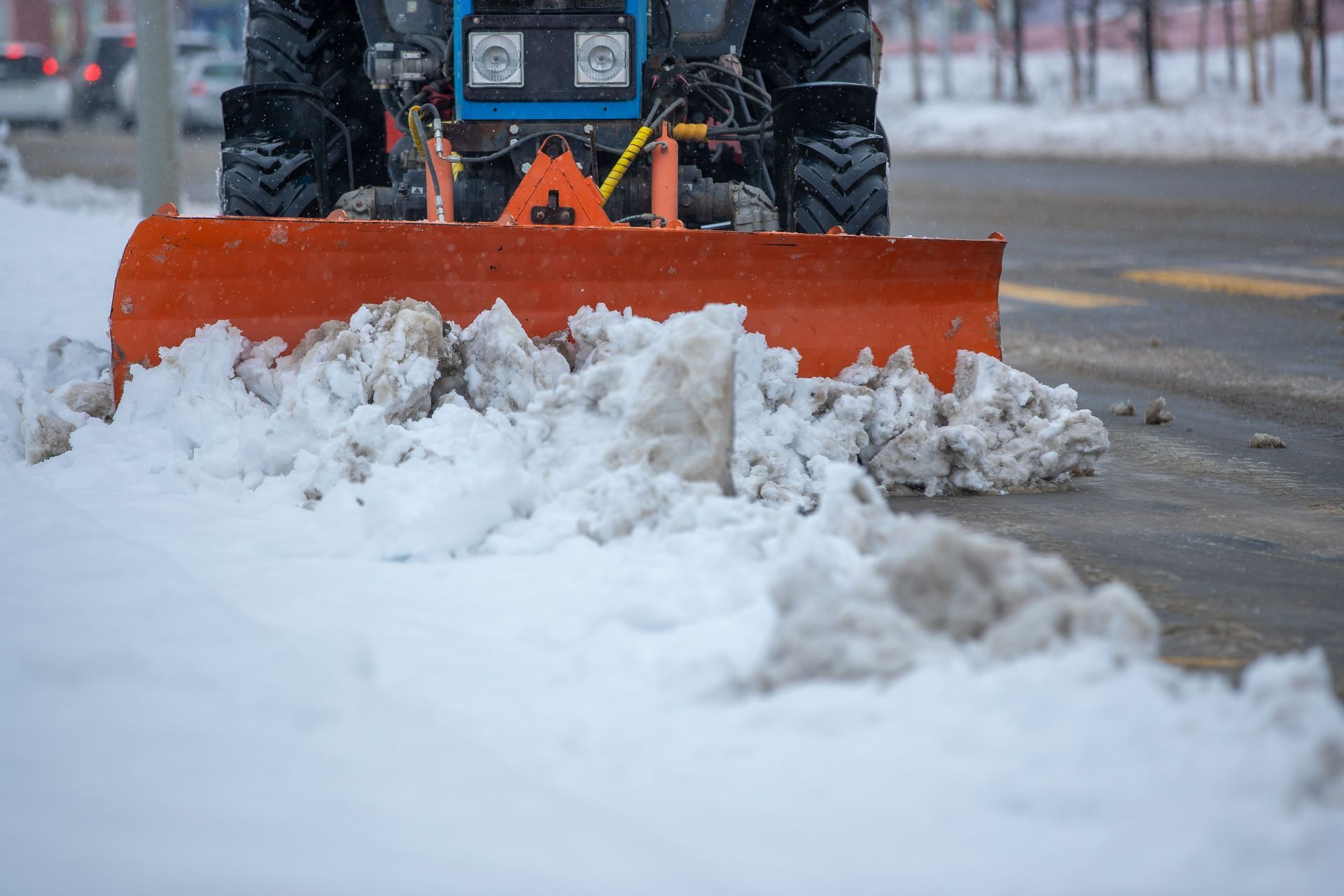
Person plowing snow on a street with an orange snow plow blade

None of that is exotic coverage. It's the standard stack for a company whose core business is winter operations. The tell isn't whether a contractor has "insurance." Almost everyone can produce a certificate. The tell is whether the coverage underneath that certificate was actually built for the work they're about to do on your property.

Why the Gap Is Your Liability, Not Just the Contractor's

This is the part property managers underweight. If a contractor's policy doesn't actually cover the claim, whether because the coverage line doesn't exist, the limits are too low, or the policy lapsed, the injured party's attorney doesn't stop at the contractor. They come after the property owner and management company next, because that's where the assets are.

A certificate of insurance (COI) by itself doesn't prevent that. As Insureon explains, a COI is a snapshot showing a policy exists on the date it was issued; it isn't the same as being named on the policy. An additional insured endorsement is what actually extends the contractor's liability coverage to protect the property owner or manager. Insureon notes that many companies "will only agree to work with a business if they can be covered as an additional insured," and that property managers commonly require exactly this kind of endorsement in their vendor agreements for that reason. A COI without the endorsement behind it is paperwork. The endorsement is protection.

The Questions to Ask Before You Sign

  • Does the general liability policy explicitly cover snow and ice management, or is it a landscaping GL policy with snow added informally?
  • Is there a pollution liability line covering de-icing chemical application, separate from general liability?
  • Does the commercial auto policy account for winter route mileage and crew size, or is it sized for a smaller warm-season fleet?
  • Is workers' compensation active for every crew member working winter routes, including any subcontracted labor?
  • Will the contractor add you as an additional insured by endorsement, not just list you as the certificate holder?
  • What are the actual policy limits, and do they match the value of the property and the portfolio you're placing under contract?

Any contractor who bristles at these questions, or can't produce documentation beyond a generic COI, is telling you something about how they've priced their winter operation.

How Invictus Is Built Differently

Invictus doesn't treat snow and ice management as an add-on to a landscaping book of business. It's the business, across the full I-5 corridor from Vancouver, BC through Seattle to Portland, with the equipment, staffing, and coverage sized for that reality rather than retrofitted onto it partway through the season. Brad Caton describes it as running a first responder operation, not a seasonal side service, which is also why property managers overseeing multi-property portfolios lean on Invictus for the documented response-time standards that a proper winter insurance and staffing stack makes possible in the first place.

If you're comparing vendors for the coming season, the coverage conversation belongs in the same conversation as checking certifications and reviewing the full vetting checklist before you sign. Insurance is the line item that's easiest to gloss over and the most expensive to get wrong.

Frequently Asked Questions

  • Is a certificate of insurance enough to protect my property?

    No. A certificate of insurance shows that a policy exists on the date it was issued. It does not extend that contractor's coverage to protect you. You need to be added as an additional insured by endorsement for the contractor's liability policy to actually respond on your behalf. 

  • Can a landscaping company legally do snow removal with just their landscaping insurance?

    They can operate, but if their policy wasn't underwritten for winter operations, it may not respond to a snow or ice-related claim the way they assume. Coverage gaps like pollution liability, winter-sized commercial auto, and required bonding are easy to miss until a claim exposes them. 


  • What's the difference between a certificate holder and an additional insured?

    A certificate holder simply receives proof that a policy exists. An additional insured is formally added to the policy by endorsement and receives actual liability protection under it. Property managers should request the endorsement, not just the certificate. 

  • Does Invictus carry insurance built specifically for snow and ice operations?

    Yes. Invictus's coverage is structured for year-round snow and ice management across Vancouver, Seattle, and Portland, not adapted from a landscaping policy partway through the season. Contact Invictus to review coverage documentation as part of your vendor evaluation.

 What's the difference between a certificate holder and an additional insured?
A certificate holder simply receives proof that a policy exists. An additional insured is formally added to the policy by endorsement and receives actual liability protection under it. Property managers should request the endorsement, not just the certificate.

Recent Posts

Property manager and maintenance contractor shaking hands in a commercial parking lot
By Brad Caton • October 16, 2026
Managing five property maintenance vendors instead of one costs hours every month. See how commercial property managers consolidate winter service with the rest of their maintenance calendar, from a company serving 500+ Pacific Northwest properties for 30+ years. Get a quote.
Snowplow clearing a large commercial parking lot for a multi-property portfolio contract in the Pacific Northwest
By Brad Caton • October 14, 2026
Multi-property snow removal contracts consolidate a fragmented, sole-proprietor-heavy market into one accountable partner. See what portfolio bundling actually saves, what to verify first, and the one trade-off to watch. Request a quote.
Yellow snowplow and front loader clearing a snowy parking lot in winter
By Brad Caton • October 12, 2026
How much snow removal equipment does your commercial property really need? Learn to evaluate a vendor's fleet capacity before the storm hits. ISO SN9001-certified Invictus serves the Pacific Northwest I-5 corridor. Request a quote.
Snow plow clearing a commercial parking lot in the Pacific Northwest at dawn
By Brad Caton • October 9, 2026
Trigger depth clauses tell you when a plow shows up — not when your property becomes a liability. See what a trigger depth actually covers, what SIMA's own guidance says it misses, and how Invictus Snowfighters' First Responder model closes the gap across the I-5 corridor. Request a quote.
Snowplow clearing snow from a road, with a bright orange blade pushing slush forward
By Brad Caton • October 7, 2026
In-house vs. outsourced snow removal: how Pacific Northwest property managers can weigh liability, equipment costs, and staffing. ISO SN9001-certified Invictus explains what to ask. Get a quote.
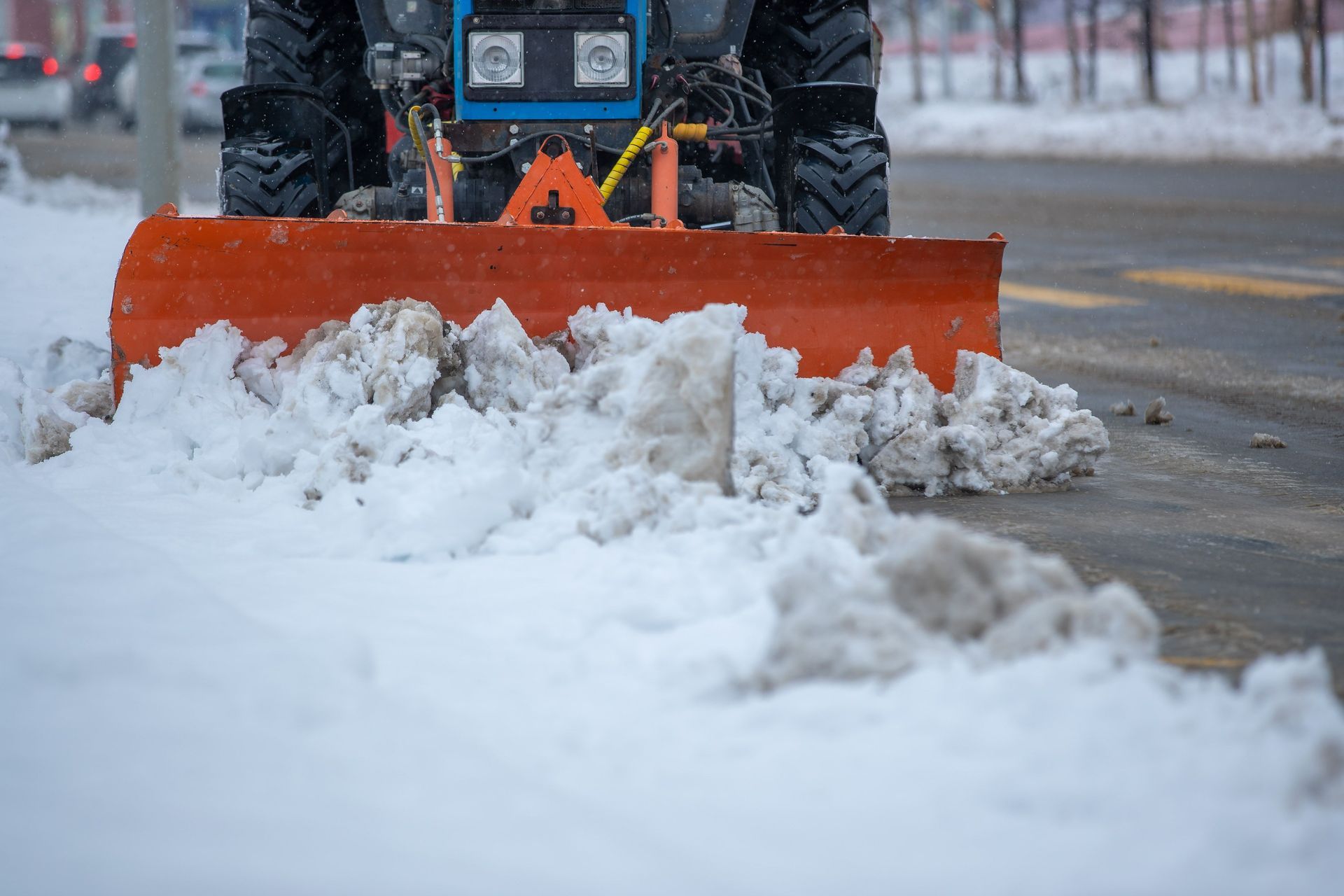
Person operating an orange snow plow clearing slush from a snowy road
By Brad Caton • October 5, 2026
Switching commercial snow removal providers takes more than a phone call — termination clauses, auto-renewal traps, and a coverage gap can all bite you. See the safe sequence for switching before winter, from a PNW snow contractor that's covered the I-5 corridor since 1990. Request a quote.
Fleet of commercial snowplow trucks staged in a yard before a winter storm in the Pacific Northwest
By Brad Caton • October 2, 2026
Snow removal equipment and staffing capacity is the best predictor of whether your site gets serviced in the worst storm of the season. Invictus breaks down the capacity math, real response-time standards, and the questions that expose an overextended contractor. Request a quote.
Orange snowplow clearing a large snowbank on a street beside colorful buildings
By Brad Caton • October 1, 2026
Industrial and manufacturing plant snow removal must meet OSHA's general industry standards for walking-working surfaces and powered trucks. See what ISO SN9001-certified Invictus recommends before winter. Get a quote.
Orange snowplow trucks clearing a snowy parking lot in winter
By Brad Caton • September 30, 2026
Snow removal contractor insurance shouldn't be assumed. See what coverage and documentation ISO SN9001-certified Invictus verifies before every contract. Get a quote.

Downtown Vancouver skyline in winter snow with the North Shore mountains
By Brad Caton • September 28, 2026
A record El Niño winter is forecast. What it means for snow and ice on Metro Vancouver commercial properties, what history shows, and what to do before the first arctic outflow.
Show More