
Commercial Snow Removal Contract Red Flags: What to Check Before You Sign | Invictus Snowfighters

Brad Caton • September 23, 2026

Share this article

A commercial snow removal contract looks like paperwork until the first storm hits — then it becomes the only thing standing between your property and a lawsuit, a blown budget, or a lot that never gets plowed. Most property managers read the price line and skim the rest. That's a mistake, because the clauses buried in the middle of a standard snow and ice services agreement decide who pays when a delivery driver slips on your sidewalk, whether your contractor shows up before your doors open, and whether you're locked into another season with a provider who underdelivered.

Invictus Snowfighters has serviced commercial properties along the I-5 corridor — Vancouver, BC to Seattle to Portland — since 2002, and we've seen what happens on both sides of a poorly written agreement. Here are the seven places a commercial snow removal contract goes wrong, what the language should actually say, and what to check before you sign anything this season.

1. Why Your Commercial Snow Removal Contract Matters More Than the Price

A low bid on a commercial snow removal pricing sheet is easy to compare. A contract's liability, response-time, and renewal terms are not — and they're the terms that actually determine what the relationship costs you over a multi-year term. Industry guidance on commercial snow contracts consistently flags the same handful of clauses as the ones property managers skip past, then regret: trigger depth, indemnification, insurance proof, pricing structure, termination rights, and auto-renewal windows.

None of these clauses show up in a quick phone quote. They show up in the fine print of the agreement your provider sends over once the deal is verbally settled — which is exactly when most property managers stop reading closely, and exactly when a fragmented, sole-proprietor-heavy vendor pool tends to bury the worst terms.

2. Trigger Depth: The Clause That Decides When Your Lot Actually Gets Plowed

"Trigger depth" is the snowfall threshold — often 1 to 2 inches — that has to accumulate before your contractor is contractually obligated to dispatch. A contract that doesn't define it in writing leaves the timing of service entirely up to the provider's judgment, which is a problem the first time you need your lot clear before a 7 a.m. opening and a half-inch of snow doesn't meet anyone's definition of "enough to plow."

A properly structured agreement, per standard commercial snow contract checklists, spells out the trigger depth, the response-time window after that depth is reached, whether ice-only events (no snow accumulation at all) are covered under a separate de-icing trigger, and where the plowed snow will actually be piled on your property. That last point matters more than it sounds — a lot with no defined snow-storage area turns into a lot with fewer usable parking spaces every time it snows.

3. Liability and Indemnification: Who's on the Hook When Someone Slips

Commercial properties carry materially higher slip-and-fall exposure than residential ones because of foot traffic, and the contract's indemnification (or "hold harmless") clause is what determines whether that exposure sits with you or your contractor. As landscape-industry contract guidance explains, a hold-harmless clause obligates the contractor to cover legal claims arising from their own negligence — but some agreements are written to shift liability the other direction, leaving the property owner responsible even when the contractor failed to perform.

Read this clause line by line, not just its heading. Confirm it names your business as protected against claims tied to the contractor's performance, and pair it with our documentation standards for premises liability — because an indemnification clause is only as good as the service records that prove the contractor actually met its obligations that day.

4. Insurance Requirements: What Certificate of Insurance to Demand

Every commercial snow removal contract should require the contractor to carry general liability insurance and workers' compensation, and to name your business as an "additional insured" on that policy before the season starts — not after the first claim. A widely circulated snow management agreement template sets its commercial general liability limit at $5,000,000; use that as a benchmark when a prospective contractor's certificate of insurance comes in lower.

Ask for the certificate directly from the insurer, not a copy forwarded by the contractor, and confirm the policy stays active for the full contract term, not just at signing. This is also where equipment and property damage gets addressed: the same template makes clear the contractor is not automatically liable for incidental damage from de-icing agents to sod, curbs, or plant material unless the contract says otherwise — so if that's a concern for your property, it needs its own line item, not an assumption.

5. Pricing Structure: Per-Push, Seasonal, or Per-Event

A snow removal contract's pricing model changes your budget risk as much as the rate itself. A per-push (per-event) contract means you pay only when the trigger depth is met, which tracks a mild winter's actual costs but makes budgeting harder to forecast. A seasonal (flat-rate) contract fixes the cost regardless of snowfall, trading budget certainty for the risk of paying full price in a light winter. Multi-property portfolios can often negotiate blended pricing — a structure worth raising directly if you're bundling several sites under one vendor, since the economics of scale only show up when a single contractor can service the whole portfolio without subcontracting pieces of it out.

6. Automatic Renewal and Termination Clauses: The Trap Property Managers Miss

Some commercial snow removal contracts include automatic renewal language that extends the agreement for another season unless you cancel inside a narrow notice window. As facility-management contract guidance warns, these clauses often renew under the same terms and conditions, preventing any adjustment for underperformance — so missing the window because you were focused on budget season instead of your vendor file can lock you into another year with a provider you'd already decided to leave.

Two fixes: know your cancellation date the day you sign, and insist on a termination clause that lets either party exit on documented performance failures — repeated missed trigger-depth windows, for example — not just at renewal.

7. Documentation and Response-Time Commitments: How to Verify Performance

A contract's promises are only as good as the record of whether they were kept. Look for language requiring the contractor to log service times, weather conditions, and treatment applied at each visit — geo-fenced, timestamped records hold up in a slip-and-fall dispute in a way that a driver's memory does not. This is the same standard we hold ourselves to across our Vancouver commercial snow removal and Seattle commercial snow removal portfolios, and it's worth requiring from any provider you're evaluating, not just us.

If you're still comparing vendors, our guides onwriting a commercial snow removal RFPandscoring the proposals that come backwalk through how to get these commitments in writing before you're comparing contracts at all.

8. What a Well-Structured Contract Looks Like With Invictus Snowfighters

We're the only snow removal company with boots on the ground across the full I-5 corridor — Vancouver, BC through Seattle to Portland, on both sides of the border — which means a multi-property portfolio can be bundled under one contract instead of four regional vendors with four different sets of fine print. Our agreements spell out trigger depth and response time up front, name your business as additional insured, and back every service call with geo-fenced documentation — the same standard behind our on-site First Responder units that stage ice melt directly at large properties before conditions turn.

This is first-responder business — people get hurt in snow and ice situations — and a contract that treats it like a landscaping add-on is the first sign a provider isn't set up to actually perform when a storm hits. Property managers overseeing $100,000-plus portfolios come to us for the peace of mind of one accountable partner instead of a patchwork of vendors, especially heading into a season that NOAA's own El Niño outlook says won't be predictable.

FAQ: Commercial Snow Removal Contracts

What's a reasonable trigger depth for a commercial parking lot?

One to two inches is standard for commercial properties with early-morning foot traffic; a higher trigger depth (3+ inches) is more common on lower-priority residential or overflow lots. Your contract should state the number, not leave it to judgment calls.

Can I cancel a snow removal contract mid-season?

Only if the contract's termination clause allows it — typically tied to documented, repeated performance failures. This is why the termination language matters as much as the price before you sign, not after service starts disappointing you.

Who is liable if someone slips on my property during a snow event?

Primary responsibility for a safe premises generally sits with the property owner, but a properly written indemnification clause shifts liability for the contractor's own negligence back onto the contractor — provided the contract requires proof of insurance and documented service records to back it up.

Per-push or seasonal pricing — which is better for a commercial property?

It depends on your risk tolerance: per-push tracks actual snowfall and can save money in a light winter, while seasonal flat-rate pricing trades that potential savings for a fixed, predictable budget line regardless of how much it snows.

How far in advance should I lock in a commercial snow removal contract?

Before your current agreement's auto-renewal window closes and before contractor capacity fills for the season — for most Pacific Northwest commercial properties, that means acting in summer or early fall, not waiting for the first forecast.

Ready to review what your current contract actually says — or bundle a multi-property portfolio under one accountable partner? Request a quote from Invictus Snowfighters and we'll walk through it with you.

Recent Posts

Snow plow clearing a commercial parking lot in the Pacific Northwest at dawn
By Brad Caton • October 9, 2026
Trigger depth clauses tell you when a plow shows up — not when your property becomes a liability. See what a trigger depth actually covers, what SIMA's own guidance says it misses, and how Invictus Snowfighters' First Responder model closes the gap across the I-5 corridor. Request a quote.
Snowplow clearing snow from a road, with a bright orange blade pushing slush forward
By Brad Caton • October 7, 2026
In-house vs. outsourced snow removal: how Pacific Northwest property managers can weigh liability, equipment costs, and staffing. ISO SN9001-certified Invictus explains what to ask. Get a quote.
Person operating an orange snow plow clearing slush from a snowy road
By Brad Caton • October 5, 2026
Switching commercial snow removal providers takes more than a phone call — termination clauses, auto-renewal traps, and a coverage gap can all bite you. See the safe sequence for switching before winter, from a PNW snow contractor that's covered the I-5 corridor since 1990. Request a quote.
Fleet of commercial snowplow trucks staged in a yard before a winter storm in the Pacific Northwest
By Brad Caton • October 2, 2026
Snow removal equipment and staffing capacity is the best predictor of whether your site gets serviced in the worst storm of the season. Invictus breaks down the capacity math, real response-time standards, and the questions that expose an overextended contractor. Request a quote.
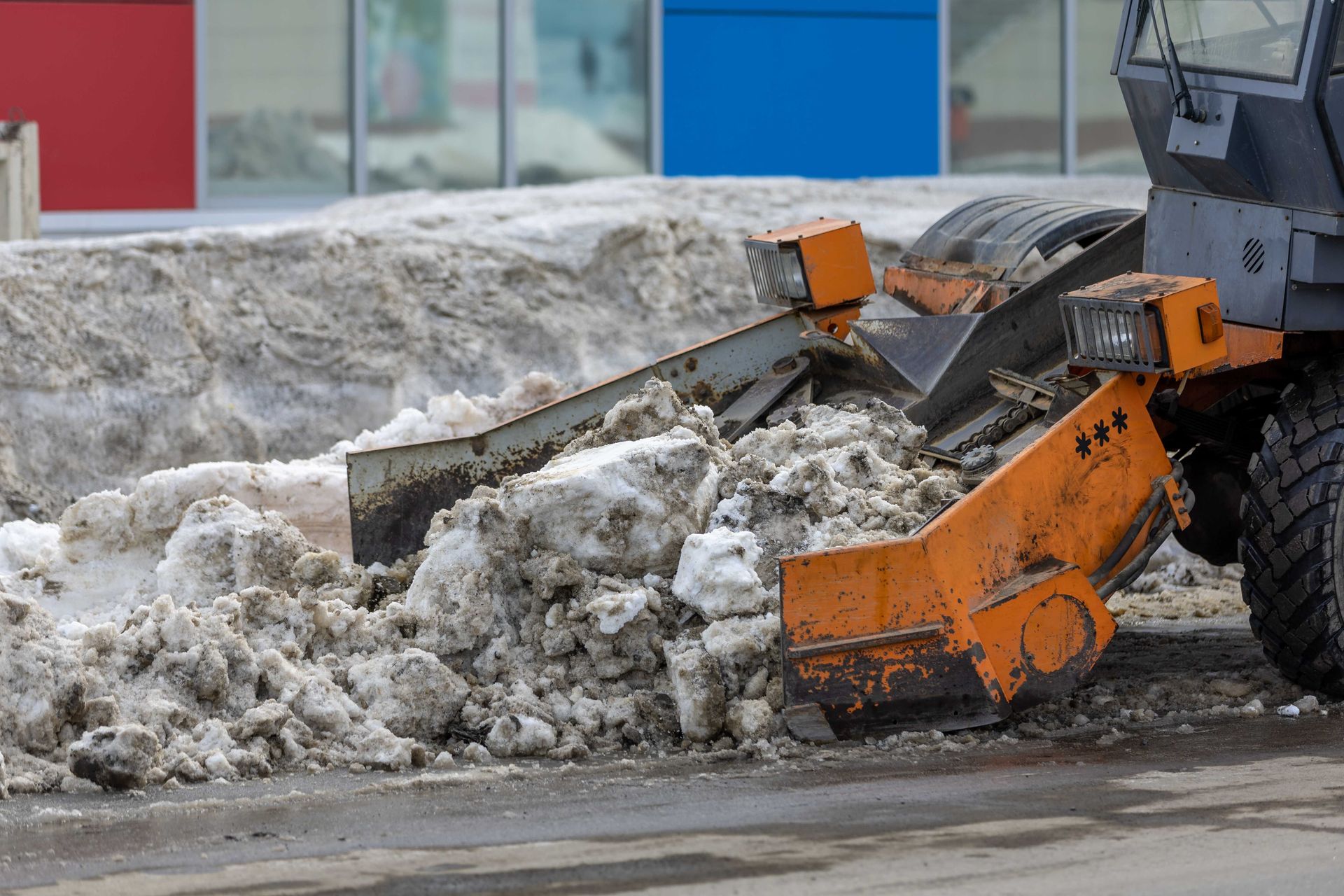
Orange snowplow clearing a large snowbank on a street beside colorful buildings
By Brad Caton • October 1, 2026
Industrial and manufacturing plant snow removal must meet OSHA's general industry standards for walking-working surfaces and powered trucks. See what ISO SN9001-certified Invictus recommends before winter. Get a quote.
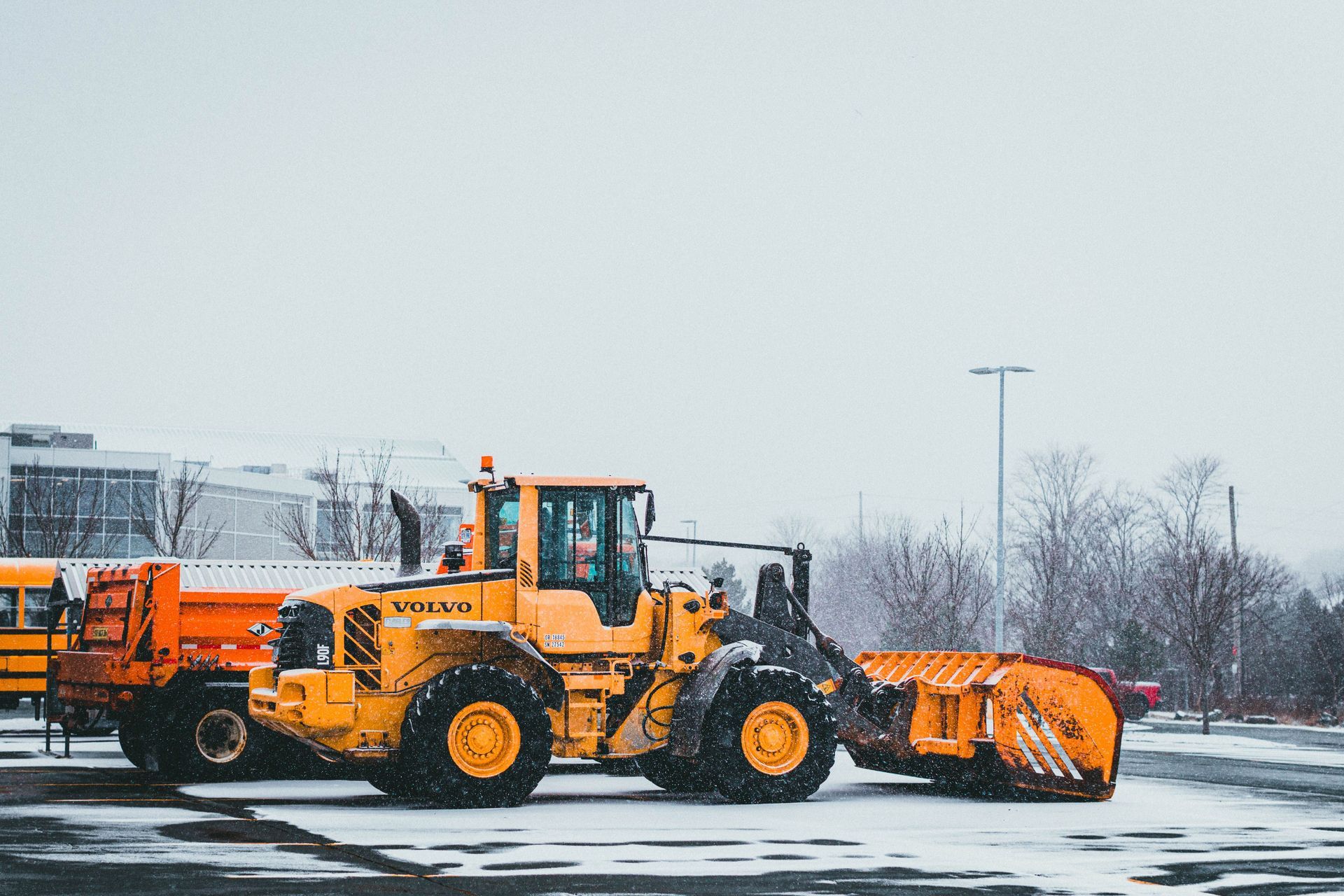
Orange snowplow trucks clearing a snowy parking lot in winter
By Brad Caton • September 30, 2026
Snow removal contractor insurance shouldn't be assumed. See what coverage and documentation ISO SN9001-certified Invictus verifies before every contract. Get a quote.

Downtown Vancouver skyline in winter snow with the North Shore mountains
By Brad Caton • September 28, 2026
A record El Niño winter is forecast. What it means for snow and ice on Metro Vancouver commercial properties, what history shows, and what to do before the first arctic outflow.

Downtown Seattle skyline in winter snow with the Space Needle and Mount Rainier
By Brad Caton • September 28, 2026
A record El Niño is forecast. What it means for snow and ice on Seattle-area commercial properties, why 2019 and 1996 still matter, and what to do before the first cold snap.

Downtown Portland skyline in winter snow with Mount Hood in the background
By Brad Caton • September 28, 2026
A record El Niño is forecast and Portland sits on the rain-to-ice line. What January 2024 proved, what forecasters expect this winter, and what to do before the first arctic push.
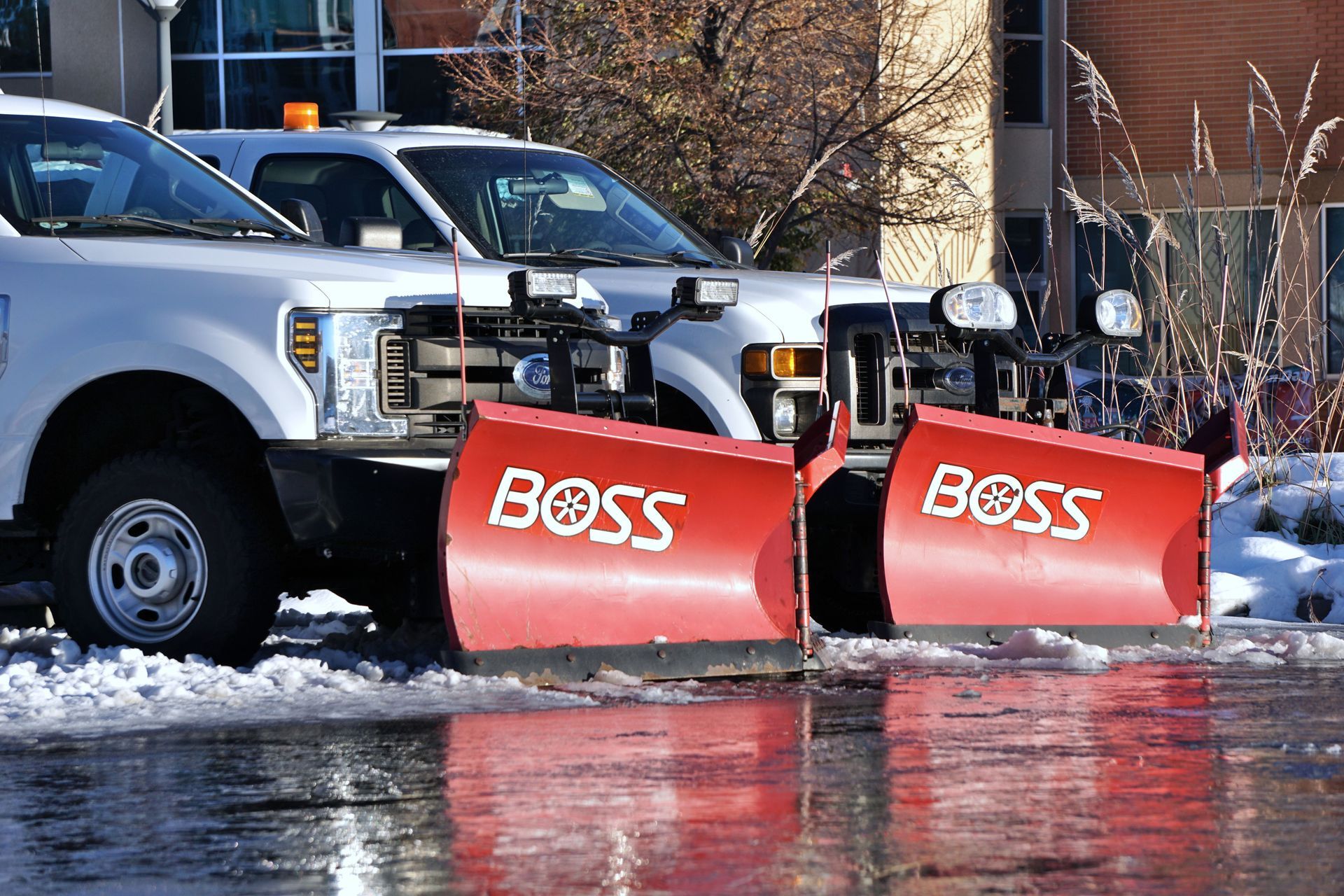
Snowplows with red BOSS blades clearing slushy water from a street near parked trucks
By Brad Caton • September 28, 2026
Commercial snow removal insurance requirements aren't optional paperwork — a missing endorsement can leave your property exposed after a slip-and-fall claim. See what Invictus's I-5 corridor teams carry and what your contract should require. Request a quote.
Show More