

Commercial Snow Removal Insurance Requirements: What Your Contract Must Include | Invictus Snowfighters

Brad Caton • September 28, 2026

Share this article

Every property manager who has sat across from a plaintiff's attorney after a slip-and-fall claim learns the same lesson: a certificate of insurance is not the same thing as being protected. A snow removal contract without the right coverage, the right endorsements, and the right contract language can leave the property owner holding the liability the contractor was supposed to carry. Commercial snow removal insurance requirements are not paperwork to skim before signing — they are the difference between a contractor absorbing a claim and your building doing it instead.

Contract-signing season for Pacific Northwest properties runs through the summer and early fall, which makes this the exact window to get the insurance language right before a single flake falls. Here's what a commercial snow and ice contract should require, why each piece matters, and how Invictus builds it in from the start.

Why Insurance Verification Belongs in Every Snow Removal Contract

Snow and ice work carries a distinct liability profile: slip-and-fall claims on commercial walkways and parking lots are among the most common premises-liability suits property managers face, and they name both the property owner and the snow contractor. A written contract is the tool that determines who actually pays when that happens — and the insurance requirements inside that contract determine whether the answer is "the contractor's carrier" or "yours."

Requiring the right coverage before a contractor sets foot on the property is also the only point of leverage a property manager has. Once a storm hits and a claim is filed, it is too late to renegotiate what should have been in the contract from day one.

Meeting scene with two people reviewing a document and shaking hands over a table with a laptop

The Minimum Coverage a Commercial Snow Removal Contract Should Require

General Liability

Insurance brokers who write coverage for snow and ice operators generally recommend commercial general liability (CGL) limits starting at $1 million per occurrence and $2 million aggregate for snow removal contractors, with larger operators carrying $2 million to $10 million depending on the size of their book of business and the portfolios they service, according to Western Financial Group. The contract should specify the required limit in writing rather than leaving it to whatever the contractor happens to carry.

Workers' Compensation and Carrier Rating

A snow removal contractor should also carry workers' compensation coverage, and the insurer providing both general liability and workers' comp should carry an AM Best rating of at least A- and be licensed to do business in the state where the work is performed, per guidance from World Insurance Associates. A low-rated or unlicensed carrier is effectively no different than no insurance at all if a claim is large enough to test it.

Umbrella Coverage for Larger Contracts

For larger commercial contracts and multi-property portfolios, an umbrella policy is typically layered on top of the base general liability and auto coverage, usually purchased in $1 million increments, according to SIMA. If a contractor is bidding on a portfolio of several sites rather than a single lot, an umbrella layer is one of the clearer signals that they're insured for the scale of the work rather than just the minimum a single property would require.

Additional Insured Status Isn't Optional Anymore

A certificate of insurance alone tells you a policy exists on the day it was issued — it does not obligate the contractor's insurer to defend or cover your property. That requires the property owner to be named as an additional insured directly on the contractor's policy, written into the contract itself, since an increasing number of carriers won't extend additional insured status unless the contract requires it, per World Insurance Associates.

The Snow & Ice Management Association (SIMA) identifies the two endorsements that actually do this work: CG2010, which covers ongoing operations, and CG2037, which covers completed operations — the period after the work is finished but before any resulting claim is filed. SIMA notes that most snow and ice contracts require both endorsements, not just one, because a slip-and-fall claim can surface well after the plow truck has left the lot.

The Primary and Non-Contributory Clause Most Contracts Miss

Being named additional insured only protects you fully if the contract also specifies that the contractor's coverage is primary and non-contributory — meaning the contractor's insurer pays first, and your own property policy isn't forced to share the cost of defending a claim that was the contractor's responsibility. Without that clause, a plaintiff's attorney can pull your policy into the claim anyway, per World Insurance Associates' breakdown of standard snow removal insurance requirements. Pair it with a defense-and-indemnity clause obligating the contractor to defend and settle claims for which they're liable, and the contract does the job a handshake agreement never could.

What Happens When Subcontractors Are Involved

Multi-property portfolios often mean a snow contractor is running subcontracted crews on some sites, particularly during storms that stretch every operator's capacity. Subcontractors are not automatically covered under the prime contractor's policy — they need their own commercial general liability coverage and, typically, their own additional insured endorsement naming the property, according to Western Financial Group. A property manager verifying insurance should ask directly whether subcontractors are used and require proof of their coverage too — not just the prime contractor's.

A Practical Checklist Before You Sign

Pulling the requirements above into one pre-signing checklist:

  • General liability at $1M per occurrence / $2M aggregate minimum, higher for larger portfolios
  • Workers' compensation in place, with the carrier licensed in your state
  • Carrier rated A- or better by AM Best
  • Property named as additional insured via CG2010 and CG2037 endorsements — not just a certificate
  • Primary and non-contributory language confirming the contractor's policy pays first
  • Defense and indemnity clause obligating the contractor to defend claims they're liable for
  • Umbrella coverage layered on for multi-site or high-value contracts
  • Proof of insurance for any subcontractors the contractor plans to use on your property

None of this needs to be adversarial. A contractor who already carries this coverage will have the certificates and endorsements ready before you ask twice — it's the ones who hesitate or push back on adding you as additional insured that are worth a second look.

Why This Matters More for Multi-Property Portfolios

A single-property owner reviews one contract. A portfolio manager overseeing a dozen commercial sites across the I-5 corridor is reviewing — or should be reviewing — a dozen, and a gap in coverage on any one of them becomes the portfolio's liability. That's the exact problem Invictus was built to solve: rather than stitching together separate vendors for Portland, Seattle, and the Vancouver, BC market, a single contractor servicing the whole corridor means one set of insurance requirements, one certificate to track, and one carrier to hold accountable — instead of five.

It also means real economy of scale. Bundling a multi-property portfolio under one contractor with sufficient equipment and crew depth is what lets a property manager negotiate consistent pricing and consistent coverage, rather than accepting whatever the cheapest bidder in each city happens to carry.

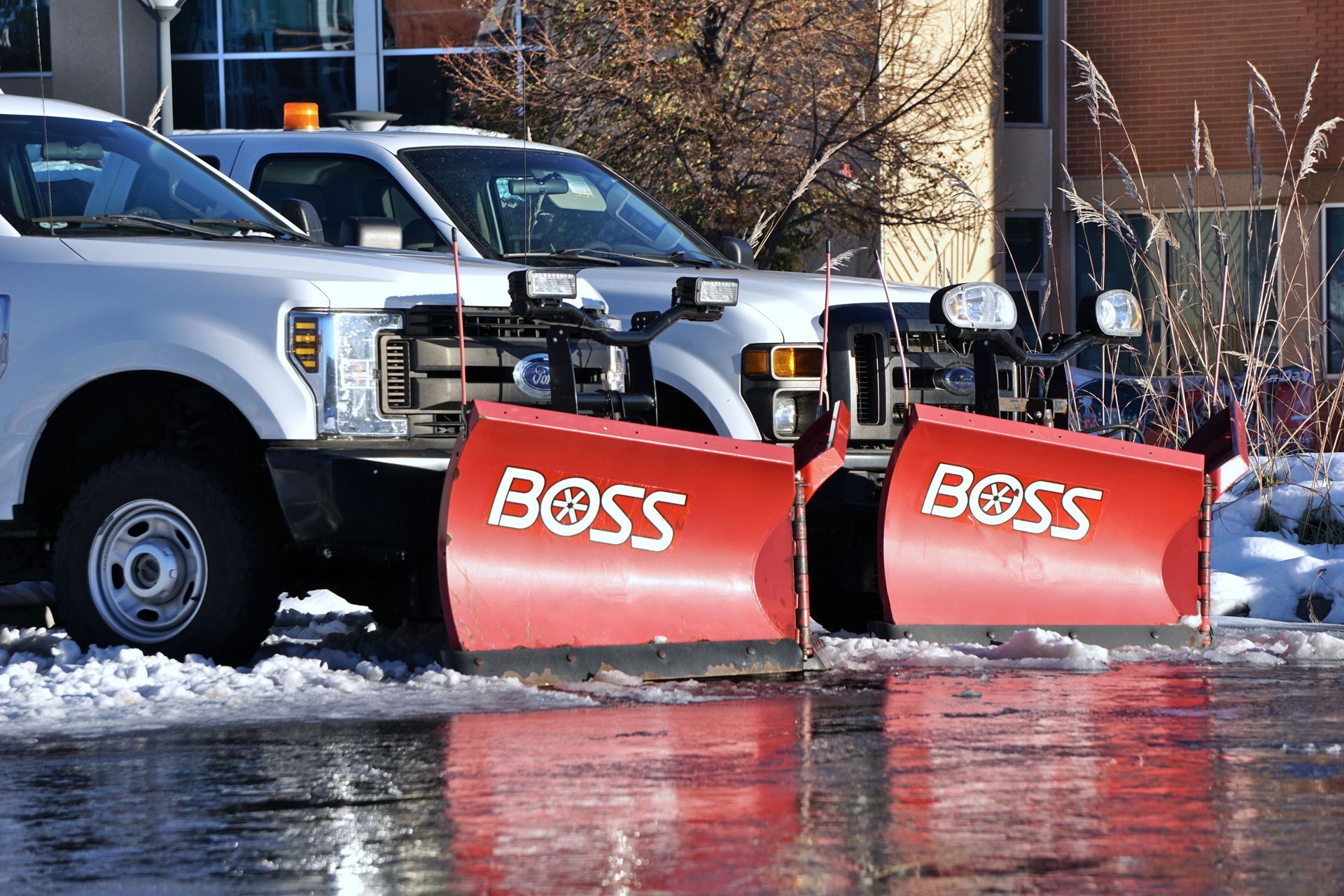
Snowplow trucks with red Boss plows clearing a wet, snowy parking lot

How Invictus Builds Insurance and Documentation Into Every Contract

Invictus treats snow and ice management as what it actually is: a first responder service, not a landscaping add-on. That shows up in how contracts are built, not just in how storms are worked. Every commercial contract specifies the coverage and endorsements above up front, and Invictus backs it with geo-fencing and time-stamped service documentation on every site — the same records that matter if a slip-and-fall claim ever needs to be defended in court. It's the same discipline behind Invictus's documentation standards for premises liability defense and the on-site first responder units staged directly at large commercial properties.

If you're currently comparing bids — or scoring RFP responses using a framework like the one in our RFP scoring guide — insurance verification belongs on that checklist alongside price and response time, not as an afterthought once you've already picked a favorite. And if a bid seems significantly cheaper than the rest, under-insurance is one of the first things worth checking; see our breakdown of why summer is the time to lock in a contract for the full timeline on getting this done before the first storm.

Invictus is the only contractor offering commercial snow removal in Vancouver, BC, Seattle commercial snow removal, and Portland snow removal services with boots on the ground across the entire I-5 corridor — which means a portfolio manager gets one contract, one insurance program, and one point of accountability instead of juggling separate vendors and separate certificates in every city. See our full range of snow and ice management services or request a quote for your portfolio before the season books up.

Frequently Asked Questions

What's the minimum general liability coverage a snow removal contractor should carry?
Brokers who insure snow and ice operators typically recommend at least $1 million per occurrence and $2 million aggregate for commercial work, with larger operators carrying up to $2–$10 million depending on portfolio size, per Western Financial Group.

What does "additional insured" mean, and why isn't a certificate of insurance enough on its own?
A certificate shows a policy exists on the day it's issued, but it doesn't obligate the contractor's insurer to cover your property. Being named additional insured — through endorsements like CG2010 and CG2037 — does, and it has to be required in the written contract itself.

Are subcontractors automatically covered under my snow contractor's insurance policy?
No. Subcontractors need their own general liability coverage and typically their own additional insured endorsement. Ask any bidder directly whether subcontractors will be used on your property.

When should I request proof of insurance — before or after signing?
Before. Insurance requirements belong in the contract itself, and certificates plus endorsements should be verified before the contractor is on site for the first storm, not after a claim is already in motion.

Recent Posts

Invictus Snowfighters crew and equipment
By Brad Caton • September 28, 2026
A record El Niño winter is forecast. What it means for snow and ice on Metro Vancouver commercial properties, what history shows, and what to do before the first arctic outflow.
Invictus Snowfighters crew and equipment
By Brad Caton • September 28, 2026
A record El Niño is forecast. What it means for snow and ice on Seattle-area commercial properties, why 2019 and 1996 still matter, and what to do before the first cold snap.
Invictus Snowfighters crew and equipment
By Brad Caton • September 28, 2026
A record El Niño is forecast and Portland sits on the rain-to-ice line. What January 2024 proved, what forecasters expect this winter, and what to do before the first arctic push.
Invictus Snowfighters crew and equipment
By Brad Caton • September 26, 2026
NOAA says a record El Niño is likely. What that means for snow and ice in Vancouver, Seattle and Portland, with sources, history, and what to do now.

Person holding a large paper map while standing on a residential street outdoors.
By Brad Caton • September 25, 2026
Issuing a commercial snow removal RFP in the Pacific Northwest? Learn exactly what sections to include, the questions that separate strong contractors from costly mistakes, and why July–August is your window to act. From Invictus Snowfighters — I-5 corridor coverage from Vancouver to Portland.
Signed commercial snow removal contract on a desk with a pen
By Brad Caton • September 23, 2026
A commercial snow removal contract can quietly shift liability, response times, and renewal terms in the wrong direction. Invictus Snowfighters — the only snow removal company covering the full I-5 corridor from Vancouver, BC to Portland — breaks down the seven clauses to check before you sign. Request a quote today.
Trucks with red BOSS snowplows lined up on a snowy, wet street
By Brad Caton • September 21, 2026
A commercial snow removal SLA should define trigger depth, response windows, documentation, and equipment backup — most contracts leave one out. ISO SN9001-certified Invictus Snowfighters breaks down what belongs in yours across the I-5 corridor. Request a quote.
By Brad Caton • September 14, 2026
Apartment community snow removal needs more than plowing — resident safety and liability ride on the plan. ISO-certified, covering Vancouver, Seattle & Portland.

By Brad Caton • September 10, 2026
EV charging station snow removal isn't standard plowing — ADA access rules and equipment risk raise the stakes. See what Pacific Northwest properties need in their contract. ISO SN9001-certified Invictus covers Vancouver, Seattle, and Portland. Request a quote.
Rows of new vehicles on a car dealership lot lightly dusted with snow, Pacific Northwest
By Brad Caton • September 8, 2026
Car dealership snow removal protects more than pavement — it protects valuable vehicle inventory, customer safety, and your liability exposure. See what a dealership-specific SLA should include, from ISO SN9001-certified Invictus Snowfighters, the only snow removal company covering the full I-5 corridor from Vancouver to Portland. Request a quote.
Show More