
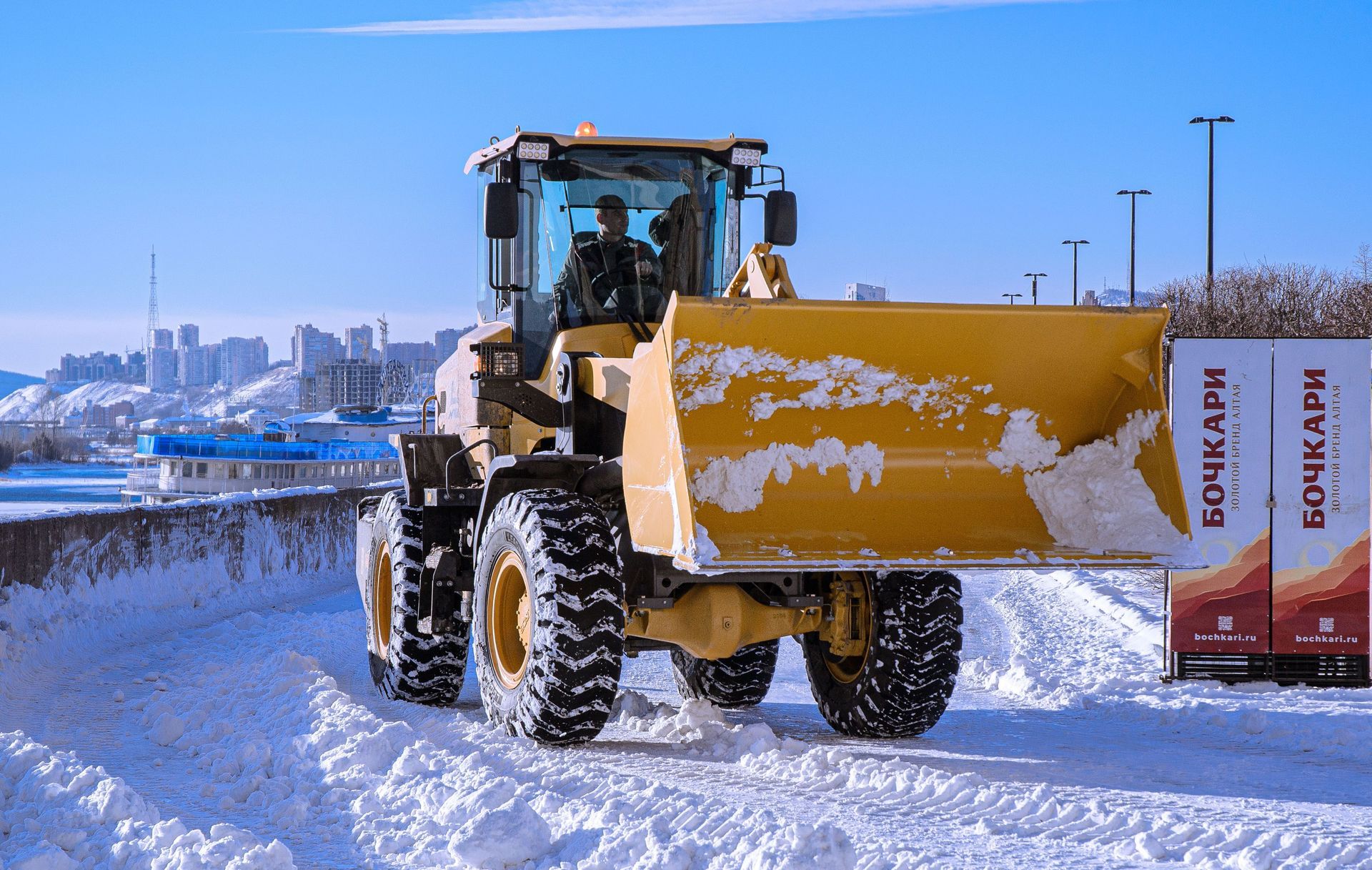
Casino and Tribal Gaming Snow Removal: A 24/7 Compliance Guide

Brad Caton • November 23, 2026

Share this article

A retail store can close early when the roads turn bad. A casino floor cannot. Gaming properties in the Pacific Northwest run 24 hours a day, 365 days a year, which means a foot of snow at 2 a.m. is not a scheduling inconvenience — it is an open-for-business problem that has to be solved while the doors are still open and the parking lot is still full. Most commercial snow removal plans are built around a business day: clear the lot before the 9-to-5 crowd arrives, touch it up at lunch, done by evening. That model does not fit a property where the parking lot, valet lane, and entrance walkway see traffic at every hour of the night.

This guide covers what actually changes when the property is a casino or tribal gaming facility instead of a standard commercial site: the accessibility and workplace-safety rules that apply the same regardless of the hour, the liability exposure that builds up in a valet lane during a storm, and what a real first-responder snow plan looks like for a site that can never lock its doors and wait out the weather.

1. Why Gaming Properties Are a Different Snow Removal Problem

Most of the commercial properties a snow removal contractor services have a natural lull: overnight for a retail center, a slow Sunday for an office park, a seasonal close for a school. A casino floor does not have that lull. Slot machines and tables generate revenue around the clock, which means the parking lot, the porte-cochère, and the walkway to the entrance are functioning as active, revenue-generating infrastructure at 3 a.m. in a snowstorm just as much as they are at 3 p.m. on a clear day.

That changes the math on response time. A property that only needs to be clear by the time it opens can wait out part of a storm and catch up before the doors unlock. A property that never closes cannot wait — every hour that a walkway or entrance sits untreated is an hour it is being used, by guests who may not be used to walking on ice, some of whom have been at the property for hours. The window for a slip-and-fall to happen is not eight hours a day; it is all twenty-four.

2. The ADA Doesn't Pause for a Storm

Accessible parking and accessible routes are not a fair-weather requirement. Under Title III of the Americans with Disabilities Act, the ADA National Network's guidance on accessible parking is direct on this point: "Accessible parking spaces, aisles, and routes must be maintained in good repair and kept clear of snow, ice, or fallen leaf build-up." That is a maintenance obligation, not a construction-day checkbox — it applies every time it snows, for as long as the property is open to the public.

For a gaming property, that obligation is larger than it looks on paper. The ADA National Network's own table scales accessible-space requirements with lot size: a facility with 501 to 1,000 total spaces needs 2% of that total to be accessible, and one out of every six of those must be van-accessible. A mid-size casino parking lot in that range can easily need 15–20 dedicated accessible spaces, plus their access aisles, plus the accessible route connecting them to the entrance — all of it clear, all of the time the property is operating. Piling plowed snow into an access aisle to get the drive lanes open faster does not solve the problem; it just relocates the violation.

3. OSHA 1910.22 Applies to Your Employees, Not Just Your Guests

The accessibility conversation covers guests. A separate set of obligations covers staff — dealers, security, valet, housekeeping, and everyone else walking the property during a shift. OSHA's walking-working surfaces standard, 1910.22, requires that employers ensure "walking-working surfaces are maintained free of hazards such as sharp or protruding objects, loose boards, corrosion, leaks, spills, snow, and ice," and that those surfaces be "inspected, regularly and as necessary, and maintained in a safe condition." The standard also requires that a hazard be corrected before an employee is allowed to use that surface again — or guarded in the meantime if it can't be fixed immediately.

For a property with staff on site around the clock, "regularly and as necessary" means something different than it does for a business that's occupied for eight hours. Loading docks, back-of-house entrances, and staff parking areas get far less attention in most snow plans than the guest-facing entrance, but they're covered by the same standard — and they're being used by employees on every shift, including the overnight shift when a storm is most likely to have gone unaddressed the longest.

4. Valet Lanes and Drop-Off Zones Are Where the Exposure Concentrates

Gaming properties lean on valet and covered drop-off far more than the average commercial site, and that lane is a uniquely bad place for snow and refreeze to accumulate. It's a mix of idling vehicles, pedestrians stepping out of cars mid-lane, and staff moving quickly between vehicles — all funneled through a comparatively narrow strip of pavement that has to stay both clear and non-slick under near-constant traffic and constant vehicle exhaust and drip melting into every low spot.

Standard lot plowing on a fixed schedule tends to treat drive lanes and entrances as one job. A valet lane needs its own cadence: cleared and treated more frequently than the general lot, because it never gets a break in foot traffic long enough for a single morning treatment to hold. Ice melt applied once at midnight is not going to still be working at the entrance canopy at 5 a.m. after four hours of car doors opening onto it.

5. Why a First Responder Model Fits This Property Type Better Than a Standard Route

A standard commercial snow route works on a queue: the contractor's trucks move from site to site in a planned order, and a property's turn comes up on that rotation. That works fine for a business that can absorb a two- or three-hour wait. It does not work for a property that is staffed and open the entire time the truck is somewhere else.

Our own operation grew out of exactly this gap. We installon-site first responder units— staged ice-melt caches at the property itself — precisely so that treatment can start the moment conditions turn, rather than waiting for a truck to leave the dispatch yard and fight its way through the same storm every other client is calling about. For a property that never closes, that's the difference between a walkway that's treated within minutes of icing over and one that sits exposed for the length of a route.

6. Multi-Property and Tribal Gaming Portfolios

Many gaming operators in this region run more than one property, sometimes across the border between British Columbia and Washington, or spread across multiple reservation land parcels. Splitting that portfolio across several regional vendors creates the same problem we've written about for other multi-site commercial owners: inconsistent service standards, five separate invoices to reconcile, and no single point of accountability when one site gets missed during a storm that hits the whole region at once.

A single vendor covering the full portfolio —consolidating multi-property snow removal under one contract— means one crew standard, one escalation contact, and pricing that reflects the full square footage instead of each site negotiating alone. For a gaming group managing properties across the Vancouver–Seattle–Portland corridor, that consolidation also solves a practical problem: a storm large enough to hit one property in this region is usually large enough to hit all of them, and a fragmented vendor list means competing for the same trucks at the same time.

7. What to Verify Before You Sign

Because the exposure is higher and the operating hours are longer, a gaming property should be vetting a snow removal contract more carefully than a standard commercial site would, not less. Before signing, verify:

Our own20 questions to ask before hiring a commercial snow removal companyis a useful baseline for any property — a gaming facility just can't afford to skip any of them, because the cost of an untreated valet lane at 2 a.m. isn't a delayed opening. It's an open floor with a hazard on it.

Frequently Asked Questions

Does the ADA require accessible parking to be cleared of snow, or just the building entrance?
Both. ADA National Network guidance is explicit that accessible parking spaces, their access aisles, and the accessible route connecting them to the building must all be kept clear of snow and ice — not just the main walkway or entrance doors.

Do OSHA snow and ice rules apply to areas guests don't use, like loading docks?
Yes. OSHA's 1910.22 walking-working surfaces standard covers any surface an employee uses in the course of their work, including back-of-house entrances, loading docks, and staff parking — not only guest-facing areas.

Why can't a casino just use the same snow removal schedule as a nearby retail center?
A retail center has hours when the lot sees little to no use, which gives a standard route time to catch up. A property operating 24/7 has no such window, so a route-based schedule that works for a business with a closing time will consistently leave a gaming property's highest-traffic areas — valet, drop-off, and entrance walkways — exposed for longer than they can safely go untreated.

What is a "first responder unit" and why does it matter for a property that never closes?
It's an ice-melt cache staged directly on-site rather than dispatched from a central yard, so treatment can begin the moment conditions turn instead of waiting for a truck to arrive on its route. For a property with no closed hours, that head start is what keeps pace with continuous foot and vehicle traffic through a storm.

Running a gaming property through a Pacific Northwest winter means planning for a parking lot, valet lane, and entrance that never get a quiet hour to catch up in. If your current snow removal plan was built around a business day, it's worth a second look before the season's first storm.

Recent Posts

Snow plow clearing an icy industrial cargo yard in the Pacific Northwest
By Brad Caton • November 20, 2026
Port and marine terminal snow removal cannot wait for a morning plow. See how Pacific Northwest cargo operators cut winter risk and downtime. Get a quote.
Snow-covered college campus courtyard with brick buildings under a cloudy sky
By Brad Caton • November 18, 2026
Corporate and tech campus snow removal carries OSHA and ADA duties a single building doesn't. See what facilities teams should require in a contract, from equipment-matched capacity to First Responder coverage. ISO SN9001 certified, Vancouver BC to Portland. Request a quote.
Snowy modern office buildings in a city plaza under overcast skies
By Brad Caton • November 16, 2026
Data center snow removal isn't standard plowing — Tier III/IV uptime guarantees depend on generator and cooling access that snow can block. See what PNW facility managers need. Invictus covers Vancouver, Seattle & Portland.
Snow-covered hotel entrance in the Pacific Northwest with a cleared walkway
By Brad Caton • November 13, 2026
Hotel and resort snow removal in the Pacific Northwest carries guest-safety and reputation stakes standard commercial plans miss. See what ISO SN9001-certified Invictus recommends before winter arrives. Call 888-459-0994 for a quote.
Snow-covered industrial buildings and machinery in a winter landscape, with a crane on the right.
By Brad Caton • November 11, 2026
Construction site snow and ice management carries fall and struck-by risks OSHA won't let GCs ignore. ISO SN9001-certified Invictus explains what to plan for. Get a quote.
Snow-covered municipal government building parking lot in Washington state with a cleared walkway
By Brad Caton • November 9, 2026
Municipal and government facility snow removal in Washington falls under RCW 39.12 prevailing wage law, even for maintenance contracts with no minimum value. See what your agency must require before work begins, from ISO SN9001-certified Invictus. Request a quote.
Snow removal technician documenting a cleared commercial parking lot at dawn
By Brad Caton • November 6, 2026
Church and nonprofit boards often assume Good Samaritan law protects a volunteer who shovels snow. It doesn't. See what Washington's RCW 4.24.670 actually covers, where it leaves your organization exposed, and the service records that hold up. Request a quote before winter.
Snow-covered commercial property in the Pacific Northwest
By Brad Caton • November 4, 2026
Business interruption insurance doesn't automatically cover a winter storm closure. See what actually triggers coverage, what's excluded, and what ISO SN9001-certified Invictus recommends Pacific Northwest property owners verify. Get a quote.
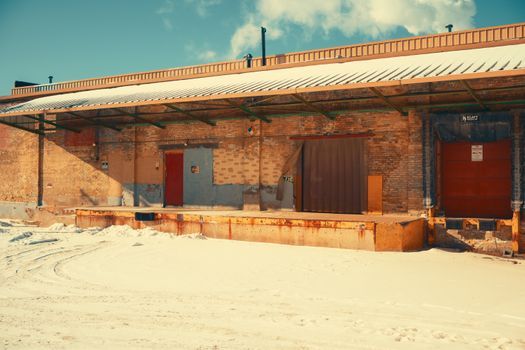
Snow-covered brick building with a metal roof and blue and red doors in bright sunlight
By Brad Caton • November 2, 2026
Loading dock snow and ice are named hazards under OSHA's walking-working surfaces rule — yet most snow removal contracts stop at the parking lot. See what's required, and how ISO SN9001-certified Invictus Snowfighters covers docks across the I-5 corridor. Request a quote.
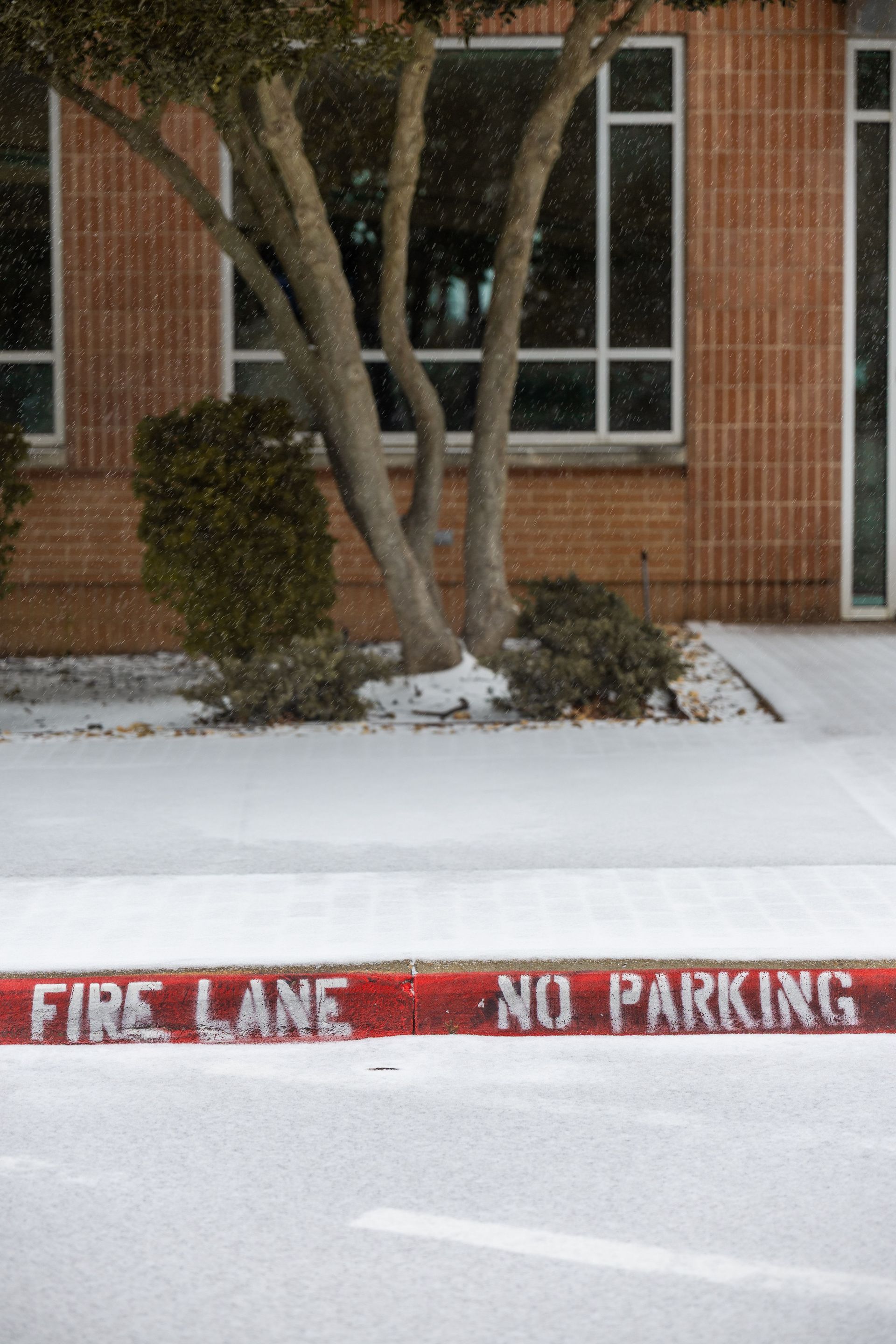
Snowy sidewalk by brick building with a tree and red curb marked “FIRE LANE NO PARKING”
By Brad Caton • October 30, 2026
A snow-covered fire lane or hydrant is a fire code violation, not just an inconvenience. ISO-certified Invictus Snowfighters breaks down what NFPA 1 and the fire code actually require. Request a quote.
Show More