

Multi-Property Snow Removal Contracts: How Bundling Cuts Costs for Commercial Portfolios

Brad Caton • October 14, 2026

Share this article

If you manage more than one commercial property in the Pacific Northwest, you've probably signed more than one snow removal contract too — a different vendor for the Seattle building, another for the Vancouver site, maybe a third for the Portland property, each with its own invoice, its own response-time promises, and its own idea of what "cleared" means. That fragmentation isn't a coincidence. It's the structure of the industry itself. Bundling those properties under a single multi-property snow removal contract changes the math on cost, accountability, and — most importantly — how fast help actually shows up when a storm hits every site at once.

1. Why Multi-Property Snow Removal Contracts Are Becoming the Default

The snow and ice management industry is more fragmented than most property managers realize. According to the Snow & Ice Management Association's (SIMA) Industry Impact Report, the U.S. private snow and ice market is estimated at $20.8 billion, but the top four largest operators control just 5% of that revenue — four out of every five providers are sole proprietors, and most of them earn snow and ice work as a side line to landscaping. Commercial accounts are now the largest and fastest-growing segment of that market, at $7.1 billion and 35% of total revenue, up from 26% in 2016, largely because more property owners are choosing to outsource facilities work rather than manage it in-house.

That combination — a growing commercial segment served mostly by small, single-market operators — is exactly why portfolio managers with properties in more than one city end up stitching together a patchwork of vendors by default, not by design. A multi-property contract with a single provider that actually operates across your whole footprint is the exception, not the norm, which is also why it's worth the extra diligence to find one.

2. What Actually Changes When You Consolidate to One Contract

The visible difference is fewer invoices. The real difference is accountability. When each site has its own vendor, a bad storm response at one property is someone else's problem to chase down — a different phone number, a different account manager, a different contract to reread before you know who's responsible for what. Bundling collapses that into one relationship with one scope of work covering every site.

That's the model behind Invictus Snowfighters' own portfolio clients: one point of contact for every property across the Vancouver and Seattle markets rather than a different crew and a different promise at each address. Property managers who've worked with Invictus for years put it simply: if there's a problem, it goes to one person who owns the resolution, not a rotation of subcontractors pointing at each other.

3. The Real Math Behind Portfolio Pricing

Bundling isn't just a convenience play — it changes the actual number on the invoice. A 2026 analysis of multi-location facility vendor consolidation notes that centralizing service under one accountable partner "creates buying power that a single-location relationship doesn't, allowing for more competitive rates across the portfolio" — and cites IFMA's Facility Management Pulse Report finding that 37% of facility professionals are already shifting toward consolidated vendor partnerships for exactly that reason.

In snow removal specifically, that buying power shows up as portfolio pricing: a provider measuring and pricing five properties together can offer per-square-foot rates that none of those five sites would get quoting independently, because no single-site vendor is set up to absorb that volume at scale. That's the gap Invictus's coverage of the full I-5 corridor — Vancouver to Seattle to Portland — is built to fill for property managers who'd otherwise be sourcing three separate regional contracts. If you're still comparing raw per-visit rates, ourbreakdown of the four standard snow removal contract pricing modelsis a useful baseline before you start comparing portfolio quotes against single-site ones.

4. What You're Actually Paying For: Equipment Depth and Response Capacity

Portfolio pricing only pays off if the provider can actually service every property at once during the same storm — which is the part smaller vendors struggle with. A single-market contractor with three trucks can be excellent at one site and still be an hour late to your second and third properties the moment snow falls everywhere simultaneously, which in the Pacific Northwest is exactly when it falls.

This is a lesson Invictus learned the hard way early on: taking on more commercial accounts than the equipment fleet could cover during a multi-day storm meant properties waited longer than they should have. Today, servicing a multi-property portfolio means fielding over 200 pieces of specialized snow management equipment across the I-5 corridor specifically so that a five-property or fifty-property book gets serviced in parallel, not in sequence. Before you sign a multi-property contract, ask the provider directly how many properties their current equipment count is built to cover simultaneously — not how many they're willing to sign.

Part of that response capacity is the de-icing product itself. Invictus's properties are treated with the company's own LEED-compliant Easy Ice Melt line, which matters at portfolio scale because a product that damages concrete or landscaping at one site becomes a liability line item across every site using the same standard.

5. The One Trade-Off to Watch Before You Consolidate

Consolidation isn't free of risk, and the broader vendor-management research is honest about that. Dr. Paul Morgan, COO for Real Estate Management Services at JLL, told Buildings magazine that "relying on a single vendor leads to dependency, which could have implications for pricing, quality, and the ability of these vendors to scale at the same pace as your business," adding that if a sole vendor hits financial or operational trouble, "you're not scrambling to find alternatives in a limited market."

That's a legitimate concern with a small operator — which loops back to the equipment-depth question in the section above. The way to de-risk single-vendor consolidation isn't to avoid it; it's to vet whether the vendor's scale (equipment count, crew depth, geographic footprint, years in operation) can actually absorb your full portfolio without becoming a single point of failure itself. A 30-year, ISO SN9001-certified operator covering three metro markets carries a very different risk profile than a regional plow truck with your name on a service agreement.

6. How to Structure a Multi-Property Contract the Right Way

Once you've vetted capacity, the contract itself needs the same rigor you'd apply to any single-site agreement, multiplied across every property in the book: a documented scope of work per site, clear trigger depths, and — critically — real-time service documentation you can pull for any property if aslip-and-fall liabilityquestion comes up later. Our guide on thedocumentation premises liability law actually requirescovers what that evidence trail needs to include at a single site; at portfolio scale, insist that the same standard applies uniformly, not just at your highest-profile property.

Timing matters as much as structure. Most commercial properties in the region secure their winter contracts in late summer or early fall, before provider capacity fills — a portfolio contract covering multiple sites takes longer to scope and negotiate than a single-site agreement, so starting that conversation now, rather than at first snowfall, is what actually protects your properties when winter arrives.

Frequently Asked Questions

Does bundling multiple properties under one snow removal contract actually cost less than separate contracts?
Typically, yes, on a per-square-foot basis, because the provider can price the portfolio's total volume rather than each site in isolation — but the savings only hold if the provider has the equipment and crew depth to service every property during the same storm without falling behind at any one of them.

How many properties do I need before a multi-property contract makes sense?
There's no fixed threshold, but the administrative case (one invoice, one point of contact, one documentation standard) applies from two properties on; the pricing case tends to strengthen as the portfolio grows.

What should I verify before consolidating my portfolio to one snow removal vendor?
Ask for the provider's total equipment count and how many properties it's built to cover simultaneously, their years operating in your specific metro markets, and whether their service documentation is standardized across every site in a portfolio, not just their flagship accounts.

When should a multi-property portfolio sign its winter snow removal contract?
Late summer or early fall, before regional provider capacity fills for the season — portfolio contracts take longer to scope across multiple sites than single-site agreements, so starting early protects your properties before the first storm.

Ready to Consolidate Your Portfolio?

Invictus Snowfighters services commercial portfolios across the full I-5 corridor — Vancouver, Seattle, and Portland — under a single accountable contract, backed by the equipment depth to service every property in your book during the same storm. Request a portfolio quote before the season books up.

Recent Posts

Property manager and maintenance contractor shaking hands in a commercial parking lot
By Brad Caton • October 16, 2026
Managing five property maintenance vendors instead of one costs hours every month. See how commercial property managers consolidate winter service with the rest of their maintenance calendar, from a company serving 500+ Pacific Northwest properties for 30+ years. Get a quote.

Yellow snowplow and front loader clearing a snowy parking lot in winter
By Brad Caton • October 12, 2026
How much snow removal equipment does your commercial property really need? Learn to evaluate a vendor's fleet capacity before the storm hits. ISO SN9001-certified Invictus serves the Pacific Northwest I-5 corridor. Request a quote.
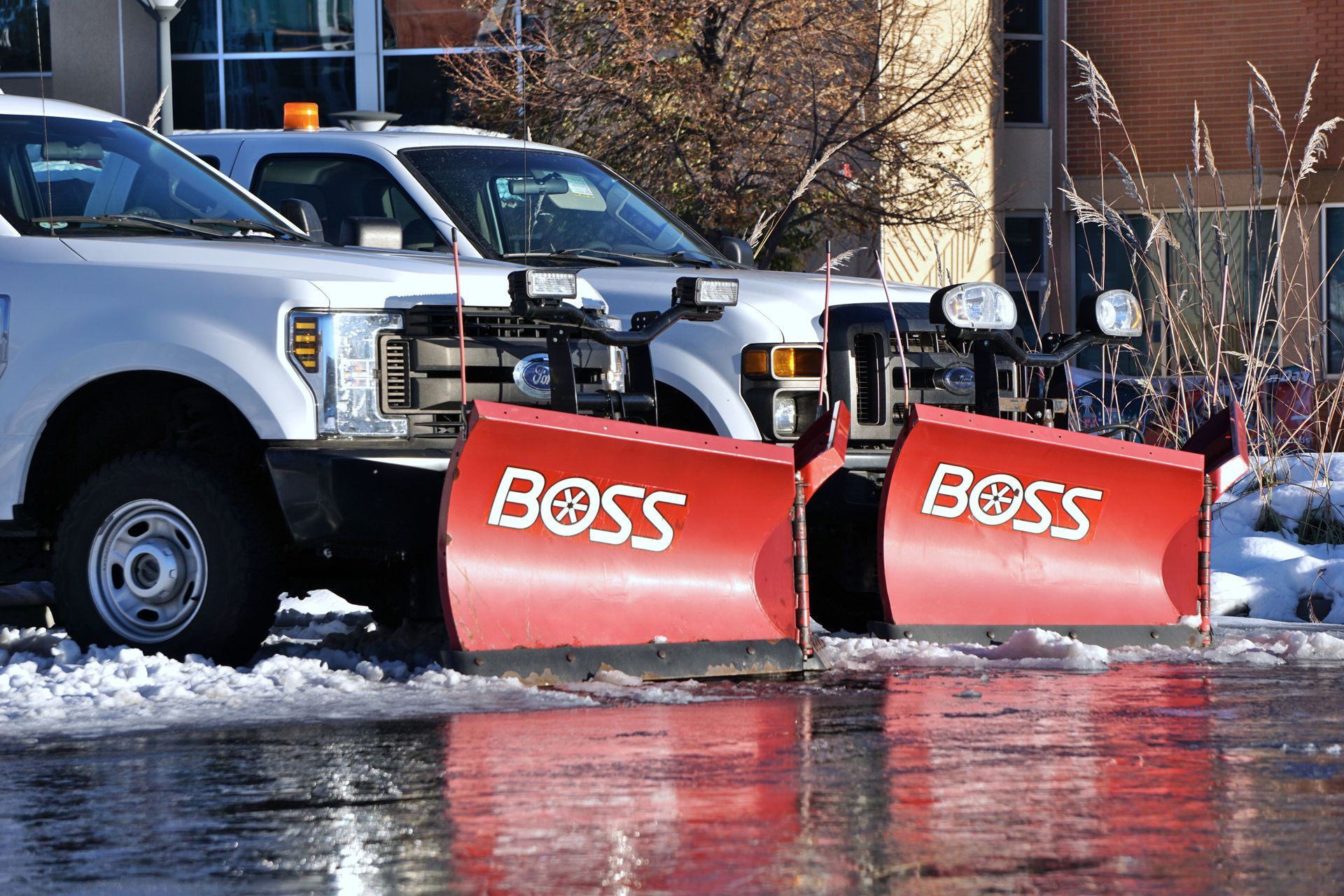
Snow plow clearing a commercial parking lot in the Pacific Northwest at dawn
By Brad Caton • October 9, 2026
Trigger depth clauses tell you when a plow shows up — not when your property becomes a liability. See what a trigger depth actually covers, what SIMA's own guidance says it misses, and how Invictus Snowfighters' First Responder model closes the gap across the I-5 corridor. Request a quote.

Snowplow clearing snow from a road, with a bright orange blade pushing slush forward
By Brad Caton • October 7, 2026
In-house vs. outsourced snow removal: how Pacific Northwest property managers can weigh liability, equipment costs, and staffing. ISO SN9001-certified Invictus explains what to ask. Get a quote.

Person operating an orange snow plow clearing slush from a snowy road
By Brad Caton • October 5, 2026
Switching commercial snow removal providers takes more than a phone call — termination clauses, auto-renewal traps, and a coverage gap can all bite you. See the safe sequence for switching before winter, from a PNW snow contractor that's covered the I-5 corridor since 1990. Request a quote.
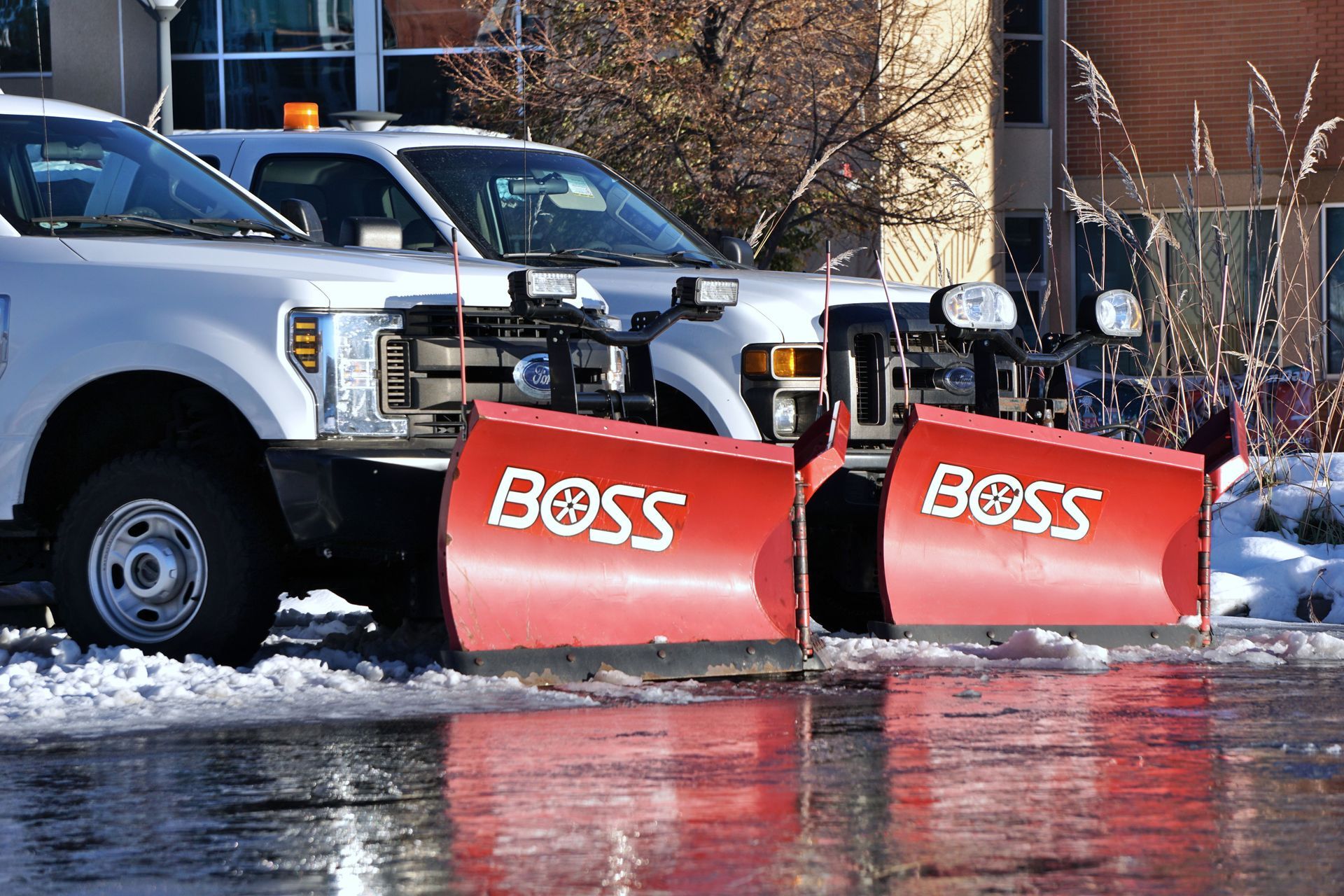
Fleet of commercial snowplow trucks staged in a yard before a winter storm in the Pacific Northwest
By Brad Caton • October 2, 2026
Snow removal equipment and staffing capacity is the best predictor of whether your site gets serviced in the worst storm of the season. Invictus breaks down the capacity math, real response-time standards, and the questions that expose an overextended contractor. Request a quote.
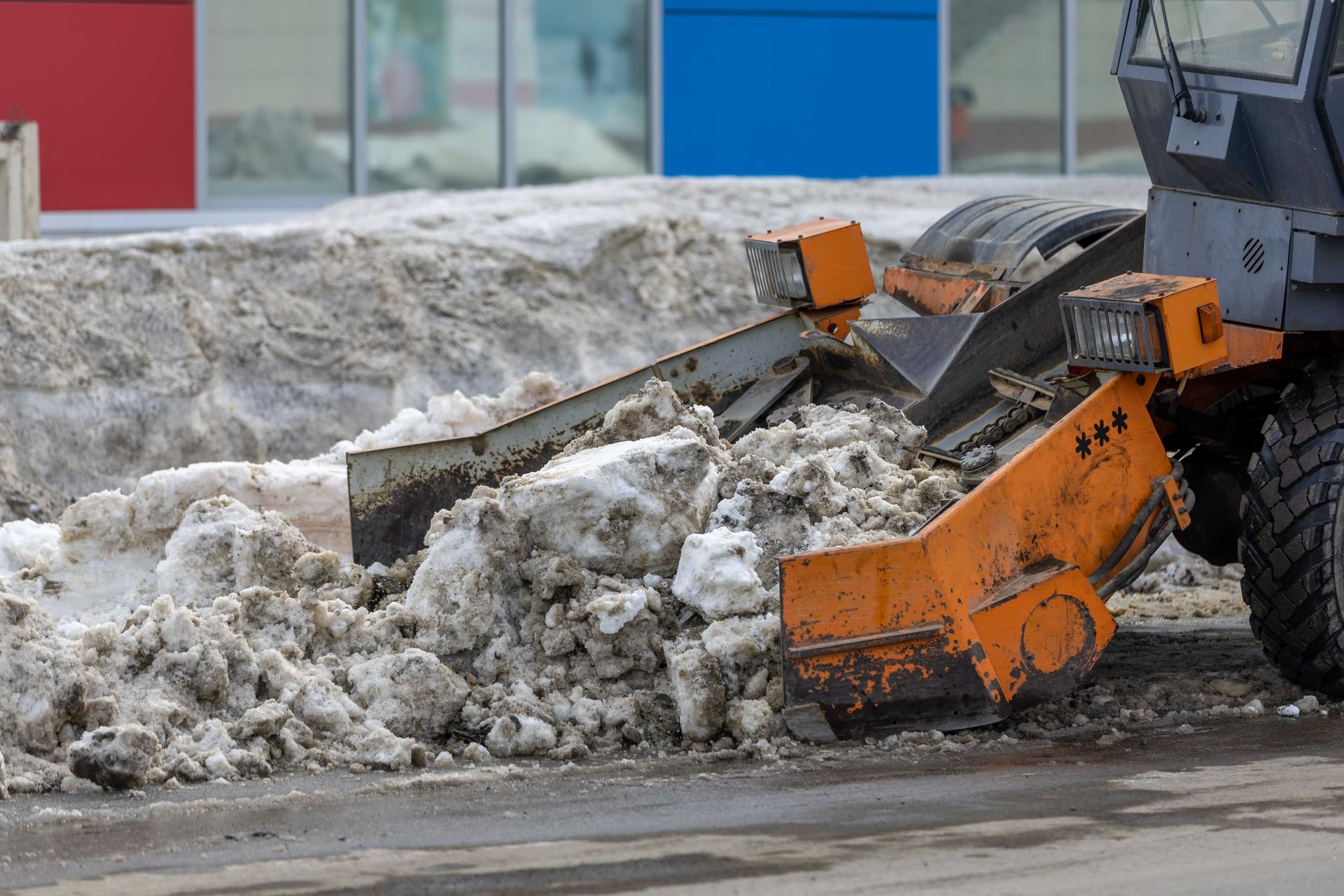
Orange snowplow clearing a large snowbank on a street beside colorful buildings
By Brad Caton • October 1, 2026
Industrial and manufacturing plant snow removal must meet OSHA's general industry standards for walking-working surfaces and powered trucks. See what ISO SN9001-certified Invictus recommends before winter. Get a quote.

Orange snowplow trucks clearing a snowy parking lot in winter
By Brad Caton • September 30, 2026
Snow removal contractor insurance shouldn't be assumed. See what coverage and documentation ISO SN9001-certified Invictus verifies before every contract. Get a quote.

Downtown Vancouver skyline in winter snow with the North Shore mountains
By Brad Caton • September 28, 2026
A record El Niño winter is forecast. What it means for snow and ice on Metro Vancouver commercial properties, what history shows, and what to do before the first arctic outflow.

Downtown Seattle skyline in winter snow with the Space Needle and Mount Rainier
By Brad Caton • September 28, 2026
A record El Niño is forecast. What it means for snow and ice on Seattle-area commercial properties, why 2019 and 1996 still matter, and what to do before the first cold snap.
Show More