How to Tell If Your Snow Removal Company Self-Performs or Just Subcontracts | Invictus Snowfighters
Brad Caton • August 10, 2026
Why "Snow Removal Company" Doesn't Mean What You Think It Means
Every vendor in a commercial snow removal RFP will tell you they "service" the Pacific Northwest. Almost none of them will tell you whether that means their own trucks and their own crews show up, or whether your contract gets handed off to a subcontractor you've never vetted, met, or seen a certificate of insurance for. For a landscaping contract, that distinction barely matters. For a commercial snow removal contract, it's the difference between a crew that's staged and ready when a storm hits and a phone call that goes to voicemail while your parking lot ices over.
Property managers rarely ask the self-perform question directly, mostly because the industry doesn't make it easy to ask. Marketing pages talk about "coverage areas" and "regional networks," language that sounds like capacity but can just as easily describe a roster of subcontractors a company has never worked a storm with before. Before you sign anything this contracting season, it's worth understanding what self-performing actually means, why it matters more in snow and ice management than in almost any other trade, and exactly what to ask a prospective provider to find out which one you're getting.
What "Self-Performing" Actually Means in Commercial Snow Removal
A self-performing snow removal company owns or directly controls the equipment, employs or directly manages the crews, and is the entity physically present at your property during a weather event. A subcontracted or brokered model works differently: the company that sold you the contract holds the relationship, but the actual plowing, salting, and sidewalk clearing is performed by a separate business, sometimes one hired for that specific season, sometimes one hired the week before a storm because the primary vendor overcommitted its territory.
Subcontracting isn't inherently a red flag. It's a standard, often smart business practice across the trades. As one landscape industry consultant put it in a trade-publication analysis of the self-perform versus subcontract decision, the choice comes down to "the complexity of the work, the variables, and the service challenge you need to solve" and for low-frequency, specialized jobs like tree work, bringing in a trusted sub can be more cost-effective than carrying idle, expensive equipment year-round. The same logic genuinely applies to some corners of exterior property maintenance.
Snow and ice management is not one of those corners. That same analysis notes that landscape contractors commonly use subs specifically for snow because winter demand is unpredictable, which is precisely the problem. The moment a provider's business model depends on spreading storm risk across subcontractors, your property's response time depends on the availability of a company you were never introduced to.
Why the Distinction Matters More in Snow Than Almost Any Other Trade
Every other exterior service on a property, asphalt sealing, tree trimming, line painting, happens on a schedule you control. Snow removal happens on a schedule the weather controls, and it happens to every property in the region at the same time. That single fact is what separates snow and ice management from routine grounds maintenance, and it's a lesson the operators who've been doing this longest tend to have learned the hard way.
Brad Caton, who founded Invictus in 1990 and moved the business into snow removal after a commercial cleaning client asked for it in 2002, describes the industry's defining constraint plainly: you can't be in two places at one time. A provider that quoted your contract with three trucks and takes on more properties than those trucks can physically cover during a single storm isn't lying about having a fleet, it's just discovering, in real time, during your event, that capacity and contracts are two different things. A subcontractor network can mask that gap on paper. It can't close it during an active storm.
That's also why the snow and ice trade doesn't treat itself as a lower-stakes version of landscaping. Ice on a walkway causes real injuries, and a delayed response during a storm is a liability event, not just a service miss. A provider's self-perform capacity, not its marketing footprint, is what determines whether your property gets treated on time or gets treated whenever a sub becomes available.
Five Questions That Reveal Whether a Provider Actually Self-Performs
You don't need to become a fleet auditor to get a straight answer. Ask a prospective vendor these five questions before you sign, and pay attention to how directly they answer:
- Who owns the equipment that will service my property? A direct answer names specific trucks, loaders, and depot locations. A vague answer talks about "our network."
- Will the crew that walks my site during the proposal be the crew that shows up during a storm? If the answer is "it depends on availability," you're likely looking at a subcontracted arrangement.
- What happens to my property if a regional storm stretches your capacity across your entire coverage area at once? Self-performing operators can describe their actual overflow plan. Broker models often can't, because the answer depends on their subs' other commitments that week.
- Who holds the liability insurance that covers work at my property — you, or a subcontractor? This is where the paper trail either holds up or falls apart, covered in more detail below.
- Do you have year-round, on-the-ground presence in my metro, or does your coverage area exist mainly on a map? A company with a depot, staged equipment, and a local crew in your city answers this in one sentence.
These questions map directly onto the criteria buyers should already be applying to any commercial vendor. If you want the fuller version, our complete 20-question vetting checklist walks through credentials, equipment, documentation, and contract terms in one pass.
The Insurance Paper Trail: How to Verify Who's Actually Liable
The clearest evidence of who really performs your snow removal work often isn't in the marketing copy, it's in the certificate of insurance. According to the Snow & Ice Management Association's insurance guidance, commercial snow and ice companies typically carry Commercial General Liability (CGL), Commercial Auto, Workers' Compensation, and for larger contracts, an Umbrella policy layered in $1 million increments. Beyond the base policies, SIMA highlights specific endorsements that determine who actually absorbs the risk at your property:
- Additional Insured (CG2010 and CG2037): these endorsements add the property owner or manager as an insured party under the contractor's policy — one for ongoing operations, one for completed operations. Most legitimate snow contracts require both.
- Snowplow Completed Operations (CG2292): a standard general liability policy actually excludes damage arising from vehicles used for snowplowing unless this endorsement is added.
- Primary/Noncontributory wording: this determines whether the contractor's policy pays first on a claim, or whether your own insurance gets pulled in to share the loss.
Here's why this matters for the self-perform question specifically: when a subcontractor is doing the physical work, ask whose policy actually carries these endorsements for your address. If the answer is unclear, or if the certificate you're handed names a subcontractor you've never heard of, you've found your answer about who's really responsible for your property when something goes wrong.
When Subcontracting Actually Makes Sense
None of this means every subcontracted provider is a bad choice, or that self-performing operators never use subs. A company that self-performs the core plowing and de-icing work but subcontracts a specialty service, sport court maintenance, major tree removal after a storm, is a different situation than one that subcontracts the storm response itself. The distinction that matters is whether the work your contract exists to guarantee, someone showing up when it snows, is performed by the company you signed with or handed off to whoever's available.
Multi-property portfolios have an added reason to care. Bundling several sites under one RFP and scoring process only produces real economy-of-scale savings if the vendor answering the RFP can actually deliver equipment and labor across every site in the portfolio, not just quote a price and lean on a fragmented network of subs to figure out logistics later.
What This Looks Like in Practice: Geography as the Real Test
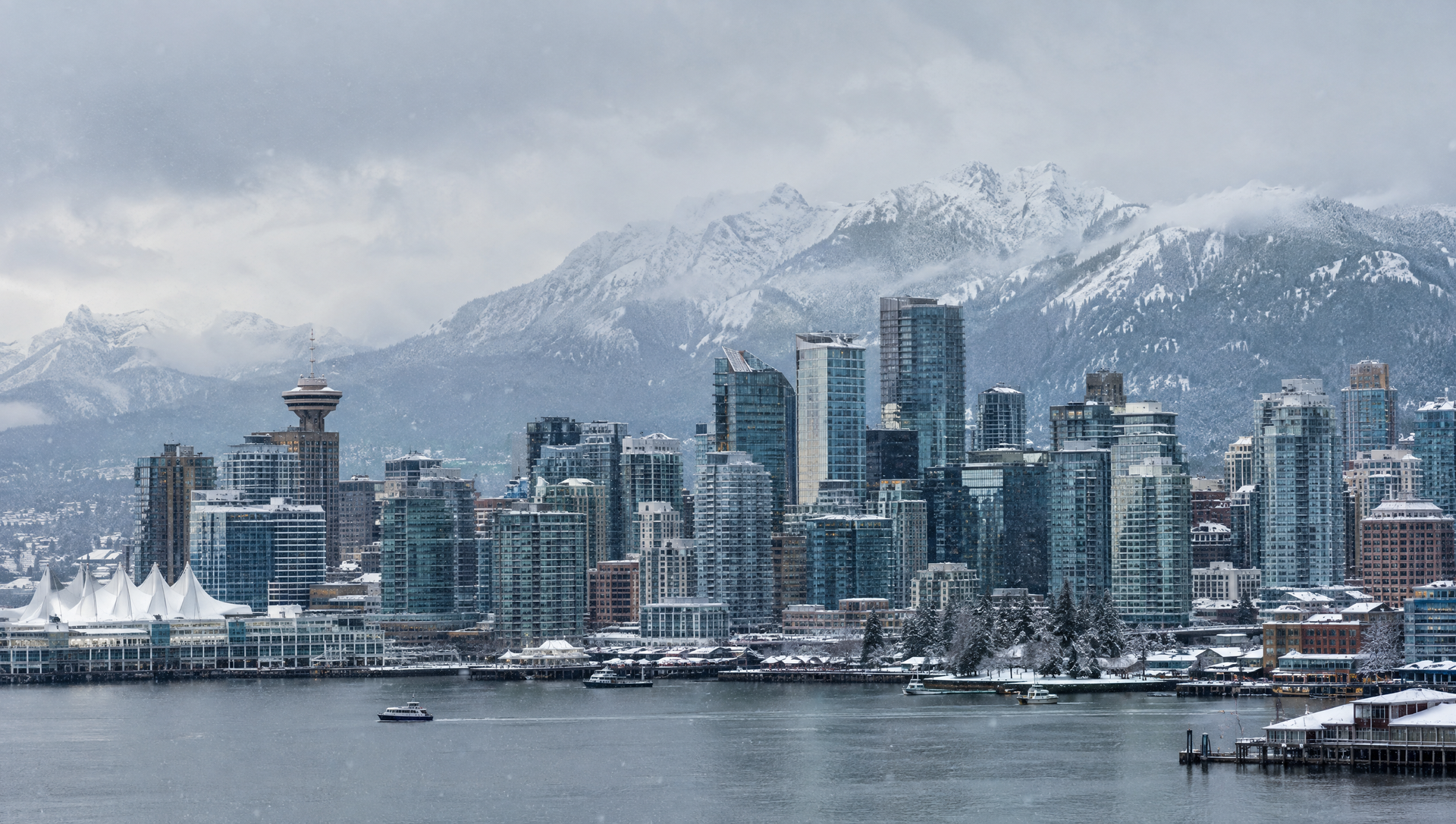
The most honest test of a self-perform claim isn't a sales conversation, it's geography. Invictus covers the full I-5 corridor with commercial snow removal in Vancouver, BC, Seattle, and Portland, boots on the ground on both sides of the border, not a coverage map built out of subcontracted relationships. That geographic reach is also what makes an on-site First Responder Unit, staged ice-melt and equipment positioned directly at a property, possible in the first place: it only works if the company deploying it also owns the equipment and controls the schedule of the crew maintaining it.
Multi-property owners tend to feel the difference in the accounting, too, not just the storm response. Consolidating a portfolio under one self-performing provider replaces the invoicing chaos of several vendors, each billing differently, some barely tracking their own hours, with a single, documented relationship. Invictus Snowfighters built its business on exactly that combination: real equipment, real crews, and a documented, geo-fenced service record property managers can produce if a slip-and-fall claim ever goes to court.
Frequently Asked Questions
Is subcontracted snow removal always worse than self-performed?
Not in every case, but for the core storm-response work, the part your contract exists to guarantee, self-performing removes a layer of uncertainty about who shows up and when. Subcontracting a narrow specialty service alongside self-performed core snow work is a different, lower-risk arrangement.
How can I verify a provider's equipment and crew claims before signing?
Ask for depot locations, ask whether the crew that walks your site is the crew that will service it, and request the actual certificate of insurance with the property named as an additional insured, not a generic sample certificate.
Does a national "coverage map" mean a company self-performs everywhere on it?
Usually not. National sourcing companies typically coordinate work through regional subcontractors rather than operating their own equipment in every market. Regional operators with real depots and crews in your specific metro are more likely to be the ones physically doing the work.
What's the single fastest way to check before a contract is signed?
Ask who holds the Additional Insured and Snowplow Completed Operations endorsements on the policy covering your property. If that answer is vague, the self-perform answer usually is too.
If your portfolio needs a straight answer on who's actually going to show up this winter, request a quote from a team that can tell you exactly which trucks and which crews will be at your property.
Recent Posts