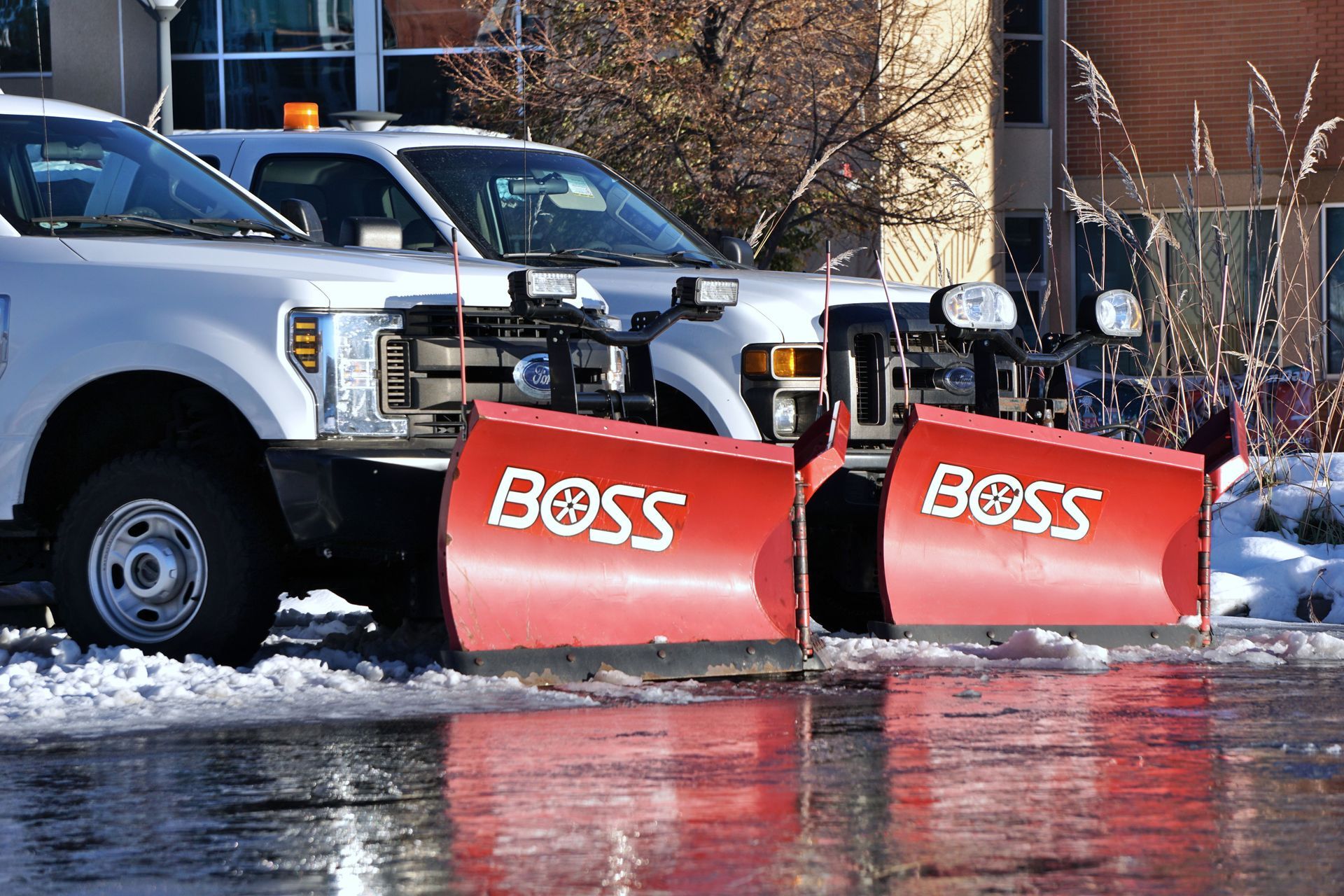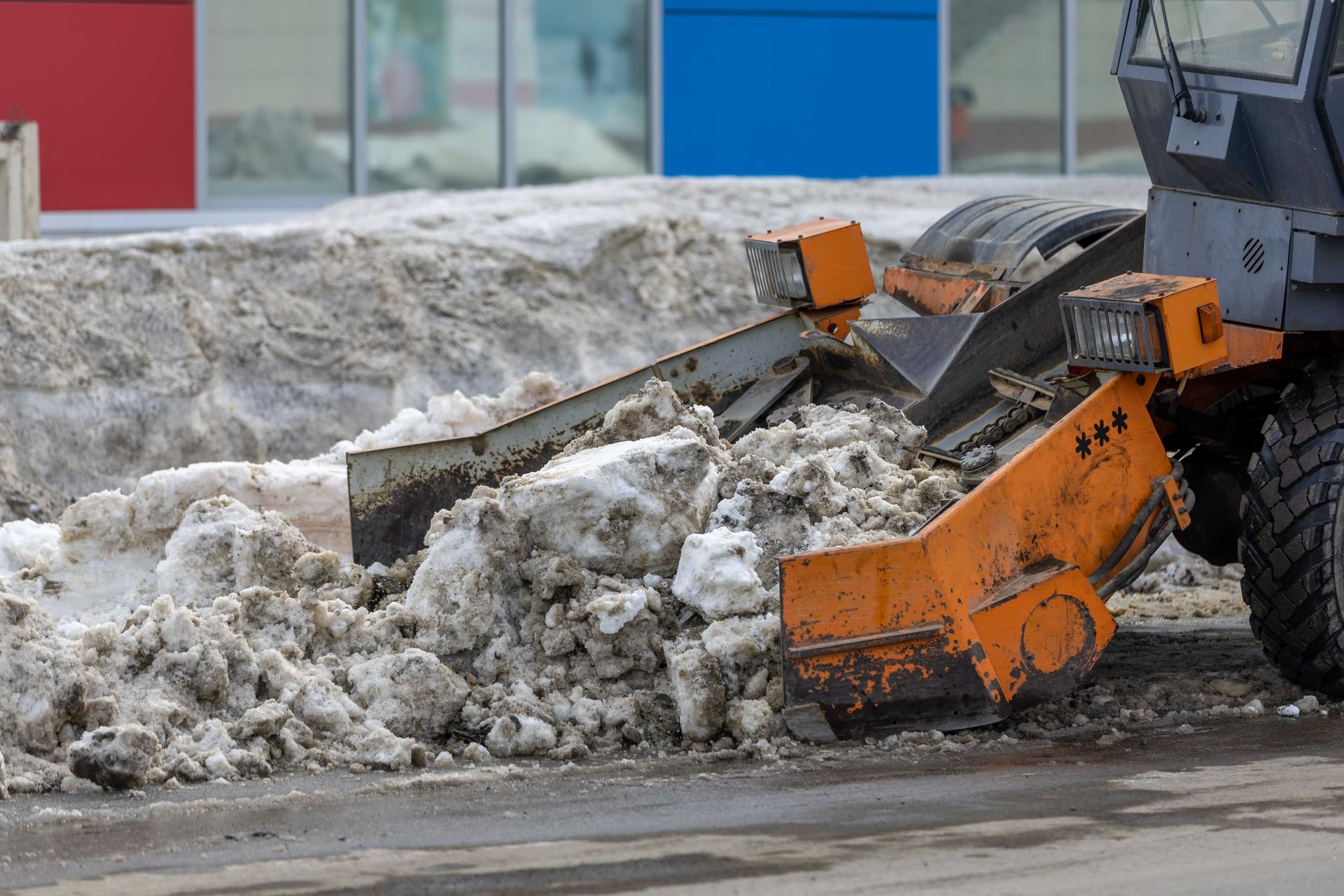

Cross-Border Snow Removal for Multi-Property Portfolios Spanning Vancouver, Seattle, and Portland
Brad Caton • August 18, 2026
Does consolidating a multi-property portfolio under one snow removal vendor actually save money?
A commercial property portfolio that spans Vancouver, Seattle, and Portland doesn't stop working when winter weather hits, but the snow removal coverage protecting it often does, right at the border. Property managers who run multi-site portfolios along the I-5 corridor frequently end up stitching together three or four regional plow companies, one per market, each with its own contract terms, invoicing cycle, and idea of what "cleared by 6 a.m." actually means. When a storm crosses the 49th parallel, so does the coordination problem.
1. The Hidden Cost of Running Snow Removal Across Multiple Regions
Every additional vendor in a snow removal program adds a relationship that has to be sourced, onboarded, monitored, and chased when something goes wrong. That overhead is easy to underestimate until a storm hits three properties in three cities on the same night and the operations team is working three separate phone trees to find out which lots are cleared.
This isn't unique to snow removal, it's a documented pattern across facility services generally. According to IFMA's Facility Management Pulse Report, cited by System4, 37% of facility professionals are already shifting toward consolidated service partnerships specifically to escape the separate invoices, contracts, and escalation paths that come with running one vendor per site. A cross-border portfolio feels that pain earlier and harder, because the fragmentation isn't just city-to-city, it's a full regulatory and insurance line running through the middle of the service area.
2. Why Vendor Sprawl Gets Worse When a Portfolio Crosses the US-Canada Line
A property manager overseeing sites in Vancouver, BC and Seattle, WA is technically managing two different countries' worth of contractors, contract law, and (often) currency. Most regional snow removal companies operate on one side of the border only, a Vancouver-based plow company has no crews, no equipment, and typically no interest in a Seattle parking lot, and vice versa. That forces the portfolio into a patchwork by default, not by choice.
The result shows up as inconsistent service standards from site to site, no single point of accountability when a storm response is late, and a reporting picture that has to be manually reassembled from three or four different vendors' formats before anyone can tell the ownership group what actually happened last night. It also shows up at renewal time: three or four separate contracts means three or four separate negotiations, three or four separate certificates of insurance to chase down and verify, and three or four different invoicing cycles to reconcile against a single portfolio budget.
None of that is a knock on any individual regional vendor, a Portland-based crew that plows well in Portland has no obligation to also be good at cross-border logistics. It's simply a mismatch between how snow removal is typically sold (market by market) and how a multi-region portfolio actually needs to buy it (as one program).
3. What "Cross-Border Coverage" Should Actually Mean in a Snow Removal Contract
Cross-border coverage is not the same as a vendor simply being willing to quote a job on both sides of the line. It should mean one accountable operator with its own equipment and crews physically staged in each market, not a broker subcontracting the work out to whoever is available locally when a storm hits. Subcontracted networks introduce exactly the accountability gap a multi-property portfolio is trying to eliminate: if the Seattle leg of the job is handled by a subcontractor the primary vendor doesn't directly manage, "one vendor" on paper is still three or four vendors in practice.
The other piece is documentation. A portfolio spanning two countries needs service records, timestamps, photos, geo-fenced proof of visit, that look the same regardless of which city or which side of the border the property sits on, so a regional or portfolio-wide report can be produced without translating three vendors' paperwork into one format.
4. The Insurance Question Most Property Managers Miss
Insurance is where cross-border service contracts most often go wrong, and it's rarely caught until a claim is already in progress. Cross-border insurance specialists at Roanoke Insurance Group note that "appropriate insurance is essential for businesses engaged in cross-border operations" and that companies need to confirm their policies actually cover operations on both sides of the border, working with brokers who understand the requirements in both countries rather than assuming a single policy travels seamlessly across the line.
The same logic applies to whoever is clearing your parking lots. A general liability certificate written for US operations does not automatically extend to a Canadian job site, and vice versa. Before signing a cross-border snow removal contract, a property manager should confirm in writing, not assume, that the vendor's coverage is valid, sufficient, and active in every jurisdiction the portfolio touches.
5. What to Ask Before You Sign With a Cross-Border Snow Removal Partner
A few direct questions separate a genuinely cross-border operator from a broker patching together local subcontractors:
- Do you have your own equipment and crews physically based in each market, or is coverage in one country subcontracted?
- Is your liability insurance confirmed valid and sufficient on both sides of the border, in writing?
- Will service documentation, timestamps, photos, geo-fenced records, look identical across every property in the portfolio, regardless of city?
- Is there a single point of contact accountable for the entire portfolio, or a different contact per region?
- Does consolidating the portfolio under one contract actually reduce the invoicing and reporting burden, or just relabel the same fragmented vendors under one logo?
Vendors that can't answer all five without hedging are, functionally, still a patchwork — just with a single sales contact in front of it.
6. How Invictus Covers the Full I-5 Corridor With One Accountable Team
Invictus is the only ISO SN9001-certified company offering snow removal in Vancouver, snow removal in Seattle, and snow removal in Portland with its own crews and equipment, the entire I-5 corridor, on both sides of the US-Canada border, under one operator rather than a network of local subcontractors. That geographic footprint is the direct answer to the vendor-sprawl problem: one contract, one point of contact, and bundled portfolio pricing instead of three or four separately negotiated regional contracts.
Every property in the portfolio gets the same geo-fenced documentation standard, the same on-site First Responder Unit model for rapid ice management, and the same equipment-matched service guarantee, whether the site is in British Columbia, Washington, or Oregon. That consistency is what economy of scale actually looks like in practice for a multi-property owner: not just a lower blended rate, but one standard of proof, one escalation path, and one team that already knows every site in the portfolio before the first storm of the season hits.
Before signing with any cross-border provider, it's worth running through the same insurance requirements checklist and contract red flags a property manager would apply to any single-market vendor, a cross-border footprint doesn't earn a pass on due diligence, it just means the diligence has to cover two countries instead of one. Invictus has been doing exactly this work for over 30 years, evolving from a single commercial cleaning contract in the early 1990s into the only boots-on-the-ground operator covering the full Vancouver-to-Portland corridor.
Frequently Asked Questions
Does one snow removal company actually operate on both sides of the US-Canada border, or is that just marketing?
Most regional snow removal companies operate in a single market and either decline cross-border work or subcontract it. A genuinely cross-border operator has its own equipment and crews physically staged in each market, that's the detail worth confirming before assuming "coverage" means the same thing as "boots on the ground."
Does my current US general liability policy cover a Canadian property, or vice versa?
Not automatically. As cross-border insurance specialists note, coverage needs to be confirmed on both sides of the border with a broker familiar with both countries' requirements, never assumed. The same standard should apply to any vendor servicing a cross-border portfolio.
Does consolidating a multi-property portfolio under one snow removal vendor actually save money?
It can, primarily through bundled portfolio pricing and reduced administrative overhead from managing one contract and one invoice instead of several. The savings come from eliminating duplicated setup, invoicing, and reporting costs across separately sourced regional vendors.
What documentation should a cross-border snow removal contract include?
Timestamped, geo-fenced service records for every visit, in a consistent format across every property regardless of city or country, the same standard a property manager would require of a single-market vendor, applied portfolio-wide.
A portfolio that spans Vancouver, Seattle, and Portland shouldn't need three snow removal vendors and three different definitions of "cleared." Invictus covers the entire I-5 corridor with one accountable team, one contract, and documentation that reads the same on both sides of the border. Request a quote to see how a consolidated cross-border contract compares to what your portfolio is running today.
Recent Posts