HOA and Condo Association Snow Removal: Who's Legally Responsible in Washington | Invictus Snowfighters

Brad Caton • August 13, 2026

Share this article

Every fall, thousands of homeowners' association and condominium boards across Washington send the same email: "Does anyone know a snow guy?" It usually gets answered by whoever on the board has a cousin with a plow truck. Then the first hard freeze hits, someone slips on an unsalted walkway outside Building C, and the board discovers that "we handled it" is not a legal defense.

Snow and ice management for a homeowners' association or condo community isn't a landscaping add-on. It's a legal obligation with real liability attached, and in Washington, the rules governing how a board is even allowed to approve a vendor contract are changing this winter. Here's what boards, community association managers, and unit owners need to know before the first storm.

Whose Job Is It, Legally? What Washington Law Says About Common-Area Snow Removal

For condominiums formed under Washington's Condominium Act, the answer isn't ambiguous. RCW 64.34.328 states plainly that, except as otherwise provided in the declaration, "the association is responsible for maintenance, repair, and replacement of the common elements, including the limited common elements." Parking lots, shared walkways, entries, and common-area stairs fall squarely inside that definition. Individual unit owners are responsible for their own units; the association is responsible for everything the community shares.

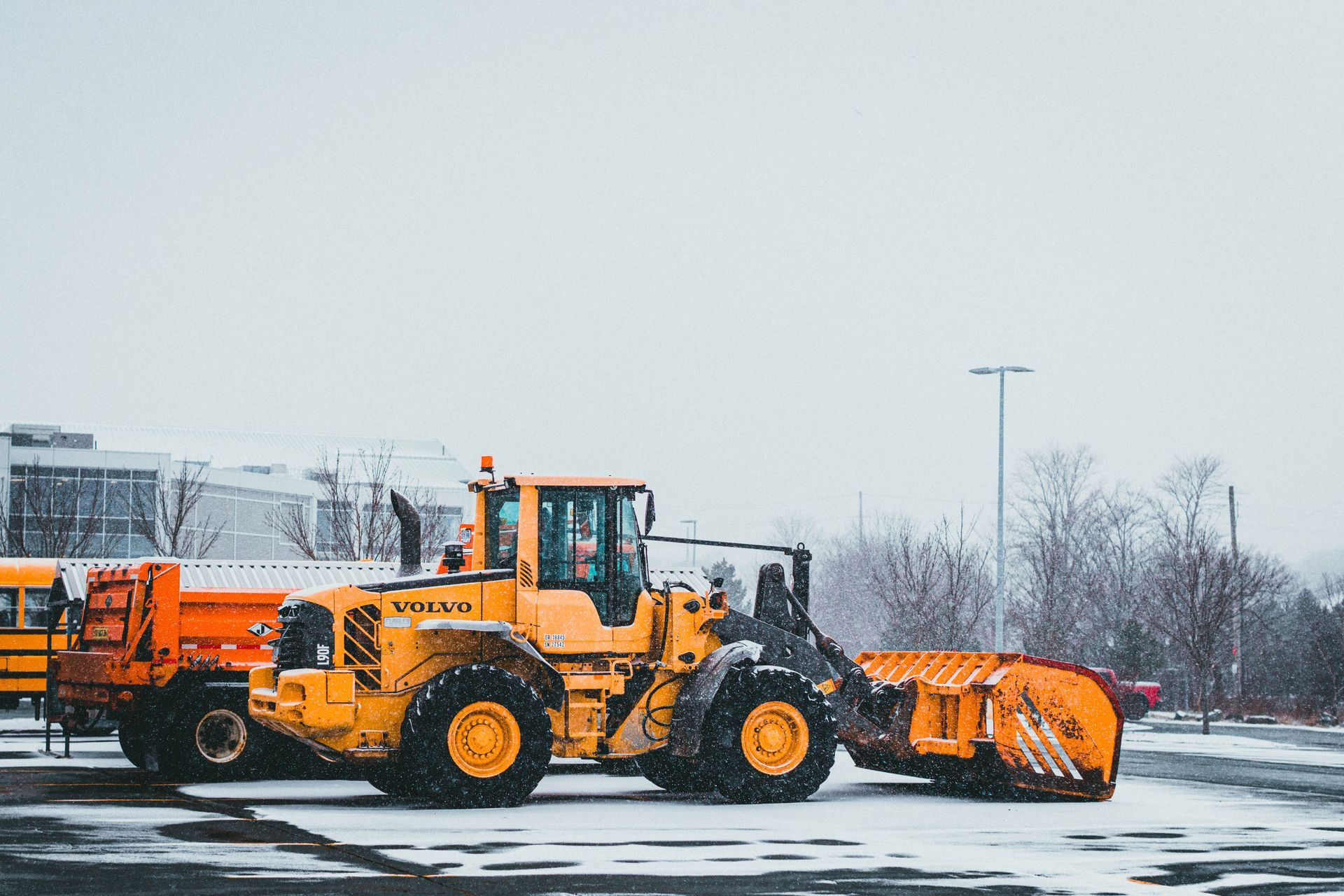
Yellow snowplow clearing deep snow on a street beside buildings

That distinction matters the moment a slip-and-fall claim gets filed. If ice accumulates on a common walkway and the association never contracted for removal, treated it as "optional," or relied on an informal, undocumented arrangement, the association, not the individual homeowner who happened to walk out first, is the party a plaintiff's attorney will look to first. Snow and ice management belongs on the same list as roof maintenance and elevator inspections: a common-element obligation the board carries, not a courtesy.

The 2026 Rule That Changes How Your Board Can Approve a Snow Removal Vendor

Washington is in the middle of a multi-year overhaul of community-association law, and the next phase lands right before this winter's storms. As Washington State Bar Association reporting on SB 5129 explains, starting January 1, 2026, portions of the Washington Uniform Common Interest Ownership Act (WUCIOA, Chapter 64.90 RCW) become mandatory for every community association in the state, regardless of when it was formed or which older statute it currently operates under.

What "Ministerial" Actually Means for a Winter Contract

The part that affects snow removal planning specifically: WUCIOA's open-meeting requirements now apply to every association, and the law sharply restricts what a board can decide outside of a properly noticed meeting. Under the older statutes, it was common and legal for a board to approve a vendor contract by informal email consensus between meetings. Under WUCIOA, boards may only act between meetings on "ministerial" matters or items already authorized at an open meeting,  a signed snow removal contract almost certainly doesn't qualify as ministerial. Boards also now must give 14 days' notice of meetings (or meet on a published schedule) and build in an owner-comment period.

Practically, that means a board that has historically waited until the first snow warning to "quickly approve" a contract over email may find that approval invalid, or at minimum vulnerable to challenge, once the new requirements take effect. The fix is simple but time-sensitive: get the vendor contract on a properly noticed meeting agenda now, before the season starts, not after the first storm is already in the forecast.

Why "The Landscaper Will Handle It" Is the Costliest Assumption a Board Can Make

Snow and ice management gets treated like a seasonal landscaping line item more often than any other common-element responsibility a board carries, and that's exactly the assumption that causes trouble. A landscaping crew plowing as a side service during the off-season isn't staffed, equipped, or contractually obligated the same way a dedicated winter operator is. When a storm hits multiple properties on the same night, a general maintenance vendor has to choose which site gets served first, and a board that never asked how that decision gets made has no idea where its property lands in that order.

This is the same distinction Invictus Snowfighters was built around: winter response treated as first-responder work, not a landscaping afterthought. People slip, fall, and get seriously hurt in icy conditions, and a board's snow and ice plan should be built with that stakes level in mind,  equipment reserved specifically for the contract, a defined response window, and a crew that isn't also trying to be somewhere else. A contract that doesn't spell out dedicated equipment and response time is a contract that hasn't actually answered the "what happens when it snows everywhere at once" question.

What a Proper HOA or Condo Snow and Ice Service Agreement Should Include

A board evaluating snow removal vendors for the first time,  or renewing a contract that's been on autopilot for years,  should expect the agreement to specify, at minimum: the trigger depth or condition that activates service, a guaranteed response window, which areas are covered (visitor parking counts as a common element too, not just the main drive), the de-icing product used and how it's applied, and what happens during a multi-day storm event. Boards evaluating coverage terms should also read what a real snow removal service level agreement should require before signing, since a vague "as needed" clause is functionally unenforceable.

Insurance is the other piece boards routinely skip. A vendor's certificate of insurance should list the association as an additional insured, and the coverage limits should match the scale of the property, not a boilerplate minimum. The insurance requirements a commercial snow removal contract should carry apply just as directly to an HOA or condo agreement; a board that never asks to see the certificate is trusting a verbal assurance instead of a legal protection.

Documentation: Why "We Cleared It" Isn't Enough If Someone Falls

If a slip-and-fall claim is ever filed against the association, the board's defense depends entirely on being able to prove what was done and when,  not on someone's memory of a phone call. Invictus documents every visit with geo-fenced, timestamped service records and photo documentation rather than a handwritten log, precisely because "we're pretty sure we salted that morning" doesn't hold up against a plaintiff's attorney asking for proof. Boards should require the same standard from any vendor: what documentation premises liability law actually expects a property to produce, and how slip-and-fall liability plays out when that documentation exists versus when it doesn't.

This isn't paperwork for its own sake. A board that can produce a timestamped record showing the walkway was treated ninety minutes before an incident is in an entirely different legal position than one that can only say "the contract said they'd handle it."

Budgeting Snow Removal When You're Managing Other Owners' Money

Community association boards are spending assessment dollars collected from every owner in the building, which raises the bar for how that spending gets justified. Seasonal flat-rate contracts and per-push (per-event) pricing carry very different risk profiles for a board trying to plan a winter budget without blowing through reserves,  the tradeoffs are laid out in this Pacific Northwest snow removal pricing guide. Boards managing more than one property, or a management company overseeing several associations, can also often consolidate vendors across sites for simpler, more transparent invoicing,  a pattern covered in more detail in this guide to property maintenance vendor consolidation. Either way, a board's winter budget line should be backed by a written contract and a clear invoicing process, not a handshake and a hope that last year's number still applies.

Where Invictus Snowfighters Serves HOAs and Condo Communities

Invictus Snowfighters runs winter operations across the entire I-5 corridor, with dedicated residential snow removal service in Vancouver, Seattle, and Portland, including condo-dense communities in Burnaby and Surrey. For boards weighing prevention options ahead of the season, Invictus also applies Easy Ice Melt, a LEED-compliant liquid de-icing treatment that bonds to walkways before a storm hits, rather than reacting after ice has already formed.

Frequently Asked Questions

  • Does an HOA have to remove snow from common areas in Washington?

    Under RCW 64.34.328, a condominium association is responsible for maintaining common elements, which includes shared walkways, drives, and parking areas. Standalone HOAs governed by other statutes should confirm the specific maintenance obligations in their declaration, but the same liability exposure applies whenever a shared area goes untreated.

  • Can our board still approve a snow removal contract by email this winter?

    Starting January 1, 2026, WUCIOA's open-meeting requirements apply to every Washington community association. Contract approvals generally aren't "ministerial" actions, so boards should plan to approve winter vendor agreements at a properly noticed meeting rather than by informal consensus between meetings.

  • What should our board ask a snow removal vendor before signing?

    At minimum: the snowfall trigger depth for service, a guaranteed response window, which areas are covered, the insurance certificate naming the association as additional insured, and how service visits are documented.

  • Is snow removal really a liability issue, or just a maintenance issue?

    Both. It's a maintenance obligation under state law and a genuine safety issue, slip-and-fall injuries on ice are common and serious, which is why documentation and response time matter as much as the contract price.

Get Your Association Ready Before the First Storm

Boards that wait until the first snow warning to sort out vendor approval, contract terms, and documentation standards are making those decisions under pressure, with owners watching. Getting the winter contract on a properly noticed meeting agenda now before WUCIOA's 2026 requirements take effect and before the first freeze protects both the property and the board itself. Contact Invictus Snowfighters for a winter service quote built around your community's specific common areas.

Recent Posts

Rows of new vehicles on a car dealership lot lightly dusted with snow, Pacific Northwest
By Brad Caton September 8, 2026
Car dealership snow removal protects more than pavement — it protects valuable vehicle inventory, customer safety, and your liability exposure. See what a dealership-specific SLA should include, from ISO SN9001-certified Invictus Snowfighters, the only snow removal company covering the full I-5 corridor from Vancouver to Portland. Request a quote.
By Brad Caton September 7, 2026
A snow removal RFP that skips the details invites bids you can't fairly compare. See what property managers should include, from service triggers to equipment guarantees. ISO SN9001-certified Invictus serves Vancouver, Seattle, and Portland. Request a quote.
By Brad Caton September 4, 2026
Snohomish County snow removal rules vary by city: Everett requires sidewalks clear by noon, Seattle uses a timely manner standard. See what your property owes and how Invictus keeps multi-city portfolios compliant.
Snow accumulated on a flat commercial building roof in the Pacific Northwest
By Brad Caton September 3, 2026
Commercial roof snow load is a structural risk, not a parking lot one. See what IBC and ASCE 7 require, key warning signs, and a pre-winter checklist. Request a quote.
By Brad Caton September 2, 2026
Snow removal contractor insurance takes more than a certificate. See what an additional insured endorsement requires, per ISO SN9001-certified Invictus. Get a quote.
By Invictus Snowfighters September 1, 2026
Who's responsible for snow removal in a commercial lease, landlord or tenant? See how CAM clauses and city code assign it. ISO SN9001-certified across the Pacific Northwest. Request a quote.
By Invictus Snowfighters August 31, 2026
Snow removal contractor onboarding, explained: what happens after you sign, from site assessment to First Responder Unit staging. ISO SN9001 certified across the Pacific Northwest I-5 corridor. Request your free quote.
By Brad Caton August 28, 2026
Snow removal contract pricing is rising as BC, WA and OR raise minimum wage in 2026. See what it means for your budget and how to lock in reliable service.
By Invictus Snowfighters August 28, 2026
Snow removal insurance and landscaping insurance aren't the same policy. See where the coverage gap opens up, what a real snow-specific policy includes, and the questions to ask before you sign. Request a quote.
By Brad Caton August 27, 2026
Commercial snow removal gets expensive and unpredictable when a portfolio is split across five vendors. See what real economy-of-scale consolidation saves, and what to vet first. Request a quote from Invictus.
Show More