Snohomish County Snow Removal Laws: What Property Managers Must Know | Invictus Snowfighters
Brad Caton • September 4, 2026
If you manage commercial property anywhere between Vancouver and Portland, you already know winter weather doesn't respect city limits. What you might not know is that the legal obligations around clearing it don't either and in Snohomish County, they change block by block. Cross from unincorporated county land into Everett city limits, and a vague, common-sense duty to clear ice suddenly becomes a hard noon deadline with a civil infraction attached.
That patchwork matters because most snow removal liability advice online is written for a single city, or worse, for "the state" as if Washington had one uniform rule. It doesn't. This guide breaks down what Snohomish County's largest city actually requires, how that compares to the neighboring jurisdictions Invictus Snowfighters already serves along the I-5 corridor, and what property managers with multi-city portfolios need to do about the gaps in between.
Why Snohomish County's Snow Removal Rules Aren't One Rule
Snohomish County itself, through its public works department, focuses its published snow and ice guidance on road plowing: prioritizing arterials, directing drivers to stay at least 200 feet behind active plows and de-icing trucks, and coordinating county-maintained routes during a storm. That's a road-clearing operation, not a private-property sidewalk mandate. It tells a property manager how the county will treat the streets outside a building — not what the property manager is required to do with the sidewalk in front of it.
Sidewalk-clearing duties, by contrast, are set city by city under Washington's Revised Code framework for municipal authority, and each city has written its own ordinance. According to the Municipal Research and Services Center (MRSC), the nonprofit that tracks Washington local government law, cities across the state have taken meaningfully different approaches some with hard deadlines, some with vaguer "reasonable time" language, and some silent on the issue entirely. Snohomish County's cities are no exception, and the differences carry real compliance consequences for anyone managing more than one address in the county.
Everett's Noon Deadline: The Strictest Standard in the County
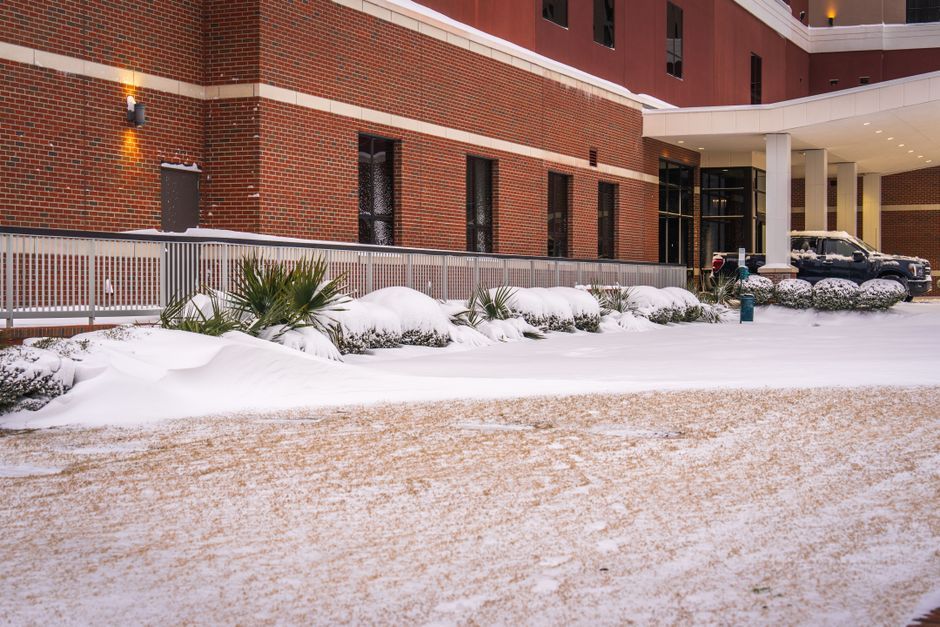
Everett, the county seat and Snohomish County's largest city, has the clearest and least forgiving rule in the area. Under Everett Municipal Code 13.08.020, the owner, agent, occupant, or person in charge of any building or vacant lot fronting a sidewalk must clear that sidewalk of snow or ice "by noon" and keep it clean afterward. There's no "reasonable time" cushion and no explicit weather exception written into the text. Violations are enforced as civil infractions under EMC Chapter 1.20, and the city's code makes clear the obligation resets with every fresh accumulation, not just the first storm of the season.
For a property manager, that means the standard isn't "clear it eventually" — it's "clear it before the lunch rush," every time it snows or ices over, for as long as the property fronts a public sidewalk inside Everett city limits. A portfolio with even one Everett address needs a service plan built around that specific deadline, not a generic regional snow plan.
How Everett Stacks Up Against Seattle, Portland, and Vancouver
Compare that to Seattle's ordinance, which requires owners and occupants to clear snow and ice from sidewalks "in a timely manner" under Seattle Municipal Code 15.48.010 — language that gives property managers more judgment but also more ambiguity about what a code officer, or a plaintiff's attorney after a slip-and-fall, will consider timely. Portland's requirements and Vancouver, BC's bylaw each set their own timing and enforcement standards as well, and none of the three match Everett's fixed deadline.
That inconsistency is exactly the kind of thing that trips up portfolios spanning multiple cities. A property manager who trains staff or vendors to the Seattle "timely manner" standard and applies that same instinct in Everett is, technically, already out of compliance the moment noon passes with snow still on the walk even if the crew is on-site and working.
Unincorporated Snohomish County: No Ordinance Doesn't Mean No Risk
MRSC's statewide survey of city and county snow and ice policies lists specific sidewalk-clearing ordinances for numerous Washington cities, including Everett and Seattle, but no comparable codified sidewalk deadline for unincorporated Snohomish County itself. For a property in the unincorporated county outside Everett, Lynnwood, Edmonds, or another incorporated city's limits that absence of a specific ordinance does not mean the absence of a legal duty. It means the duty shifts from a codified deadline back to Washington's general premises liability standard.
What "Reasonable Opportunity" Has Meant in Washington Courts
Washington courts have repeatedly addressed how much time an owner has before liability attaches for snow and ice conditions. In cases including Leroy v. State (2004), Wright v. Kennewick (1962), and Bird v. Walton (1993), Washington courts established that a party cannot be held liable for snow- or ice-related injuries if it hasn't had a reasonable opportunity to address the hazard — those cases specifically concerned public road agencies, but the "reasonable opportunity" reasoning is the same negligence framework Washington courts apply to private commercial property. We've covered the private-property side of that standard in detail in our guide to what premises liability law actually requires; the short version is that "reasonable" is a fact question a jury decides after the fall, not a bright line you can plan around in advance the way you can plan around Everett's noon deadline.
What the Patchwork Means for Multi-Property Portfolios
This is precisely the kind of jurisdictional patchwork that catches multi-property owners off guard. A portfolio with buildings in Everett, unincorporated Snohomish County, and Seattle is really operating under three different legal standards at once — one with a hard deadline, one governed by case-by-case negligence law, and one built around a "timely manner" test. Treating them as interchangeable is how a property that was technically compliant in one city ends up exposed in another during the same storm.
It's also why the geography that makes Invictus Snowfighters unusual in this market — the only crew running the full corridor from Vancouver, BC, through Seattle, down to Portland — is more than a coverage map. It means one operator is tracking Everett's noon rule, Seattle's timely-manner standard, and Portland's requirements simultaneously, instead of a property manager coordinating separate vendors who each know only their own city's rules.
Building One Compliance Plan That Covers Every City in Your Portfolio
The property managers who stay ahead of this don't memorize every city code themselves — they build a service plan that already accounts for the strictest applicable deadline in the portfolio and documents the response either way. In practice, that looks like a few concrete steps:
- Map every address to its jurisdiction first. Know which properties sit inside Everett city limits versus unincorporated county land versus another municipality, since the clock — or the lack of one — is different for each.
- Set the service schedule to the tightest deadline in the portfolio. If one property is subject to Everett's noon rule, treat every property serviced on that same route with the same urgency, rather than running a single average response time across the whole book.
- Document every response, not just the ones with a hard deadline. In unincorporated areas where "reasonable opportunity" is the standard, geo-fenced arrival and completion timestamps are the record that shows a jury what "reasonable" looked like in practice.
- Treat snow and ice as first-responder work, not routine landscaping. As our founder puts it, "this is first responder business — people die in snow and ice situations." That mindset is why Invictus stages on-site ice management units on larger properties rather than waiting to mobilize after the first call comes in.
For portfolios that already work with Invictus across multiple cities, this is largely handled through route sequencing and documentation built into a written service-level agreement. For portfolios juggling separate vendors city by city, it's worth asking each one, in writing, what standard they're servicing to — a noon deadline, a timely-manner standard, or neither — before the next storm makes the answer matter.
This also gets more complicated when responsibility for the property itself is layered. A commercial lease may assign snow removal to the tenant rather than the landlord, and an HOA or condo structure can split responsibility across an association and individual unit owners. We've covered landlord vs. tenant responsibility in a commercial lease and HOA and condo snow removal responsibility in Washington in more depth elsewhere — the jurisdiction-by-jurisdiction rules above apply regardless of which party ultimately holds the obligation.
Frequently Asked Questions
Does Snohomish County itself require private property owners to clear snow from sidewalks?
The county's own published snow and ice guidance addresses road plowing priorities, not private sidewalk obligations. Sidewalk-clearing duties in the county are set at the city level — Everett has a specific noon deadline, while unincorporated areas fall back on Washington's general premises liability standard rather than a codified ordinance.
What happens if I don't clear a sidewalk in Everett by noon?
Under Everett Municipal Code 13.08.020 and 13.08.030, failing to clear snow or ice from an abutting sidewalk by noon is enforced as a civil infraction under the city's general code enforcement chapter. Beyond the infraction itself, an uncleared sidewalk past the deadline can also become evidence in a slip-and-fall claim.
Is Everett's rule stricter than Seattle's?
Yes. Everett sets a fixed clock — clear by noon — while Seattle's ordinance requires clearing "in a timely manner," a standard with more built-in judgment and more room for dispute after an incident.
How do multi-property portfolios in Snohomish County stay compliant across different cities?
The most reliable approach is mapping every address to its jurisdiction, servicing the whole route to the strictest deadline in the portfolio, and documenting arrival and completion times at every property not just the ones with a codified deadline so there's a record of reasonable response even where the law itself is less specific.
Does Invictus Snowfighters service properties in Snohomish County?
Invictus services the full Vancouver, BC to Seattle to Portland corridor, including the greater Seattle metro area. Reach out through our Seattle-area service page to talk through a specific address and jurisdiction.
Snow and ice compliance in Snohomish County isn't a single rulebook — it's a set of overlapping ones, and the gap between them is where liability tends to live. If your portfolio spans more than one city in the county, or you're not sure which standard applies to which address, talk to Invictus about a compliance walkthrough before the season's first storm makes the answer academic.