Best Practices for Eco-Friendly De-Icing Solutions on Commercial Pavement
Brad Caton • February 21, 2026
Introduction: The Growing Need for Sustainable Winter Maintenance
Commercial property managers across the Pacific Northwest face a persistent winter challenge that extends far beyond simply clearing snow and ice from parking lots and walkways. Every de-icing decision carries environmental consequences that ripple through local ecosystems, affect water quality in surrounding communities, and impact the long-term integrity of the very pavement infrastructure you're trying to protect. Traditional rock salt applications, while effective at melting ice, introduce significant volumes of chlorides into stormwater systems, degrade concrete surfaces, damage nearby vegetation, and contribute to the corrosion of vehicles and building materials. As environmental regulations tighten and corporate sustainability commitments intensify, property managers increasingly recognize that winter maintenance practices must evolve beyond the crude "salt everything heavily" approach that dominated the industry for decades.
The emerging paradigm of eco-friendly de-icing represents far more than environmental virtue signaling—it reflects a sophisticated understanding that effective winter safety management and environmental stewardship are not competing priorities but complementary objectives that enhance property value, reduce long-term maintenance costs, and protect businesses from both physical liability and reputational risk. Professional snow and ice management now demands a strategic approach that balances immediate safety requirements with environmental responsibility, utilizing advanced materials, precision application techniques, and proactive planning to minimize ecological impact while maintaining the safe, accessible conditions that tenants, customers, and employees depend upon throughout winter's harshest periods. This article explores the best practices that forward-thinking commercial property managers are implementing to achieve this critical balance.

Understanding the Environmental Impact of Traditional De-Icers
Sodium chloride—common rock salt—has dominated winter maintenance for over a century primarily because of its low cost and widespread availability, but this convenience masks a troubling environmental legacy that property managers can no longer afford to ignore. When rock salt dissolves on pavement surfaces, it creates a chloride-rich brine that flows into storm drains with snowmelt and rain, eventually reaching streams, rivers, and groundwater sources where chloride concentrations persist for years because natural processes cannot break down these compounds. Studies conducted in urban watersheds throughout North America consistently show chloride levels exceeding safe thresholds for aquatic life during winter and spring months, with some water bodies experiencing permanent chloride elevation that fundamentally alters their ecological character. Property managers applying rock salt to parking lots might not witness the immediate consequences, but those chlorides are accumulating in local water supplies, threatening drinking water quality and damaging sensitive aquatic ecosystems that depend on balanced mineral concentrations.
The environmental damage extends well beyond water contamination to affect the immediate property landscape and infrastructure integrity. Rock salt's hygroscopic nature—its tendency to attract and retain moisture—creates persistent wet zones in soil adjacent to treated pavement, elevating salt concentrations to levels that prove toxic to tree roots, ornamental plantings, and turf grass. Property managers often attribute winter and spring landscape decline to cold damage when the actual culprit is salt toxicity that accumulates through repeated applications season after season. Even salt-tolerant species experience stress when chloride levels exceed their tolerance thresholds, resulting in browning foliage, stunted growth, and eventual mortality that requires expensive landscape replacement. The visual impact of dead or declining vegetation near parking areas and walkways undermines the professional appearance that commercial properties work diligently to maintain throughout the year.
Infrastructure degradation represents perhaps the most economically significant consequence of excessive rock salt application, imposing costs that accumulate invisibly over years before manifesting as expensive repair requirements. Sodium chloride accelerates the concrete spalling and surface deterioration that property managers might assume results simply from freeze-thaw cycles, but research demonstrates that chloride penetration into concrete pore structure significantly amplifies damage by promoting internal pressure buildup and reinforcing steel corrosion. Parking structures, walkways, and building foundations exposed to heavy salt applications deteriorate more rapidly than those maintained with alternative de-icing strategies, requiring premature resurfacing or reconstruction that could have been delayed or avoided through more judicious chemical application. Metal infrastructure—light poles, railings, signage, drainage grates, and exposed structural elements—suffers accelerated corrosion that compromises both aesthetic appeal and structural integrity, creating liability concerns and replacement costs that far exceed the initial savings achieved through cheap rock salt application.
Alternative conventional de-icers including magnesium chloride and calcium chloride present their own environmental considerations despite being marketed as "improved" solutions over traditional rock salt. While these compounds offer advantages such as effectiveness at lower temperatures and reduced quantity requirements per application, they still introduce chlorides into the environment and create similar water quality concerns as sodium chloride. Calcium chloride's hygroscopic properties prove even more aggressive than rock salt, drawing moisture from the air and creating persistently slick surfaces that can actually worsen traction problems under certain conditions while accelerating concrete deterioration through repeated moisture cycling. Magnesium chloride, though somewhat less harmful to vegetation than sodium chloride, still damages sensitive plant species and contributes to waterway chloride loading. The proliferation of these alternative salts in the commercial de-icing market reflects industry recognition that traditional rock salt creates unacceptable environmental problems, but property managers seeking genuinely sustainable solutions must look beyond simply substituting one chloride compound for another. Professional snow and ice management demands a more sophisticated approach that recognizes when chemical de-icing is truly necessary and implements advanced materials and application techniques that minimize environmental impact while maintaining the safety standards that protect people and property.
Key Principles of Eco-Friendly De-Icing
The foundation of environmentally responsible winter maintenance rests on a fundamental shift from reactive response to proactive planning—an approach that professional contractors characterize as the "first responder" mindset. Traditional snow removal operations wait for accumulation to occur before mobilizing crews and equipment, resulting in hazardous conditions that demand heavy chemical application to restore safe surfaces after ice has already bonded to pavement. In contrast, proactive programs monitor weather forecasts continuously, deploy anti-icing treatments before precipitation arrives, and position equipment and personnel strategically to intervene during the early stages of winter events when minimal chemical intervention achieves maximum effectiveness. This preventive approach dramatically reduces the total quantity of de-icing materials required throughout the season because preventing ice formation proves far more efficient than breaking established ice bonds after the fact. Property managers who embrace proactive winter maintenance not only minimize environmental impact but also achieve superior safety outcomes at lower overall cost by avoiding the crisis management mentality that drives excessive chemical application during emergency conditions.
The principle of "right product, right time, right amount" represents the operational core of sustainable de-icing, requiring property managers and contractors to move beyond the simplistic one-size-fits-all approach that treats every winter event identically. Different temperature ranges demand different chemical solutions—what works effectively at 28°F may prove completely ineffective at 10°F, leading to either wasted material or dangerous conditions when contractors apply inappropriate products. Weather timing matters enormously: applying liquid anti-icing agents twelve hours before precipitation arrives prevents ice bonding far more efficiently than spreading granular de-icers after two inches of snow have compacted into ice layers. Application rates must be calibrated precisely based on pavement temperature, precipitation intensity, and traffic levels rather than relying on the crude "spread until it looks white" approach that wastes materials and maximizes environmental contamination. Professional contractors invest in calibrated spreading equipment, electronic weather monitoring systems, and operator training programs that enable precision application tailored to actual conditions rather than guesswork and habit. This smart application strategy typically reduces seasonal de-icing material consumption by 30-50% compared to traditional practices while maintaining equivalent or superior safety performance, demonstrating that environmental responsibility and operational effectiveness reinforce rather than conflict with each other.
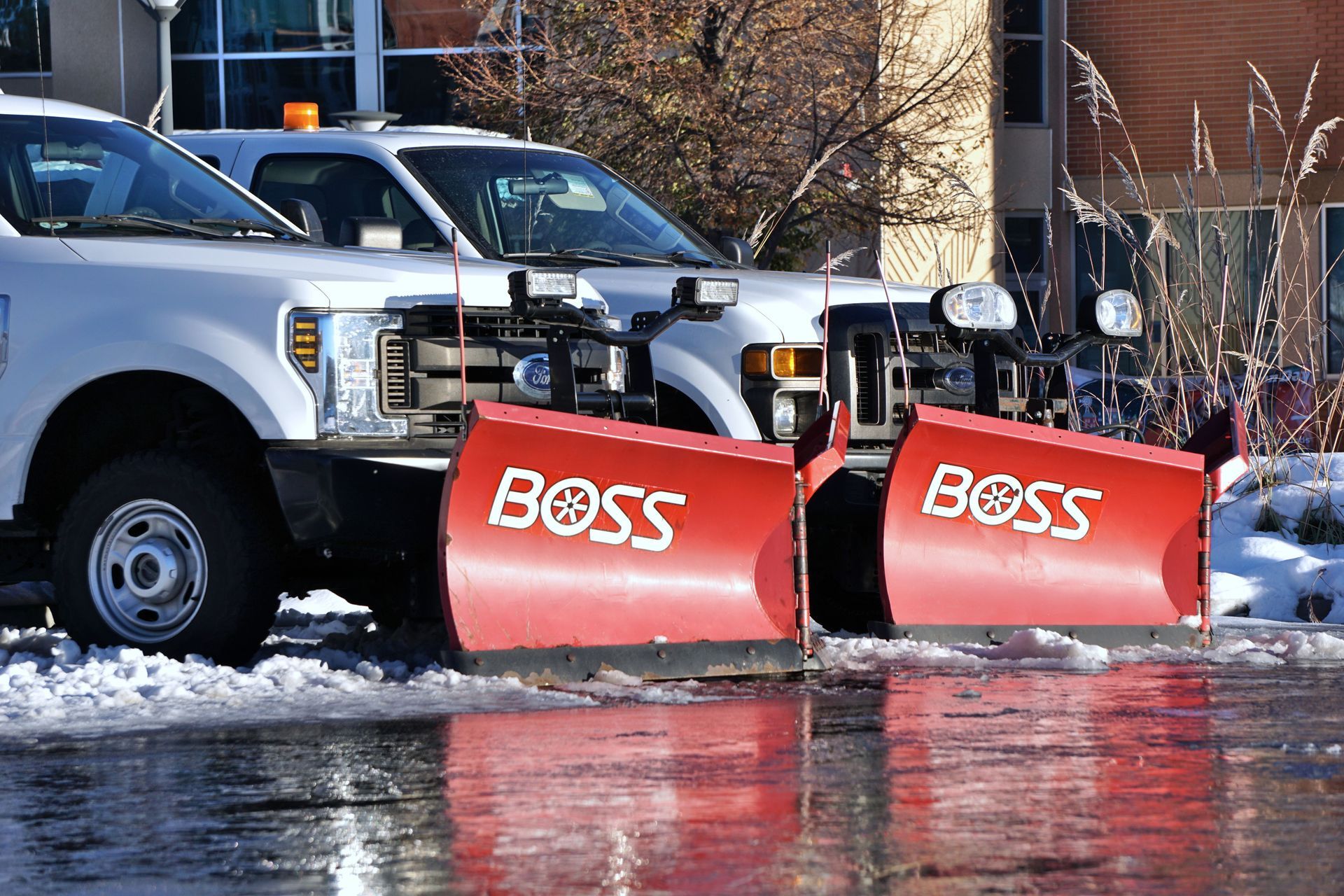
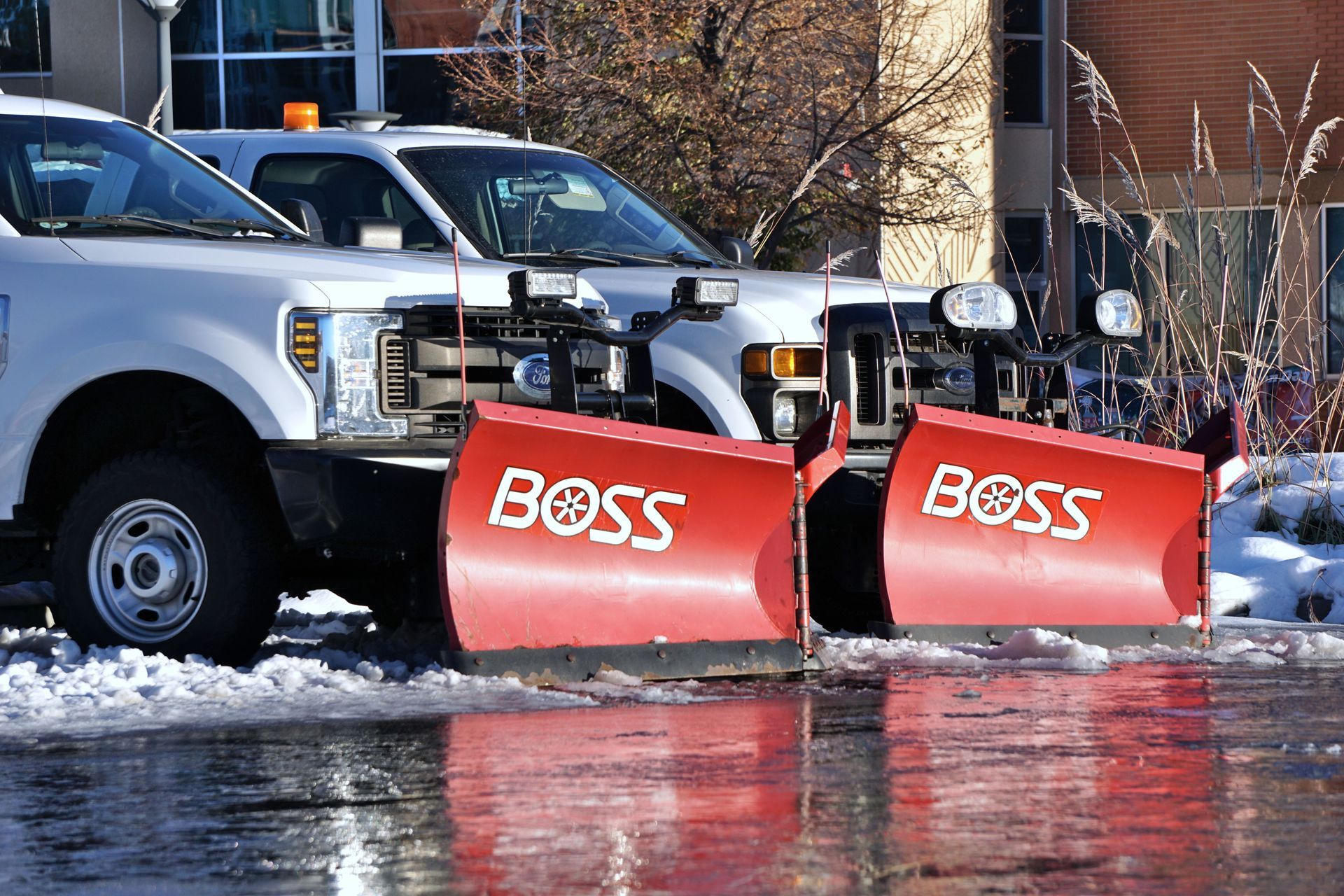
Integrating mechanical snow removal with strategic chemical application represents another critical principle that distinguishes sustainable programs from environmentally careless operations. Many property managers underestimate the value of thorough plowing, shoveling, and sweeping in reducing chemical requirements, treating physical snow removal as a preliminary step before the "real" work of chemical application begins. Professional winter maintenance recognizes that removing as much snow and ice as mechanically possible before applying any chemicals dramatically improves de-icer effectiveness while minimizing quantity requirements. A parking lot that's been plowed down to bare pavement or near-bare pavement requires only targeted chemical treatment on remaining ice patches rather than broadcast application across the entire surface. Walkways that receive prompt attention from shoveling crews before foot traffic compacts snow into ice need minimal chemical intervention compared to those allowed to develop thick ice layers. Property managers should evaluate contractor capabilities based not just on their de-icing materials and methods but on their commitment to aggressive mechanical removal that prevents ice formation in the first place. The most environmentally responsible winter maintenance programs view chemicals as precision tools for addressing specific hazards rather than blanket solutions applied indiscriminately across all pavement surfaces, reserving chemical application for high-risk areas like building entrances, accessible ramps, and pedestrian crossings where safety demands immediate intervention that mechanical methods alone cannot achieve.
Documentation and continuous monitoring close the loop on sustainable de-icing programs by creating the feedback mechanisms necessary for ongoing improvement and accountability. Property managers should demand detailed records showing exactly what materials were applied, when, where, and in what quantities—information that enables analysis of application efficiency, environmental impact tracking, and identification of opportunities to reduce chemical usage without compromising safety. Advanced GPS and geo-fencing technology allows contractors to verify that spreader equipment operated only in designated areas at proper application rates, preventing the over-application that occurs when operators make multiple passes over the same surfaces or fail to properly calibrate equipment settings. Weather data integration with application records reveals patterns about which materials and rates prove most effective under different conditions, supporting continuous refinement of protocols that minimize environmental impact. This documentation serves the additional critical function of liability protection in slip-and-fall litigation, where property owners must demonstrate that they took reasonable steps to maintain safe conditions—but progressive property managers recognize that documentation also supports environmental stewardship by creating transparency and accountability around chemical application practices. Professional snow and ice management partners embrace this documentation burden not as regulatory compliance obligation but as operational intelligence that drives better decision-making and demonstrates commitment to both safety and sustainability.
Sustainable De-Icing Alternatives for Commercial Pavement
Non-chloride-based de-icers represent the most significant advancement in environmentally responsible winter maintenance, offering effective ice melting performance without the persistent water contamination and vegetation damage associated with salt compounds. Potassium acetate, widely used in airport runway de-icing operations where environmental sensitivity and metal compatibility prove critical, breaks down naturally in soil and water through biological processes that convert it into harmless carbon dioxide and water rather than accumulating as persistent pollutants. This biodegradability makes potassium acetate particularly valuable for properties near sensitive water bodies, environmentally protected areas, or locations where stormwater discharge faces strict regulatory oversight. Calcium magnesium acetate (CMA), another acetate-based compound, provides similar biodegradability while offering the additional benefit of minimal corrosivity to metal surfaces—a crucial consideration for parking structures, vehicle fleets, and infrastructure where salt-accelerated corrosion imposes substantial long-term costs. While these acetate-based de-icers typically cost two to three times more per pound than rock salt, their effectiveness at lower application rates, reduced infrastructure damage, and elimination of environmental remediation costs often result in competitive total cost of ownership when property managers calculate the true lifecycle economics rather than focusing narrowly on upfront material prices.
Potassium formate emerges as another promising non-chloride alternative that combines effective ice melting capability with rapid biodegradation and low toxicity to aquatic organisms. Originally developed for airport applications where pavement compatibility and environmental protection demand premium solutions, potassium formate works effectively at temperatures as low as -15°F while breaking down quickly in soil and water systems through natural biological processes. Property managers evaluating formate-based de-icers should understand that while material costs exceed traditional salts significantly, the environmental benefits and infrastructure protection justify premium pricing for applications where sustainability priorities or regulatory requirements prohibit chloride use. These advanced de-icing compounds prove particularly valuable for properties pursuing green building certifications, operating near environmentally sensitive areas, or serving environmentally conscious tenants who value demonstrated commitment to sustainability. The commercial viability of non-chloride de-icers continues improving as production scales increase and environmental awareness drives market demand, making these solutions increasingly accessible to property managers who previously considered them economically prohibitive for routine winter maintenance operations.
Agricultural byproduct-based de-icing solutions present an intriguing category of sustainable alternatives that transform food processing waste streams into valuable winter maintenance products. Beet juice, corn steep liquor, and cheese brine have gained traction as de-icing additives that reduce chloride requirements when blended with traditional salts, typically replacing 20-30% of salt content while maintaining or improving ice melting performance. These organic compounds work by lowering the freezing point of salt brines and improving their adhesion to pavement surfaces, allowing effective treatment with reduced chemical quantities. The sustainability appeal extends beyond reduced salt application to encompass waste stream utilization that converts agricultural processing byproducts into useful materials rather than disposal challenges. However, property managers considering agricultural-based de-icers should understand their limitations: these products require careful handling to prevent freezing in storage tanks, may attract wildlife or create odor issues if applied excessively, and prove most effective in anti-icing applications or when blended with traditional materials rather than as standalone solutions. Professional contractors with experience implementing agricultural-based programs can navigate these practical challenges while achieving meaningful reductions in chloride application and demonstrating environmental stewardship to sustainability-focused stakeholders.
Advanced liquid de-icing agents represent the cutting edge of precision winter maintenance, enabling targeted application that dramatically reduces material consumption while improving effectiveness compared to traditional granular spreading. Liquid treatments work faster than solid materials because they begin melting ice immediately upon contact rather than requiring time to dissolve, and their ability to adhere to pavement surfaces even during active traffic makes them particularly effective for anti-icing applications where preventing ice formation proves far more efficient than breaking established ice bonds. Salt brine solutions (liquid sodium chloride) offer cost-effective anti-icing performance when prepared on-site using bulk salt and water, reducing chloride application by 50-70% compared to traditional granular spreading while achieving superior coverage consistency through precision spray equipment. Enhanced brines incorporating agricultural byproducts or other performance additives further improve effectiveness and reduce required application rates. Property managers should recognize that liquid de-icing programs demand investment in specialized equipment, storage infrastructure, and operator training, but professional contractors who have made these investments can deliver environmental benefits that transform winter maintenance from a crude chemical spreading operation into a precision treatment program. The geographic reach of contractors matters enormously for liquid de-icing implementation—property managers with portfolios spanning the Pacific Northwest I-5 corridor benefit tremendously from partnering with contractors who maintain liquid production and application capabilities across their entire service area, ensuring consistent access to advanced sustainable solutions rather than relying on different contractors with varying capabilities and environmental commitments at different locations.

Implementing Best Practices for an Effective Eco-Friendly Program
Successful implementation of sustainable de-icing practices begins with comprehensive site assessment and planning that identifies the unique characteristics, environmental sensitivities, and operational requirements of each property in your portfolio. Professional contractors conduct pre-season evaluations examining pavement composition and condition, drainage patterns and stormwater discharge points, proximity to sensitive vegetation and water bodies, traffic volumes and patterns, and areas of particular slip-and-fall risk that demand priority attention. This assessment informs customized treatment plans specifying which de-icing materials suit different pavement types—concrete surfaces near landscaping might receive acetate-based products while asphalt parking areas use enhanced salt brine, for instance. The planning process establishes application rate guidelines calibrated to actual site conditions rather than generic industry standards, identifies opportunities for increased mechanical removal that reduces chemical dependency, and determines trigger points for treatment activation based on weather forecasts and pavement temperature monitoring. Property managers overseeing multiple locations benefit enormously from working with contractors capable of implementing consistent sustainable practices across entire portfolios while respecting site-specific variations, ensuring that every property receives the environmental consideration and professional attention that sustainability commitments demand.
Equipment capabilities and personnel training represent the operational foundation that determines whether sustainable de-icing remains aspirational rhetoric or becomes operational reality. Contractors committed to environmental responsibility invest in calibrated liquid application systems that deliver precise treatment rates, GPS-equipped spreaders that prevent over-application through overlapping passes, and weather monitoring technology that supports data-driven decision-making rather than guesswork. The sophistication of equipment matters less than the contractor's commitment to proper calibration, regular maintenance, and operational discipline that ensures equipment performs as designed rather than applying materials haphazardly. Personnel training proves equally critical—operators must understand the environmental consequences of their decisions, recognize how different products perform under varying conditions, and embrace the mindset that every pound of de-icing material represents both environmental impact and operational cost that should be minimized through skill and attention rather than wasted through carelessness. Property managers evaluating contractors should inquire specifically about equipment capabilities, calibration protocols, and training programs that support sustainable practices, recognizing that contractors making substantial investments in these areas demonstrate genuine commitment to environmental stewardship rather than merely marketing green credentials. The geographic scope of contractor operations influences equipment deployment significantly: multi-property portfolios spanning the Pacific Northwest from Portland through Seattle require contractors with sufficient equipment procurement and maintenance capacity to deliver consistent service quality and environmental performance across the entire region rather than concentrating superior capabilities in certain markets while underserving others.
Documentation systems and monitoring protocols transform sustainable de-icing from best intentions into measurable performance that property managers can verify, analyze, and continuously improve. Advanced contractors utilize technology platforms that capture detailed records of every treatment application including exact locations served, materials and quantities used, weather conditions present, and pavement temperatures recorded, creating comprehensive datasets that reveal application efficiency patterns and identify opportunities for material reduction. Geo-fencing technology verifies that treatment occurred within designated boundaries at appropriate rates, preventing the environmental contamination that results when operators inadvertently spread materials beyond intended areas or make repeated passes that multiply application rates above planned levels. Photographic documentation showing conditions before and after treatment supports both operational decision-making and liability protection in potential slip-and-fall litigation, demonstrating that property owners took reasonable steps to maintain safe conditions using materials and methods appropriate to circumstances. This documentation serves the critical environmental function of creating transparency around chemical usage that enables property managers to track progress toward sustainability goals, identify contractors who truly minimize environmental impact versus those who merely claim to, and demonstrate environmental stewardship to tenants, investors, and regulators who increasingly demand proof of sustainable operational practices rather than accepting unverifiable claims.
Professional communication throughout winter events represents the often-overlooked element that determines whether sustainable de-icing programs maintain stakeholder confidence when weather conditions test operational capabilities. Property managers need contractors who proactively explain how sustainable practices affect service delivery—why anti-icing applications occur before storms arrive rather than after snow accumulates, why certain pavement areas receive different treatment materials than others, why application rates might appear lighter than traditional heavy-handed salt spreading. Tenants and building occupants accustomed to seeing pavement "white with salt" may initially question whether lighter-handed sustainable treatments provide adequate protection, requiring education about how precision application and advanced materials achieve superior results with reduced environmental impact. The best contractors cultivate what industry professionals call the "give it to Brad, he'll fix it" mentality—a reputation for responsive problem-solving and transparent communication that builds trust even when sustainable practices require adjustment periods as operators refine techniques and stakeholders develop confidence in unfamiliar approaches. This communication excellence proves particularly valuable for property managers overseeing portfolios where consistent messaging about sustainable winter maintenance practices across multiple locations reinforces corporate environmental commitments and demonstrates operational sophistication that distinguishes professionally managed properties from those receiving commodity-level service.
Conclusion: Partnering for a Safer, Greener Winter
The transition to eco-friendly de-icing practices represents far more than regulatory compliance or environmental virtue signaling—it embodies a strategic evolution in commercial property management that recognizes sustainability and safety as complementary objectives that enhance property value, reduce long-term operational costs, and position properties favorably in markets where environmental consciousness increasingly influences tenant decisions and investor evaluations. The environmental benefits of reduced chloride application, infrastructure protection from corrosion damage, and landscape preservation from salt toxicity combine with operational advantages of precision material usage, documented service delivery for liability protection, and professional communication that builds stakeholder confidence. Property managers who embrace sustainable winter maintenance don't sacrifice safety or accept elevated costs; rather, they partner with sophisticated contractors who deliver superior outcomes through advanced materials, precision equipment, proactive planning, and the operational excellence that distinguishes professional snow and ice management from crude commodity services.
The path forward demands careful contractor selection that prioritizes genuine capability over marketing rhetoric, recognizing that sustainable de-icing requires substantial investment in equipment, materials inventory, technology infrastructure, and personnel training that not all contractors have made or are willing to make. Property managers should seek partners who demonstrate commitment through concrete evidence: calibrated liquid application systems, diverse material inventories beyond basic rock salt, comprehensive documentation platforms, and the geographic operational capacity to deliver consistent service across entire portfolios rather than concentrating capabilities in selected markets. For property managers overseeing commercial holdings throughout the Pacific Northwest I-5 corridor, the contractor selection challenge extends beyond environmental practices to encompass the fundamental question of whether prospective partners maintain genuine operational presence—boots on the ground, equipment staging, and personnel deployment—across Portland, Seattle, and the entire region they claim to serve.
The opportunity before forward-thinking property managers is clear: transform winter maintenance from an environmental liability into a demonstration of operational sophistication and sustainability leadership that differentiates your properties in competitive markets. Assess your current practices honestly, evaluate whether existing contractors possess the capabilities and commitment necessary for genuine sustainable performance, and explore partnerships with professional snow and ice management companies who treat environmental stewardship as operational imperative rather than marketing afterthought. The commercial properties that emerge as sustainability leaders in winter maintenance won't be those making the loudest environmental claims but those working with contractors who deliver measurable results through advanced technology, precision application, comprehensive documentation, and the first responder mindset that prevents problems rather than reacting to crises. Winter weather presents challenges, but it also offers opportunities for property managers to demonstrate the values and operational excellence that define truly professional commercial property management.

Recent Posts